The decoupling of parameter count from active compute via sparsity means intelligence is becoming a software optimization problem as much as a hardware one.
Audit your agentic workflows for turn efficiency rather than just cost per token.
In a world of infinite tokens, the winner is the one who can verify the truth the fastest.
The Macro Pivot: The transition from LLMs as chat interfaces to LLMs as logic engines. As models move from text prediction to logic execution, the value moves from the model itself to the verification systems surrounding it.
The Tactical Edge: Audit the stack. Prioritize the integration of agentic coding tools like Jules to shorten the feedback loop between ideation and deployment.
The Bottom Line: Code is the only medium where AI can self-correct and scale without human intervention. The next 12 months will be defined by who can turn raw model power into reliable, self-healing code.
The Macro Transition: We are moving from "fire-and-forget" prompts to durable execution environments where state is as important as the model itself.
The Tactical Edge: Wrap your existing tool calls in the `useStep` function to gain instant retry logic and execution history.
The Bottom Line: Reliability is the primary moat in the agent market. Builders who adopt durable workflows will move to production while others are still debugging local scripts.
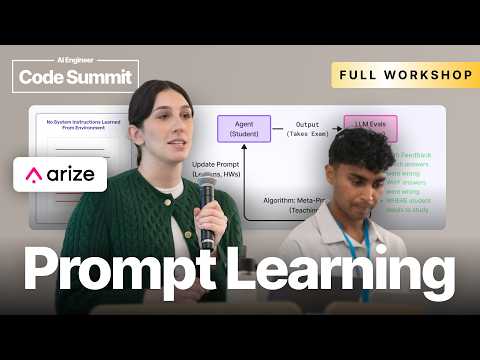
The move from manual prompt engineering to automated prompt learning. As models become commodities, the proprietary loop that refines them becomes the moat.
Implement a Train-Test Split for your prompts. Use a subset of failure data to generate new rules and validate them against a separate holdout set to ensure the logic holds.
Reliability is the only metric that matters for agent adoption. If you are not using a feedback loop to update your system instructions, you are building on sand.
The move from industrial management to creative inspiration. As AI automates routine tasks, the only remaining value is high-variance human creativity.
Apply the Keeper Test today. Ask your leads which team members they would fight for and provide generous exits for the rest to reset your talent bar.
Scaling doesn't require more rules. It requires better people. If you can maintain talent density, you can run fast while your competitors choke on their own handbooks.
L1 Tokens are Commodity-Money: They function as the native economic unit of their blockchain, used for services and increasingly held as a store of value, not as shares in a company.
Networks, Not Corporations: L1s are decentralized ecosystems of validators, users, and infrastructure providers, lacking a single point of control or liability.
Store of Value is Key: The primary long-term value accrual for L1 Tokens likely stems from demand for staking and DeFi utility outpacing the token's supply growth, making them a vehicle to "transport wealth through time."
100x Faster Finality: Alpenglow targets ~100ms finality, making the Solana user experience near-instantaneous and bolstering its DeFi and payments utility.
Economic Revamp: Off-chain voting drastically cuts validator costs, with future plans for explicit incentives to further align network participants.
Aggressive Innovation: Anza's roadmap, including Alpenglow by late 2024/early 2025, doubled block limits, and future slot time reductions, signals relentless pursuit of peak performance.
Institutional Crypto Adoption is Real & Accelerating: Forget retail; corporations globally are now the big crypto buyers, reshaping market dynamics and creating both opportunities and SPAC-like bubble risks.
Bitcoin ETFs Signal Deepening Institutional Commitment: Massive, consistent inflows into Bitcoin ETFs, led by giants like BlackRock, confirm that sophisticated capital is making significant, long-term allocations to digital assets.
AI is a Deflationary Force Rewriting Job Specs: AI's economic impact is undeniable, driving productivity and disinflation but also forcing a rapid evolution in the workforce, where adaptability and human-AI collaboration are key to future value.
Lowering Entry Barriers: Galxe's "learn, explore, earn" model makes crypto accessible by allowing users to earn their first tokens, fostering organic community growth for projects.
Privacy-Preserving Verification: The adoption of Zero-Knowledge Proofs for quests and identity is key to building user trust and enabling verifiable on-chain activity without compromising personal data.
Integrated Infrastructure: By developing its own L1, Gravity Chain, Galxe aims to provide a seamless, high-performance experience, tackling cross-chain friction and offering a robust platform for dApps and users.
Leverage Kills: Excessive open interest relative to price movement is a clearer warning sign than funding rates alone; avoid getting over-levered at market highs.
Perps are the Future: Perpetual swaps are a superior financial product for speculation and could see explosive growth, with crypto platforms leading the charge if US regulation permits.
Buy the Geopolitical Dip (Wisely): Bitcoin often dips on geopolitical scares but rallies on subsequent government stimulus, presenting strategic entry points.
L1 Valuation is Evolving: Investors are moving beyond simple metrics, seeking frameworks that capture both transactional utility (REV) and monetary premium (RSOV).
The "Money" Angle is Key: Understanding L1 tokens as emerging forms of non-sovereign money, with value driven by capital flows and store-of-value properties, is critical for long-term investment theses.
Focus on Real Yield Drivers: For investors, analyzing how L1s plan to capture value from contentious state (e.g., sequencing fees) is crucial, as this will be a durable source of real yield and token demand.