AGI is a Compute Game. The primary bottleneck is compute. The process is one of "crystallizing" energy into compute, then into the potential energy of a trained model. More compute means more intelligence.
The Future is a "Manager of Models." AGI won't be a single entity. It will be an orchestrator that delegates tasks to a fleet of specialized models, from fast local agents to powerful cloud reasoners.
Build for Your AI Coworker. To maximize leverage, structure codebases for AI. This means self-contained modules, robust unit tests, and clear documentation—treating the AI as a team member, not just a tool.
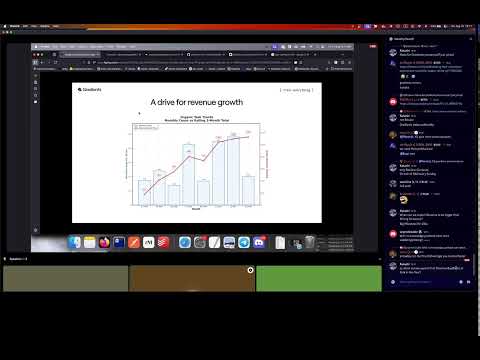
Performance is a Solved Problem. For post-training tasks, Gradients has established itself as the best in the world. Developers should stop writing custom training loops and leverage the platform to achieve superior results faster and cheaper.
Open Source Unlocks Trust and Revenue. The pivot to open source directly addresses the biggest enterprise adoption hurdle—data privacy. This move positions Gradients to capture significant market share and drive real revenue to the subnet.
The Bittensor Flywheel is Real. Gradients didn't just beat a major AI lab; its incentive mechanism ensures it will continue to improve at a pace traditional companies cannot match. Miners who don’t innovate are automatically replaced, creating a relentless drive toward optimization.
**Training is a Solved Problem.** For users and developers, the message is clear: stop building custom training loops. Gradients offers superior performance out-of-the-box, turning the complex art of model training into a simple API call.
**Open Source is the Ultimate Competitive Moat.** By making top training scripts public, Gradients accelerates its own innovation flywheel, creating a continuously compounding advantage that closed-source competitors cannot replicate.
**The Best 8B Model is Now from Bittensor.** Gradients has moved beyond theoretical benchmarks to produce a state-of-the-art model that beats a leading industry player. This is a powerful proof-of-concept for the entire Bittensor ecosystem.
Geopolitics Is the New OS: The AI discourse is no longer an intellectual parlor game about existential risk. It is a strategic mandate driven by fierce competition with adversaries like China.
Open Source Is the Ultimate Moat: The winning strategy isn't to hoard IP but to build an ecosystem. Open source has emerged as the most powerful tool for establishing American models and infrastructure as the global standard.
The Cost of Inaction Exceeds the Risk of Action: The "what's the rush?" argument is dead. The opportunity cost of delaying progress—from curing diseases to solving scientific challenges—is now viewed as a more tangible threat than the theoretical dangers of AI.
Beware of "AI" Consultants: Many enterprise-focused "agent startups" are just traditional IT consultancies in disguise, selling high-cost, human-led services with a thin veneer of AI.
Benchmark What Matters: The real value in coding agents isn’t just solving abstract problems; it’s how well they integrate with existing libraries. Companies that measure and optimize for this will win the next wave of developer adoption.
Tooling is the Final Frontier: The key hurdle to superintelligence isn't just model capability; it's an agent's ability to discover and skillfully use an infinite library of external tools to solve problems.
**Character, Not Video:** The winning primitive in generative video isn't the frame; it's the character. Companies that master subject-level control and performance are building a defensible moat in a crowded market.
**The Meme-to-Enterprise Pipeline:** Viral trends are the new market research. The fastest path to enterprise AI adoption is to follow what users are creating for fun and build a robust, reliable tool around it.
**Interactive is the Next Platform:** The future of media isn't just watching; it's directing. Real-time, interactive models that let users guide AI characters will unlock entirely new applications in entertainment, education, and commerce.
**Treat AI Like a Nuke, Not an App.** The strategic framework for AI must mirror nuclear non-proliferation. The goal is to prevent any single actor from making an explosive bid for superintelligence, an act that would be met with sabotage, not applause.
**A "Manhattan Project" for AI Is a Strategic Blunder.** A secretive, government-led AGI project is doomed. It's impossible to hide, invites pre-emptive attacks, alienates crucial international talent, and would trigger a highly destabilizing arms race with adversaries who may have better information security.
**Bargain While You Still Can.** As AI automates cognitive work, the value of human labor will plummet, erasing our economic and political leverage. Societal structures for benefit-sharing and power distribution must be established *now*, not after we've lost our seat at the table.
Personality Over Performance: For consumer-facing chatbots, an engaging, human-like personality can be more important than benchmark-topping intelligence. The GPT-4o backlash is a clear signal that users want companions, not just oracles.
Integration is the Ultimate Feature: The most successful AI tools will be those embedded into existing workflows. Grok’s deep integration into X makes creation frictionless, a model others will likely follow.
The AI Tooling Stack is Specializing: One-size-fits-all platforms are a temporary phase. The future of AI development tools, from LLMs to "vibe coders," lies in specialized solutions built for specific user segments and use cases.
**A "Magical Moment" for Investors.** The host argues that TAO and its subnets are in a period analogous to early Bitcoin or Ethereum. The massive valuation gap between subnets (e.g., a $15M AI subnet) and their centralized counterparts (a $28B company) suggests the market has not yet priced in their potential.
**The Biggest Customers Are Outside Crypto.** While currently serving Bitensor subnets, Bitcast's largest future growth vector is projected to be other crypto chains and external projects seeking a hyper-efficient, trustless advertising platform.
**Scale is Imminent.** Bitcast is weeks away from launching a "no-code miner," enabling one-click onboarding for creators. This, combined with planned expansion to X (Twitter) and TikTok, is set to dramatically scale the network's reach and impact.
High Premiums are a Red Flag: The massive premiums (some at 80x NAV) on many new crypto treasury stocks are likely unsustainable and warrant extreme investor caution.
Collateralization is the Catalyst: The primary systemic risk emerges if these shares become widely accepted as collateral, creating a leveraged ecosystem vulnerable to market shocks.
History as a Guide: The industry must heed the lessons from GBTC's collapse to prevent irresponsible risk-taking and a potential repeat of cascading failures.
PumpFun's Token Looms Large: With its massive user base and revenue, PumpFun's upcoming token is a critical event for Solana and the broader memecoin market, offering a direct investment into crypto's consumer wave.
IPO Window is Open: Circle's successful IPO signals renewed investor interest in publicly traded crypto companies, potentially paving the way for more listings and providing liquidity events for equity holders.
Regulatory Clarity is King: The future of crypto innovation, from token launches to organizational structures, hinges on clear market structure legislation to move beyond current cumbersome models.
Don't Midcurve Success: Circle’s IPO triumph, despite online skepticism, shows that strong fundamentals and clear value propositions (like stablecoin infrastructure) attract serious capital.
Ambition Attracts Capital (and Scrutiny): Pump.fun's massive raise, while controversial, signals a drive to leverage its huge user base for something much bigger than memecoins. Profitability plus vision equals investor interest.
IPO Pipeline Primed: Circle’s success is a catalyst, likely opening the IPO floodgates for other mature crypto companies sooner than anticipated.
Cash is King (Again): Pump Fun's $1B target underscores a potential shift back to ICOs for well-capitalized projects, offering a war chest for aggressive expansion, M&A, and de-risking beyond what current revenues allow.
Distribution is Destiny: Pump Fun's long-term viability hinges on owning its front-end and user discovery to avoid disintermediation, making moves into wallets or even exchanges critical.
Solana Symbiosis Likely: Despite L1/L2 speculation, Pump Fun’s incentives align more with growing the existing memecoin market on Solana rather than fragmenting its user base by launching a new chain, especially given Solana's ongoing performance enhancements.
**Institutional Gravity:** The long-awaited institutional capital is here, reshaping market dynamics even as retail sentiment flickers.
**Transparency vs. Tactics:** The need for private trading venues (dark pools) is growing, challenging the "everything on-chain" ethos for practical trading.
**Altcoin Arenas:** Specific ecosystems like Solana (via LSTs like Jito) and BNB Chain (via PancakeSwap) are showing unique strengths and attracting significant, albeit sometimes under-the-radar, volume and institutional attention.