The Macro Shift: Context management is the new compute. As models get smarter, the winning architecture will be the one that most efficiently partitions and feeds relevant data to sub-agents.
The Tactical Edge: Prioritize reviewability. When building or using agents, focus on tools that provide clear diffs and tours of changes rather than just raw code generation.
The Bottom Line: The developer's role is evolving from a writer to an orchestrator. Success in the next 12 months depends on mastering the skill of agentic review rather than manual syntax.
The Macro Shift: Engineering is moving from a headcount-driven Opex model to an infrastructure-driven autonomy model where validation is the primary capital asset.
The Tactical Edge: Audit your codebase against the eight pillars of automated validation. Start by asking agents to generate tests for existing logic to close the coverage gap.
The Bottom Line: Massive velocity gains are not found in the next model update. They are found in the rigorous internal standards that allow agents to operate without human hand-holding.
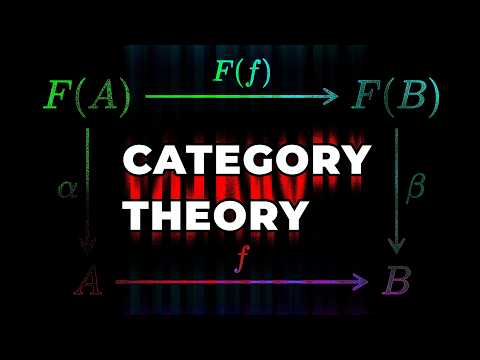
[Algorithmic Convergence]. The gap between symbolic logic and neural networks is closing through category theory. Expect architectures that are "correct by construction" rather than just "likely correct."
[Audit Architecture]. Evaluate new models based on their "algorithmic alignment" rather than just parameter count. Prioritize implementations that bake in non-invertible logic.
The next year will see a shift from scaling data to scaling structural priors. If you aren't thinking about how your model's architecture mirrors the problem's topology, you are just an alchemist in a world about to discover chemistry.
Strategic Implication: The future of software development isn't about *if* we use AI, but *how* we integrate human understanding and architectural discipline to prevent an "infinite software crisis.
Builder/Investor Note: Builders must prioritize deep system understanding and explicit planning over raw generation speed. Investors should favor companies that implement robust human-in-the-loop processes for AI-assisted development.
The "So What?": Over the next 6-12 months, the ability to "see the seams" and manage complexity will differentiate thriving engineering teams from those drowning in unmaintainable, AI-generated code.
Strategic Implication: The market for AI transformation services is expanding rapidly, driven by enterprises seeking to integrate AI for tangible business outcomes.
Builder/Investor Note: Focus on AI solutions with clear, practical applications for mid-market and enterprise clients. Technical talent capable of bridging research with deployment holds significant value.
The "So What?": The next 6-12 months will see increased demand for AI engineers who can implement and scale AI solutions, moving beyond proof-of-concept to widespread adoption.
Compensation Innovation: The traditional compensation playbook for engineers is outdated. New models that directly reward AI-augmented output will attract top talent and drive efficiency.
Builder/Investor Note: Founders should re-evaluate their incentive structures. Investors should seek companies experimenting with these models, as they may achieve outsized productivity.
The "So What?": The productivity gap between AI-augmented and non-AI-augmented engineers will widen. Companies that adapt their incentives will capture disproportionate value in the next 6-12 months.
Strategic Shift: Successful AI integration means identifying and solving *your* organization's specific SDLC bottlenecks, not just boosting code completion.
Builder/Investor Note: Prioritize psychological safety and invest in AI skill development. For builders, this means dedicated learning time; for investors, look for companies that do this well.
The "So What?": The next 6-12 months will separate organizations that merely *adopt* AI from those that *master* its strategic application and measurement, driving real competitive advantage.
Strategic Implication: AI integration is a company-wide transformation, not a feature. Organizations must re-architect processes, tools, and culture to compete.
Builder/Investor Note: Prioritize internal tooling that democratizes AI experimentation. Look for companies establishing "model behavior" as a distinct, cross-functional discipline.
The "So What?": The next 6-12 months will reward builders who bake AI security and user control into product design from day one, recognizing that technical mitigations alone are insufficient.
Appetite is Insatiable: Investor demand for any crypto-related exposure is immense, capable of pumping stocks like Circle's despite questionable financials.
Fundamentals Still (Should) Matter: Circle's low margins, high costs, and interest rate sensitivity paint a precarious picture, a "terrible company" according to one host, even if its stock moons.
Hype Cycle Peaks & Troughs: The current frenzy across crypto-linked stocks (Circle, potential Ripple IPO, Coinbase, MSTR) signals significant hype, which historically precedes market corrections.
Flipcash is betting that a hyper-fast, intuitive "digital cash" experience, leveraging Solana's speed and a novel L2, can carve out a unique niche in the crowded payments landscape.
The shift to USDC and a clever onboarding mechanism (pay for account, get instant credit) aims to overcome common crypto adoption hurdles related to volatility and empty wallets.
Solana's Speed is a Moat: Flipcash's core "instant cash" UX is explicitly tied to Solana's performance, highlighting the chain's capability for consumer-facing applications demanding high speed.
Political Winds Shift Crypto Sails: The Trump-Musk fallout underscores the urgency for clear crypto legislation, as policy can be derailed by high-level discord.
Stablecoin Showdown Looms: Circle's hot IPO masks a fiercely competitive future where big banks could disrupt incumbents by leveraging distribution and offering yield.
Q4 Top Signal? The flurry of crypto IPOs (Circle, potentially Gemini, Kraken) and soaring Bitcoin treasury adoption might signal a market peak approaching in Q4 2025 or Q1 2026.
Bitcoin is king: Expect Bitcoin to outperform traditional assets significantly; avoid fumbling this generational chance through common investor errors.
Evolve your strategy: The game has shifted from infrastructure hype and rapid trading to identifying and holding quality applications and tokens like Hyperliquid or Syrup with longer horizons.
Appetite meets fundamentals: While hype can drive initial pumps (e.g., Circle IPO), sustainable value lies in strong business models (Tether's organic growth) and clear token utility.
**IPO Appetite is Real (for Some):** Public markets are hungry for crypto, but primarily for clear narratives like stablecoins (see: Circle); broader adoption requires substantial revenue.
**VCs Get Flexible:** The smart money is adapting, ready to pounce on equity or tokens, depending on where the value (and exit) lies.
**On-Chain IPOs - The Next Speculative Playground?:** Imagine a world where early-stage crypto companies list on-chain, offering a more productive outlet for speculative capital than today's memecoin casino.
Regulatory Renaissance: The SEC's stance has softened, creating a more favorable U.S. environment for crypto; Ether's non-security status (for the scope of the past investigation) is a major win.
Ether as a Productive Treasury Asset: ESBET's strategy of acquiring and actively yielding Ether could set a new standard for corporate treasuries, showcasing Ether's utility beyond just holding.
The "Trust Commodity" Narrative: Expect a strong push to frame Ether's value around its ability to provide programmable trust and facilitate economic activity, with Lubin championing this.