The transition from general-purpose LLMs to specialized coding agents that operate on the entire codebase rather than isolated snippets.
Audit your current stack for agentic readiness. Prioritize tools that integrate with Gemini 3 or similar high-reasoning models to automate repetitive pull requests.
Code is the substrate of the digital world. If you control the means of AI code generation, you control the speed of innovation for every other industry.
The move from a singular "Universe" view to a "Multiverse" perspective mirrors the transition from centralized monoliths to fragmented, interoperable ecosystems.
Build systems that fail gracefully when hitting Gödelian limits.
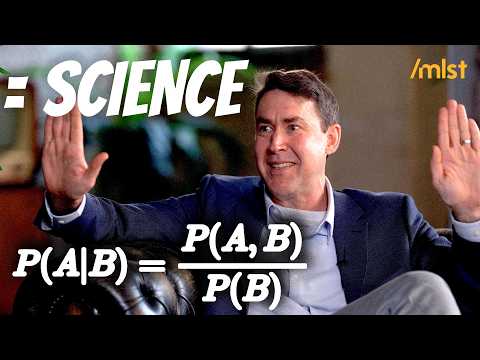
Truth is a vast ocean while proof is a small boat. Your roadmap must account for the reality that your system will eventually encounter truths it cannot verify.
The Macro Pivot: Outcome-Based Intelligence. We are moving from AI as a Service to Results as a Service where software value is tied to revenue generation rather than seat licenses.
The Tactical Edge: Verticalize the Data. Build in sectors with non-public outcome data to create a compounding moat that resists commoditization by foundation models.
The winners of 2026 will be those who use AI to solve core human needs for connection and discovery while building defensible, data-rich business models.
The Macro Transition: Moving from "Big Model" monoliths to "Lots of Little Models" where distributed Bayesian assets represent specific physical objects.
The Tactical Edge: Prioritize "Object-Centered" architectures that track uncertainty. This allows robots to "phone a friend" when encountering novel data.
The LLM era is hitting a wall of implicit representation. The next 12 months belong to those building explicit, causal world models grounded in physics rather than language.
The Macro Trend: The transition from static benchmarks to live human-in-the-loop evaluation. As models saturate fixed tests, the only remaining signal is subjective human preference at scale.
The Tactical Edge: Monitor secret model drops on Arena to spot frontier capabilities before official releases. This provides a lead time advantage for builders choosing their tech stack.
The Bottom Line: Arena is the new kingmaker. If you are building AI products, their expert-tier data is the most reliable map for navigating the frontier.
The move from small models to medium models (15B to 70B) suggests that reasoning capability is outstripping the desire for low-latency edge deployment.
Implement instruction-following re-rankers to prune your context window. This prevents the model from getting confused by irrelevant data.
Stop building toys. The next year belongs to those who can build full agentic systems that handle billions of tokens without losing the plot.
Listed is Better (For Now): For functional crypto options, look to products on established, regulated exchanges with competitive market-making; on-chain options are largely unworkable due to poor liquidity and structure.
US Spot Market Needs a Shake-Up: The high costs and concentration in US spot crypto trading stifle accessibility; more competition is essential.
Market Structure is Destiny: The design of a market—its rules, incentives, and competitive landscape—ultimately determines execution quality and cost, far more than the underlying asset itself.
Fundamentals First: The "revenue meta" is here to stay; projects without real earnings or clear paths to profitability will struggle.
Institutions are Driving: With institutional players dominating trading volumes, expect crypto valuations to increasingly align with traditional financial metrics and scrutiny.
Value Accrual is King: Tokens must demonstrate how they capture and return value to holders; mechanisms like revenue share and buybacks are becoming non-negotiable.
**Transparency Pays:** Projects embracing transparency will likely see a long-term price premium, appealing to sophisticated, long-horizon investors.
**Clarity Cuts Through Noise:** Fundamentally strong but poorly communicated projects can leverage the framework to gain visibility and investor trust.
**Bad Actors Beware:** The framework is designed to punish extractive and scam projects, cleaning up the ecosystem and redirecting resources to genuine innovation.
Shine a Light: The Framework allows legitimate projects ("peaches") to differentiate themselves from opaque or scammy ones ("lemons"), potentially reducing the 80% "lemon discount."
Investor Shield: Provides investors a standardized checklist to assess a token's structural integrity beyond just its hype, looking at critical areas like equity vs. token alignment and fund use.
Market Integrity Boost: Widespread adoption could significantly improve market transparency, attract institutional capital, and discourage nefarious actors, ultimately strengthening the entire crypto ecosystem.
**Public Equities Offer Familiarity:** Investors are gravitating towards public crypto vehicles for their established legal structures and operational simplicity over direct token holdings.
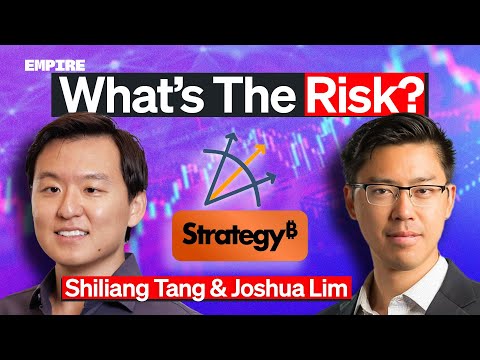
**Leverage Looks Different Now:** Today's public crypto plays (e.g., MicroStrategy) exhibit significantly less leverage than the high-risk trades that caused meltdowns last cycle.
**Securities Classification Could Be Bullish:** Regulating tokens as securities might unlock substantial institutional capital, providing clearer rules and bolstering market stability.
**Solana ETFs are knocking on the door**, potentially armed with staking yield and a clearer TradFi narrative than their Ethereum counterparts.
**The DEX arena is a battlefield**: CLOBs on specialized infrastructure are rising, challenging AMMs and reshaping liquidity for everything from blue-chips to memecoins.
**Stablecoins are crypto's killer app going mainstream**, with Circle's IPO firing the starting gun for broader investor participation and a new wave of competition.