Intent Over Implementation: The value in software creation shifts from low-level coding to clearly defining intent and design, with AI handling the technical execution.
Rapid Prototyping: Builders can now rapidly prototype and deploy complex, full-stack applications, significantly compressing development cycles and lowering entry barriers.
New Creator Economy: Expect a surge in non-technical creators building sophisticated applications, driving innovation in UI/UX and personalized content.
Strategic Shift: The "factory-first" mindset is a strategic reorientation towards physical production, enabled by AI, extending beyond traditional manufacturing to all large-scale infrastructure.
Builder/Investor Note: Focus on companies applying modular design, AI-driven process optimization, and automation to sectors like housing, energy, and mining. Data centers are a leading indicator for these trends.
The "So What?": Rebuilding America's industrial capacity through these methods offers a competitive advantage, impacting defense, consumer goods, and commercial sectors in the next 6-12 months.
Strategic Implication: The future of AI agents hinges on practical utility and adaptive reasoning, not just raw scale. Models that integrate expert feedback and iterative thinking will outperform those focused solely on benchmarks.
Builder/Investor Note: Builders should prioritize robust generalization through diverse training perturbations. Investors should seek models that demonstrate real-world adoption and cost-effective scalability for multi-agent architectures.
The So What?: The next 6-12 months will see a shift towards smaller, highly specialized, and deeply integrated AI models that function as reliable co-workers, driving efficiency in developer workflows and complex agentic tasks.
Strategic Shift: The industry is moving from code generation to code orchestration. The value lies in guiding AI, not just prompting it.
Builder/Investor Note: Invest in tools that enhance "vibe engineering" (real-time steering, context management) and education for senior developers. Avoid strategies that solely rely on AI to replace junior talent without skilled oversight.
The "So What?": Over the next 6-12 months, the ability to effectively "vibe engineer" will become a critical differentiator, separating high-performing teams from those drowning in AI-generated "slop."
Strategic Implication: The next frontier in AI involves a fundamental shift from statistical compression to genuine abstraction and understanding.
Builder/Investor Note: Focus on research and development that grounds AI in first principles, leading to more robust, efficient, and interpretable systems, rather than solely scaling existing empirical architectures.
The "So What?": The pursuit of mathematically derived, parsimonious, and self-consistent AI architectures offers a path to overcome current limitations, enabling systems that truly learn, adapt, and reason in the next 6-12 months and beyond.
Data Scarcity is a Feature, Not a Bug: Be wary of narratives built on incomplete data. Just because a dataset (on-chain, AI training) is all we have, doesn't mean it's representative.
Standardization is Survival: For any new technology (crypto protocols, AI models), robust "lexicography" and clear documentation are critical for long-term adoption and preventing fragmentation.
Question the "Received Law": Don't assume current "archaeological evidence" (e.g., current blockchain data, AI model limitations) tells the whole story. Look for the "perishable materials" that might be missing.
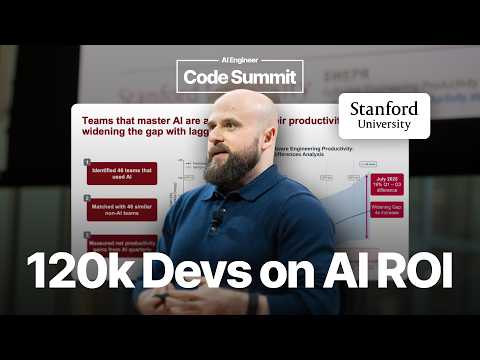
Strategic Shift: AI ROI isn't about adoption, it's about intelligent adoption. The gap between top and bottom performers will widen based on measurement sophistication and codebase health.
Builder/Investor Note: For builders, prioritize codebase hygiene and engineer training before or concurrently with AI rollout. For investors, scrutinize AI productivity claims; ask about code quality, rework rates, and specific measurement frameworks beyond simple usage.
The "So What?": In the next 6-12 months, companies that master AI integration by focusing on quality, measurement, and environment will compound their gains, while those chasing superficial metrics risk significant tech debt and negative ROI.
Strategic Implication: The next frontier of AI in software isn't just *generating* code, but *governing* its quality. This shift will redefine competitive advantage.
Builder/Investor Note: Prioritize investments in AI-powered quality gates, intelligent code review, and dynamic testing. For builders, feed your AI tools rich, comprehensive context. For investors, look for companies building these "picks and shovels."
The "So What?": The promised 2x-10x productivity gains are real, but they won't come from raw code generation alone. The next 6-12 months will see a scramble to implement agentic, context-aware quality workflows to unlock AI's true potential across the SDLC.
Strategic Shift: The competitive edge in AI agents is moving from clever architecture to superior model training data and robust RL environments.
Builder/Investor Note: Prioritize raw model capability over complex agent stacks. Builders should contribute to open-source RL environments; investors should seek companies focused on generating and leveraging high-quality training data.
The "So What?": The next 6-12 months will see a race to build and utilize real-world, outcome-driven benchmarks. Open initiatives like Client Bench could democratize model improvement and accelerate AI development significantly.
**Standardized Scrutiny Arrives:** The Token Transparency Framework introduces a systematic, 18-criteria evaluation, offering a clear benchmark for assessing token projects beyond hype.
**Rewards & Repercussions:** By first celebrating transparent projects (like Jito and Jupiter) and then planning to rate less forthcoming ones, the framework aims to incentivize industry-wide improvements in disclosure.
**Investor Toolkit Boost:** This framework provides investors with a concrete tool for due diligence, moving towards a more informed and transparent crypto investment landscape.
CEXs Go Lean: Exchanges are increasingly opting for lighter on-chain footprints, prioritizing app development on existing chains over building new L1s/L2s, signaling a focus shift to direct user value.
Transparency is Non-Negotiable: The 0xResearch Token Transparency Framework highlights a critical industry need for standardized disclosures, aiming to build trust and attract serious capital by demystifying token projects.
Utility Drives Valuation: Projects like Kamino, despite strong fundamentals and growth, underscore that clear token utility and value accrual mechanisms are essential for market recognition and valuation.
Selective Bets Over Broad Sprees: Forget throwing darts; the crypto market now rewards surgical precision. Focus on projects with strong fundamentals and demonstrable traction, as "hyper dispersion" is the new norm.
Public Equities as a Crypto Proxy: With limited direct, high-quality crypto IPOs, existing listed entities like Circle and Coinbase are soaking up institutional and retail interest, mimicking "alt season" dynamics in traditional markets.
Pragmatism Pays: The industry is shedding ideological baggage. Successful projects will meet existing market needs, provide clear disclosures, and avoid outdated tokenomic "tricks." Prediction markets are an emerging utility to watch.
**Transparency is Now Table Stakes:** Projects neglecting robust disclosure standards, like those promoted by the new Token Transparency Framework, will face escalating investor scrutiny and skepticism.
**Public Markets: Crypto's Current Darling (But For How Long?):** Expect continued capital inflow and outperformance from regulated, publicly traded crypto entities before a potential, broader token market resurgence.
**Real Value is Built on Fundamentals & Community:** Platforms like Hyperliquid, showcasing operational efficiency, potent tokenomics, and community wealth creation, are forging lasting value that transcends fleeting market trends.
Stablecoin Surge: The GENIUS Act is set to unleash trillions in stablecoin value, positioning dollar-backed digital assets as a global financial linchpin and reinforcing US dollar networks.
ETF Explosion Imminent: Prepare for a diversified crypto ETF market in 2025, as assets like Solana and Dogecoin likely gain approval, testing the true depth of institutional appetite.
Super App Showdown: The battle for your financial future is on, with Coinbase and Robinhood racing to build all-in-one platforms blending traditional finance with on-chain crypto services.
**Revenue is King**: The "revenue meta" isn't a meme; it's the future. Invest in applications and protocols generating real cash flow.
**Solana's DeFi Gap is an Opportunity**: Solana needs robust, user-friendly DeFi, especially perps. Building best-in-class products here is a massive opportunity, even if not unseating current L2 leaders.
**IPOs & M&A Signal Maturation**: The success of Circle’s IPO and increasing M&A activity point to a maturing industry where equity value is re-emerging, offering alternative liquidity paths beyond token launches.