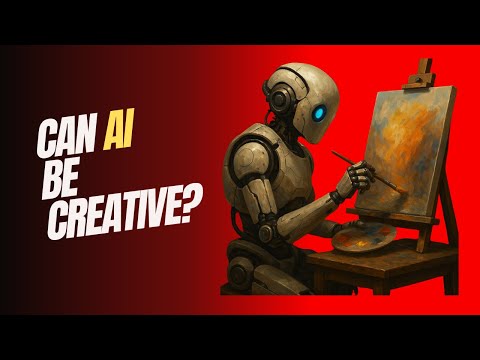
AI as a System, Not a Tool: Advanced AI art projects are not just prompt-driven tools but autonomous systems. They use feedback loops (DAOs, user interaction) to develop their own "taste" and creative trajectory, aiming for a level of agency beyond simple human puppeteering.
AI Reveals Human Vulnerabilities: AI companions act as a social mirror, showing that humans fundamentally crave connection and non-judgmental spaces. We are turning to AI to fulfill core needs that are often unmet in our human-to-human relationships.
The Artist's Dilemma: Adapt or Perish: Resisting AI is becoming a losing battle. The future for artists isn't about competing with AI on replication but on finding what AI can't do, critiquing it from within, or carving out a niche for "100% human-made" work in a world of synthetic media.
Benchmarks are broken. The ML community can no longer rely on leaderboards as a proxy for truth. The new frontier is developing robust, qualitative explanations for why models succeed or fail.
Embrace the illusion. The most effective models aren’t finding universal laws but are constructing powerful, computationally efficient illusions of them. Progress lies in refining these illusions, not in a futile search for Platonic perfection.
Think like a physicist. The future of foundational AI research is to treat models as complex physical systems. The task is to design parametric models where stochastic processes, like SGD, can efficiently "relax" into a state that approximates the data distribution.
**Incumbent Advantage is Real:** Existing SAS companies with API-first platforms and deep domain knowledge are well-positioned to leverage AI as a TAM-expanding, sustaining innovation.
**Startups Should Hunt Greenfields:** The biggest disruption will happen in unstructured industries (legal, healthcare) that were previously resistant to software. This is where new, AI-native giants will be born.
**The New Bottleneck is Human:** The speed of AI adoption is no longer limited by technology, but by the organization's ability to adapt its workflows and people. The most valuable skill is now managing agents, not just tasks.
AI's Power Problem is Crypto's Opportunity: The insatiable energy demand of large, centralized AI models creates a strategic opening for more efficient, specialized AIs built on decentralized compute networks.
Decentralize or Be Manipulated: The fight is on to prevent a handful of corporations from controlling the "super-intelligent beings" we interact with daily. User-owned AI built on blockchain primitives is the primary defense.
The AI Tokenization Wave is Coming: Profitable AI startups that don't fit the traditional VC mold will increasingly turn to "on-chain IPOs," creating a new, high-demand asset class that offers investors direct exposure to AI's growth.
Memorization is an unsolved vulnerability. Any organization fine-tuning models on private, sensitive data is creating a ticking time bomb for a major data breach.
Prompt injection is the new default attack vector. The rush to deploy AI agents with broad system access is creating a massive, insecure attack surface that will define the next era of cybersecurity.
Watermarking is not a security solution. Techniques for marking AI-generated content are fragile and easily defeated by simple transformations like translation, making them unreliable for detecting malicious deepfakes or disinformation.
LPs Face a Critical Choice: You must now decide between earning staking rewards or LP fees. Future upgrades may allow staked LP positions, but for now, it's a strategic trade-off.
Subnet Stability is the Goal: User-provided liquidity is designed to build moats around subnets by reducing price volatility, creating more attractive and stable markets for participants.
Decentralization is the Endgame: The next major engineering effort is decentralizing the chain, a massive undertaking that will move Bittensor toward its goal of becoming an anti-fragile, eternal AI federation.
**Founder-Led Firms Have the Ultimate Edge:** In the capital-intensive race for AI supremacy, founder-controlled companies like Meta can make decisive, multi-billion-dollar bets that professionally-managed boards cannot, creating a structural advantage.
**AI Productivity is Not Hype, It's Here:** Michael Dell states that 10-20% productivity improvements from AI are easily achievable, with some cases hitting 30-40%. This is not a future promise; it’s a present-day reality for the few companies executing well.
**The Biggest Threat is Self-Inflicted:** The primary risk to America’s continued tech dominance is not foreign competition but poor domestic policy. Restrictive export controls, limits on AI diffusion, and a failure to attract skilled immigrants could cede our leadership position.
AI as a Co-Pilot, Not a Pilot: The most powerful current use of AI in development is as a super-assistant guided by a human architect. Fully autonomous AI-built apps often become unmaintainable "monsters."
Distribution is the New Moat: As AI makes building easier for everyone, the ability to build is commoditized. The key differentiator becomes distribution, where crypto’s token-based incentives and built-in communities offer a distinct advantage over Web2.
Solana is the Default Consumer Chain: For consumer-facing applications that require speed, low costs, and access to a vibrant user base, Solana has become the no-brainer choice, solidifying its position as the go-to layer for new experiments in crypto.
BitTensor is a VC alternative. The network provides startups like SCORE with millions in free compute and R&D, allowing them to compete with giants by replacing venture funding with token incentives.
Revenue is the ultimate metric. In the post-DTO world, subnets that can demonstrate a clear path to revenue and token buybacks, like SCORE, are positioned to attract significant capital.
The economic moat is real. The argument that subnets will "go private" ignores the immense, ongoing value of a free, decentralized AI research lab that constantly keeps them at the bleeding edge.
All Roads Lead to Debasement: Both political parties are now committed to a policy of fiscal dominance and financial repression. The goal is to inflate away the debt, which makes holding cash and traditional bonds a losing proposition.
Get Out on the Risk Frontier: The only rational response is to move capital into assets that can benefit from currency debasement and a manufactured asset boom. This means frontier tech, crypto, and other high-growth, high-risk assets.
The Social Contract is Breaking: These policies will blatantly exacerbate wealth inequality, fueling populist anger. The system is no longer a free market but a manipulated game, and the backlash will define the political landscape for the next decade.
**The Great Bifurcation:** Capital is rotating out of altcoins and into two main buckets: Bitcoin (channeled through treasury companies) and crypto-adjacent equities (COIN, HOOD). Don't mistake isolated pumps for a broad "alt season."
**Synthetics are the New Speculation:** The next wave of on-chain gambling will be on synthetic versions of real-world assets, from private company shares to public stocks, providing exposure without the complexity of ownership.
**Apps Over Chains:** The most valuable real estate in crypto is no longer the base layer but the application layer. Companies that build sticky, revenue-generating products with great UX—even if they just clip fees—are winning.
**Bet on a Thesis:** Coinbase is a pure-play bet on the entire global economy moving on-chain, positioning itself as the essential B2B infrastructure provider.
**Follow the Money:** Robinhood is a bet on demographics, strategically positioning itself to capture the next generation's financial life and inherit trillions in the great wealth transfer.
**The Next Frontier is On-Chain:** The new battleground is Layer 2. Coinbase’s established Base ecosystem will face a formidable challenge from Robinhood Chain, with tokenized stocks as the initial prize.
**Invisible Rails are the Endgame:** The winner isn't the platform that forces users to understand blockchain, but the one that makes it invisible. Mainstream adoption will arrive when consumers use stablecoins without even knowing it, powered by seamless wallet and card integrations.
**Wallets Are the New Financial Hub:** Wallets are transcending simple storage to become full-fledged financial platforms. The next wave of innovation will focus on embedding neobank-like features (direct deposits, bill pay) into non-custodial wallets.
**AI Will Run on Stablecoins:** The rise of autonomous AI agents executing commercial tasks will create massive demand for a programmable, internet-native currency. Stablecoins are the clear frontrunner to become the default payment rail for this new automated economy.
Exporting US Monetary Policy. Stablecoins are extending the US financial system's reach by creating a global on-ramp to dollar assets. Demand from emerging markets now directly impacts US Treasury yields.
The Repo Market is the Epicenter. The crucial arena for stablecoin reserves is shifting from T-bills to the reverse repo market. This creates a massive, structural demand for overnight lending against Treasury collateral.
A Permanent Weight on the Yield Curve. This constant, inelastic demand from stablecoin issuers will act as a permanent force suppressing Treasury funding rates, creating a powerful and lasting influence on the entire US yield curve.
Robinhood is the Blueprint. Its plan to launch tokenized assets on its own future Layer-2 is the new model for financial institutions, creating a direct challenge to the supremacy of existing public blockchains.
Become a Trader, Not a "Crypto Trader". The most successful investors will be those who treat crypto as one of several asset classes, moving capital opportunistically based on macro trends, political shifts, and emerging frontiers like prediction markets.
Politics Will Drive Your Portfolio. While both US political parties are expected to debase the dollar through spending, they present different risks. The Republican party is seen as bullish for risk assets via deregulation, while a progressive Democratic shift could introduce bearish headwinds through redistributionist policies.