AI is transforming software development from manual coding to agent orchestration, making "building" accessible to anyone with an idea and language. This fundamentally reconfigures the value of traditional programming skills and the entire app economy.
Invest in or build tools that prioritize agent-friendly APIs and CLI interfaces over traditional graphical user interfaces. Future value will accrue to services that seamlessly integrate into an agent's workflow, not just human-facing apps.
Personal AI agents are not just a new tool; they are a new operating system. Expect rapid shifts in user behavior and market demand, favoring platforms and services that empower autonomous AI, making now the time to adapt or be left behind.
AI agents are moving beyond language to autonomous action, fundamentally altering how software is built and consumed. This shift gives individuals the power to create complex systems with natural language, but also demands a new level of security awareness and critical thinking from users.
Embrace agentic engineering by focusing on clear communication and context provision rather than rigid coding. Experiment with open-source agents like OpenClaw to understand their capabilities and limitations firsthand.
The future of software is agent-centric. Investors should eye companies building agent-facing APIs or infrastructure, while builders must adapt their skills to "lead" AI teams. Ignoring this shift means missing the next wave of digital transformation.
The digital world moves from discrete apps to an integrated, agent-orchestrated OS, shifting value to platforms enabling seamless agent interaction.
Builders must pivot to "agentic engineering," focusing on guiding and designing systems for AI agents, mastering prompt engineering and CLI-based tool integration.
Personal AI agents will reshape software and productivity over the next 6-12 months. Investors should back agent infrastructure/API-first services; developers must embrace agent collaboration.
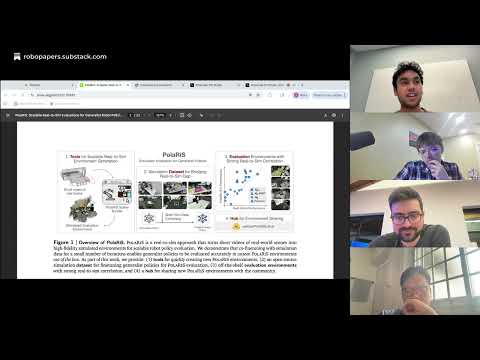
The push for generalist robot policies, akin to foundation models in other AI domains, demands evaluation tools that scale and generalize. PolaRiS directly addresses this by providing a framework for creating diverse, real-world correlated benchmarks, moving robotics beyond task-specific, overfitting evaluations towards true zero-shot generalization testing.
Implement PolaRiS's real-to-sim environment generation and "sim co-training" methodology. This allows for rapid, cost-effective iteration on robot policies with high confidence that improvements in simulation will translate to real-world gains, significantly accelerating development cycles.
For builders and investors, PolaRiS represents a critical infrastructure upgrade for robotics. It de-risks policy development by providing a reliable, scalable testing ground, making the path to deployable, generalist robots faster and more capital-efficient over the next 6-12 months.
The era of "agentic engineering" is here, moving software creation from explicit, line-by-line coding to high-level guidance of autonomous AI agents.
Experiment with agentic workflows now. Set up a local OpenClaw instance, even with free models, and use it to automate tedious tasks or prototype ideas.
Personal AI agents with system-level access are not just productivity tools; they are a new operating system layer that will consume and redefine existing applications.
Invest in companies demonstrating deep vertical integration in AI, custom silicon, and software-defined vehicle architectures. Prioritize those building proprietary data flywheels from large, active fleets.
The automotive industry is undergoing a fundamental re-architecture, moving from hardware-centric, domain-based systems to software-defined, AI-powered platforms. This shift will consolidate market power among vertically integrated players who control their data, compute, and software stack.
Autonomy will be a must-have feature by 2030, akin to airbags today. Companies without a robust, in-house, neural-net-based autonomy strategy and a software-defined architecture will struggle to compete at scale, leading to significant market share shifts in the coming years.
The shift from explicit coding to agentic orchestration means human creativity moves up the stack. Instead of writing every line, builders define intent, guide agents, and curate outcomes, making software creation more accessible and focused on problem-solving.
Invest in understanding agent-native design patterns. Prioritize building CLI-first tools and services that expose clear, composable interfaces, as these will be the foundational blocks for the next generation of AI-driven applications, making your products "agent-friendly" and future-proof.
Personal AI agents are not just productivity tools; they are a new operating system layer. Over the next 6-12 months, expect a rapid re-evaluation of traditional app value, a surge in agent-first infrastructure, and a critical need for robust, user-centric security frameworks as AI moves from language to action, directly impacting your digital strategy and investment thesis.
The rise of autonomous AI agents with system-level access is fundamentally reshaping the software landscape, moving value from traditional app interfaces to underlying APIs and data, and making building accessible for non-programmers.
Invest in infrastructure and tooling that facilitates agent-to-agent communication and robust CLI-based skill development, as this will be the new battleground for software functionality and integration.
The next 6-12 months will see increased adoption of agentic workflows, compelling companies to re-evaluate their product strategies towards API-first designs and human-centric "delight" to stay relevant as AI agents handle most functional tasks.
The push for radical decentralization, as seen with Dynamic TAO's token transformation, inherently introduces market inefficiencies and bad actors, compelling communities to develop emergent, permissionless self-regulation mechanisms to achieve economic viability.
Design for resilience, not prevention; assume bad actors will exist in any truly permissionless system and build in mechanisms for community-led critique and adaptation.
The next 6-12 months will reward projects that embrace the full spectrum of permissionless market dynamics, understanding that robust, self-correcting communities are more valuable than perfectly sanitized, centrally controlled ones.
AI's cost-compression power is fundamentally altering software economics, shifting value from infrastructure providers to application builders and traditional businesses, while exposing the inherent instability of leveraged "synthetic" markets in crypto.
Re-evaluate portfolio allocations, considering a rotation towards traditional companies benefiting from AI's cost efficiencies and a long-term view on crypto projects focused on building replacement financial systems.
The current market volatility is a re-pricing of assets in an AI-first world. Understanding where value truly accrues and crypto's need for a new, disruptive narrative will be critical for navigating the next 6-12 months.
FTX's collapse highlighted the need for transparent, self-custodial exchanges. Bullet's design ensures all operations are auditable on-chain, giving users full control of their funds.
Market makers on Solana L1 faced adverse selection, where bots with faster connections could front-run their price updates. This led to consistent losses for liquidity providers.
Increased market maker confidence leads to deeper order books and tighter spreads. This directly benefits all traders with better pricing and less slippage.
The Macro Shift: TradFi's embrace of crypto rails, stablecoins, and tokenized assets is undeniable, driving a new era of "Neo Finance" where efficiency gains are captured by businesses, not always the underlying protocols' tokens.
The Tactical Edge: Prioritize projects with clear revenue models and token designs that actively reinvest or distribute value to holders, mimicking equity-like compounding. Look for teams with agile decision-making.
The Bottom Line: The next 6-12 months will see a continued repricing of crypto assets. Focus on applications and "crypto-enabled equity" that demonstrate real cash flow and a path to compounding value, rather than speculative infrastructure plays.
Decentralized AI evolves beyond simple compute, with Bittensor establishing a "proof of useful work" model. This incentivizes specialized intelligence and democratizes early-stage AI investment.
Research and allocate capital to Bittensor subnets with strong fundamentals and high staking yields (30-150% APY), outperforming TAO.
Bittensor's unique tokenomics and incentive layer position it as critical infrastructure for decentralized AI. This offers investors and builders a compelling opportunity to accrue value in a high-growth ecosystem.
Institutional capital is forcing a re-evaluation of crypto's core tenets, pushing for greater accountability and risk mitigation, particularly in Bitcoin's governance.
Prioritize investments in crypto projects demonstrating clear cash flows, real-world utility, and robust, responsive governance, rather than speculative tokens.
Bitcoin's future hinges on its ability to adapt to external pressures, especially the quantum threat. Investors should monitor how institutions influence this change, as the "boring", cash-generating parts of crypto and AI infrastructure are poised for growth.