The decoupling of parameter count from active compute via sparsity means intelligence is becoming a software optimization problem as much as a hardware one.
Audit your agentic workflows for turn efficiency rather than just cost per token.
In a world of infinite tokens, the winner is the one who can verify the truth the fastest.
The Macro Pivot: The transition from LLMs as chat interfaces to LLMs as logic engines. As models move from text prediction to logic execution, the value moves from the model itself to the verification systems surrounding it.
The Tactical Edge: Audit the stack. Prioritize the integration of agentic coding tools like Jules to shorten the feedback loop between ideation and deployment.
The Bottom Line: Code is the only medium where AI can self-correct and scale without human intervention. The next 12 months will be defined by who can turn raw model power into reliable, self-healing code.
The Macro Transition: We are moving from "fire-and-forget" prompts to durable execution environments where state is as important as the model itself.
The Tactical Edge: Wrap your existing tool calls in the `useStep` function to gain instant retry logic and execution history.
The Bottom Line: Reliability is the primary moat in the agent market. Builders who adopt durable workflows will move to production while others are still debugging local scripts.
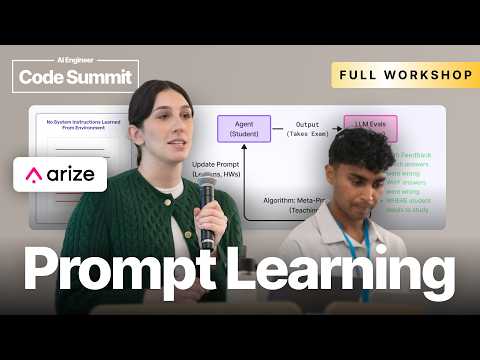
The move from manual prompt engineering to automated prompt learning. As models become commodities, the proprietary loop that refines them becomes the moat.
Implement a Train-Test Split for your prompts. Use a subset of failure data to generate new rules and validate them against a separate holdout set to ensure the logic holds.
Reliability is the only metric that matters for agent adoption. If you are not using a feedback loop to update your system instructions, you are building on sand.
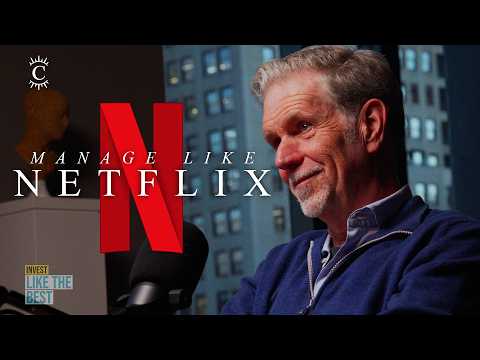
The move from industrial management to creative inspiration. As AI automates routine tasks, the only remaining value is high-variance human creativity.
Apply the Keeper Test today. Ask your leads which team members they would fight for and provide generous exits for the rest to reset your talent bar.
Scaling doesn't require more rules. It requires better people. If you can maintain talent density, you can run fast while your competitors choke on their own handbooks.
The push for radical decentralization, as seen with Dynamic TAO's token transformation, inherently introduces market inefficiencies and bad actors, compelling communities to develop emergent, permissionless self-regulation mechanisms to achieve economic viability.
Design for resilience, not prevention; assume bad actors will exist in any truly permissionless system and build in mechanisms for community-led critique and adaptation.
The next 6-12 months will reward projects that embrace the full spectrum of permissionless market dynamics, understanding that robust, self-correcting communities are more valuable than perfectly sanitized, centrally controlled ones.
AI's cost-compression power is fundamentally altering software economics, shifting value from infrastructure providers to application builders and traditional businesses, while exposing the inherent instability of leveraged "synthetic" markets in crypto.
Re-evaluate portfolio allocations, considering a rotation towards traditional companies benefiting from AI's cost efficiencies and a long-term view on crypto projects focused on building replacement financial systems.
The current market volatility is a re-pricing of assets in an AI-first world. Understanding where value truly accrues and crypto's need for a new, disruptive narrative will be critical for navigating the next 6-12 months.
FTX's collapse highlighted the need for transparent, self-custodial exchanges. Bullet's design ensures all operations are auditable on-chain, giving users full control of their funds.
Market makers on Solana L1 faced adverse selection, where bots with faster connections could front-run their price updates. This led to consistent losses for liquidity providers.
Increased market maker confidence leads to deeper order books and tighter spreads. This directly benefits all traders with better pricing and less slippage.
The Macro Shift: TradFi's embrace of crypto rails, stablecoins, and tokenized assets is undeniable, driving a new era of "Neo Finance" where efficiency gains are captured by businesses, not always the underlying protocols' tokens.
The Tactical Edge: Prioritize projects with clear revenue models and token designs that actively reinvest or distribute value to holders, mimicking equity-like compounding. Look for teams with agile decision-making.
The Bottom Line: The next 6-12 months will see a continued repricing of crypto assets. Focus on applications and "crypto-enabled equity" that demonstrate real cash flow and a path to compounding value, rather than speculative infrastructure plays.
Decentralized AI evolves beyond simple compute, with Bittensor establishing a "proof of useful work" model. This incentivizes specialized intelligence and democratizes early-stage AI investment.
Research and allocate capital to Bittensor subnets with strong fundamentals and high staking yields (30-150% APY), outperforming TAO.
Bittensor's unique tokenomics and incentive layer position it as critical infrastructure for decentralized AI. This offers investors and builders a compelling opportunity to accrue value in a high-growth ecosystem.
Institutional capital is forcing a re-evaluation of crypto's core tenets, pushing for greater accountability and risk mitigation, particularly in Bitcoin's governance.
Prioritize investments in crypto projects demonstrating clear cash flows, real-world utility, and robust, responsive governance, rather than speculative tokens.
Bitcoin's future hinges on its ability to adapt to external pressures, especially the quantum threat. Investors should monitor how institutions influence this change, as the "boring", cash-generating parts of crypto and AI infrastructure are poised for growth.