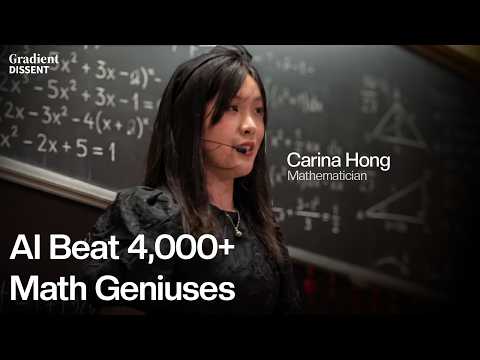
Demand for provably correct systems in hardware, software, and critical infrastructure creates a massive market for formal verification. AI scales these human-bottlenecked processes.
Investigate formal verification tools for high-stakes codebases or chip designs. Prioritize solutions combining probabilistic generation with deterministic proof for speed and reliability.
"Good enough" code is ending for critical applications. AI-driven formal verification is a commercial imperative, redefining development cycles and trust.
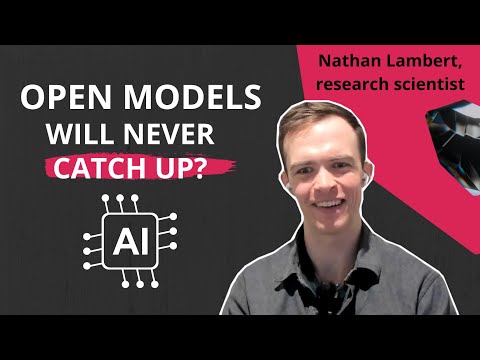
The macro shift: Geopolitical competition in AI is not just about raw model power; it is about who controls the foundational research and development platforms. Open models are the battleground for long-term national AI sovereignty.
The tactical edge: Invest in open model research and infrastructure, particularly in post-training environments and high-quality data generation. This builds a resilient, transparent AI ecosystem that can adapt and innovate independently.
The bottom line: The US must prioritize open model development now to secure its position as a global AI leader, foster domestic innovation, and provide accessible AI options for a diverse global user base over the next 6-12 months.
The convergence of AI and immersive computing is pushing towards a "HoloDeck" future. Roblox's vector-based data storage of 13 billion monthly hours provides unprecedented training data for agentic NPCs and real-time world generation, fundamentally changing how virtual worlds are built and experienced.
Invest in platforms that offer cloud-native, AI-accelerated creation tools and robust multiplayer synchronization. Prioritize those building on rich, proprietary 3D interaction data for superior AI agent training.
The future of digital interaction is 4D, photorealistic, and AI-driven. Companies with a clear, long-term vision paired with rapid, cloud-connected iteration will capture the next wave of virtual co-experience, making them prime targets for investment and partnership over the next 6-12 months.
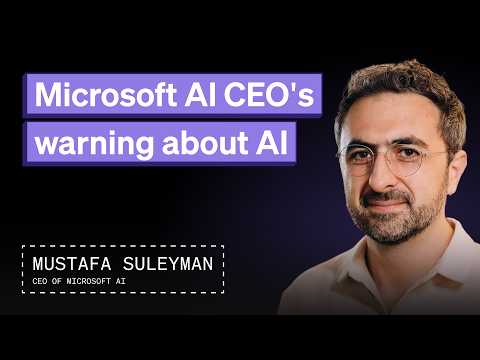
The exponential reduction in the cost of intelligence is transforming AI from a mere tool into a "hyperobject" with quasi-human capabilities, forcing society to adapt from a scarcity-based operating system to one of intelligence abundance.
Cultivate "AI muscle" by actively experimenting with AI tools, understanding their capabilities and limitations, and pushing their boundaries. This hands-on engagement is the best inoculation against "AI psychosis" and prepares you for a world where AI is ubiquitous.
AI's rapid proliferation and increasing autonomy demand immediate, collective action from governments, companies, and individuals to establish clear boundaries and ensure human control. Ignoring this "fourth class" of being risks societal instability and the erosion of human agency over the next 6-12 months.
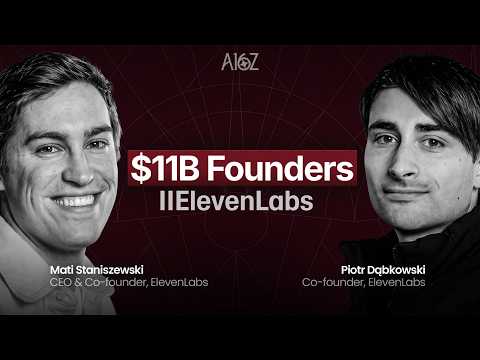
The computing paradigm is shifting from visual-centric to auditory-first, driven by AI's ability to process raw audio data for emotional depth and contextual understanding. This opens new frontiers for immersive experiences and global communication.
Invest in or build solutions that prioritize raw audio data processing and multimodal AI integration. Focus on applications where emotional nuance and natural interaction create a distinct user experience.
Voice AI, particularly with ElevenLabs' approach to emotional intelligence, is not just an incremental improvement; it is a foundational shift that will redefine human-computer interaction and unlock massive markets in education, entertainment, and global connectivity over the next 6-12 months.
AI's memory demands invert data center design, moving from storage-first to memory-first. High-speed networks and NVMe flash are now core memory tiers.
Fund software-defined memory solutions like WEKA's Axon and Augmented Memory Grid. These convert existing NVMe drives into high-performance context memory.
Persistent, rapid KV cache access through "Token Warehouses" will determine AI application and agent deployment profitability over the next 6-12 months.
AI is moving from opaque, data-driven systems to transparent, intentionally designed agents. This shift is driven by the need for reliability, safety, and the ability to extract novel insights from increasingly powerful models.
Invest in tools and research that provide granular control over AI internals, like Goodfire's platform. This enables precise customization, reduces unintended behaviors, and accelerates scientific discovery in critical domains.
The future of AI isn't just about bigger models; it's about smarter, more controllable ones. Understanding and directly influencing AI's "mind" will be a competitive differentiator and a prerequisite for deploying AI in high-stakes, real-world applications over the next 6-12 months.
The era of "good enough" probabilistic AI for critical systems is ending; the market demands provable correctness. Axiom Math's approach signals a return to formal methods, supercharged by AI, addressing the verification bottleneck in software and hardware.
Investigate formal verification tools for safety-critical code generation, hardware design, and legacy code migration. Prioritize solutions combining AI generation with deterministic proof for speed and certainty.
Formally verifying complex systems with AI will redefine trust in software and hardware. Companies integrating these capabilities gain a competitive advantage, reducing bugs, accelerating development, and meeting regulatory demands over the next 6-12 months.
The scaling laws seen in large language and video models are now extending to physical robotics. Internet-scale human video data, combined with humanoid morphology, is creating a new paradigm for robot generalization.
Invest in or build systems that prioritize multi-stage data pipelines, especially those incorporating diverse egocentric data. This approach is proving key to unlocking zero-shot capabilities in physical AI.
World models are not just a research curiosity; they are a practical tool for accelerating robot deployment. Their ability to generalize and act as learned simulators will redefine how robots are trained, tested, and ultimately integrated into our daily lives over the next 6-12 months.
Escape Velocity Reached: Like the early internet and Bitcoin, BitTensor has survived its infancy. Its ecosystem of 128+ subnets has created a network-effect moat that makes it incredibly difficult to disrupt.
The "Front Door" Is the Next Billion-Dollar Opportunity: The most significant hurdle for BitTensor is its developer-focused user experience. The companies that successfully build simple, consumer-friendly interfaces on top of the subnets will unlock immense value.
Powerful Tokenomics Signal a Supply Shock: TAO's upcoming halving, combined with its built-in utility and high staking rate, is creating a classic supply squeeze. With demand structurally increasing as the network grows, the economics point toward a significant price appreciation for the root token.
The Game Is Rigged, Play Accordingly. Traditional analysis is failing. The winning strategy is "grift arbitrage"—investing in assets that benefit from government spending and political connections.
Bonds are Dead, Long Live Yield. With governments committed to fiscal dominance, bonds offer negative real returns. The hunt for yield is driving capital from fiat junk bonds into Bitcoin and Ethereum.
Hedge for the Inevitable Shakeup. The system is fragile. Key risks like aggressive tariffs or a hawkish Bank of Japan could trigger a sharp sell-off. With volatility low, now is the time to buy cheap protection.
Treasury Vehicles are a Trap. They're the new high-risk, high-reward play, but the danger isn't debt—it's massive shareholder dilution and a rapid, reflexive unwind that will be far quicker and more brutal than Grayscale's.
The Cycle Isn't Dead, It's Rhyming. The market is replaying the classic playbook: BTC runs, ETH surges, and capital spills into retail-favorite alts. Calling a top is a fool's errand, but the exuberance is palpable.
Regulation is a Double-Edged Sword. New laws provide a path for tokens to become commodities but may incentivize projects to launch chains purely for regulatory arbitrage, adding another layer of complexity to the market.
**Ethereum's revival is structural, not speculative.** Unprecedented ETF and corporate treasury inflows are creating sustained buying pressure that could push ETH to $10K and beyond, rendering past cynicism obsolete.
**Regulation is the unlock for institutional crypto.** The Clarity and Genius Acts are not just rules; they are the green light for institutional capital that has been waiting on the sidelines for legal certainty.
**The future of consumer crypto is weird and profitable.** Platforms like Pump.fun prove that the most powerful business models may not fit traditional molds but will win by tapping into raw, unfiltered user demand.
The ETH Treasury Is The New Institutional Bid. The narrative that powered Bitcoin's run is now being replicated for ETH, but with a twist: former Bitcoin miners are leading the charge, creating a powerful, reflexive buy-cycle.
ETH's Supply Squeeze Is Real. The combination of record ETF demand, minimal proof-of-stake issuance, and a re-staking culture means the buy pressure is overwhelming the available sell-side liquidity.
Regulation Is Becoming A Tailwind. The expected passage of the stablecoin bill provides a legitimate foundation for institutional adoption, turning a long-time headwind into a powerful catalyst for growth.
Solana’s Watershed Moment: The smooth on-chain execution for a high-demand event proved that decentralized infrastructure is not just viable but, in this case, superior to its centralized counterparts.
Value Accrual is Non-Negotiable: The era of valueless governance tokens is over. Protocols must now provide clear, tangible mechanisms like revenue sharing or buybacks to build trust and justify their valuation.
The Real Game is the Front-End: While back-end infrastructure plays are viable, the ultimate prize is owning the user relationship. PUMP’s battle with Axiom for the title of the premier consumer-facing crypto app is the key narrative to watch.