The decoupling of parameter count from active compute via sparsity means intelligence is becoming a software optimization problem as much as a hardware one.
Audit your agentic workflows for turn efficiency rather than just cost per token.
In a world of infinite tokens, the winner is the one who can verify the truth the fastest.
The Macro Pivot: The transition from LLMs as chat interfaces to LLMs as logic engines. As models move from text prediction to logic execution, the value moves from the model itself to the verification systems surrounding it.
The Tactical Edge: Audit the stack. Prioritize the integration of agentic coding tools like Jules to shorten the feedback loop between ideation and deployment.
The Bottom Line: Code is the only medium where AI can self-correct and scale without human intervention. The next 12 months will be defined by who can turn raw model power into reliable, self-healing code.
The Macro Transition: We are moving from "fire-and-forget" prompts to durable execution environments where state is as important as the model itself.
The Tactical Edge: Wrap your existing tool calls in the `useStep` function to gain instant retry logic and execution history.
The Bottom Line: Reliability is the primary moat in the agent market. Builders who adopt durable workflows will move to production while others are still debugging local scripts.
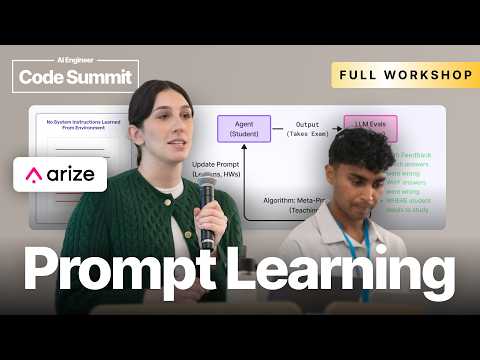
The move from manual prompt engineering to automated prompt learning. As models become commodities, the proprietary loop that refines them becomes the moat.
Implement a Train-Test Split for your prompts. Use a subset of failure data to generate new rules and validate them against a separate holdout set to ensure the logic holds.
Reliability is the only metric that matters for agent adoption. If you are not using a feedback loop to update your system instructions, you are building on sand.
The move from industrial management to creative inspiration. As AI automates routine tasks, the only remaining value is high-variance human creativity.
Apply the Keeper Test today. Ask your leads which team members they would fight for and provide generous exits for the rest to reset your talent bar.
Scaling doesn't require more rules. It requires better people. If you can maintain talent density, you can run fast while your competitors choke on their own handbooks.
It’s an Operating Company, Not Just a Vault: xTAO’s strategy is to actively build validators and infrastructure, using its public listing as a flywheel for accretive TAO acquisition, rather than passively holding the asset.
Structure is Strategy: The combination of a low-cost TSXV listing and a tax-free Cayman Islands headquarters gives xTAO a significant operational and financial edge designed for long-term sustainability.
The Next Frontier is User Adoption: For Bittensor to reach its potential, it must break out of the crypto bubble. The ecosystem's ultimate success hinges on subnets creating useful products that attract mainstream users.
Own What Institutions Buy. This is not a crypto-native cycle. The winning strategy is to hold the assets institutions are buying: Bitcoin, Ethereum, and potentially Ripple as a speculative trade on its IPO.
Trade Crypto Stocks Like Memes. Public companies like Galaxy are being driven by retail hype, not fundamentals. This creates high-volatility trading opportunities for those who can ride the narrative waves.
Hold Your Conviction. The macro backdrop is incredibly bullish. Don't let healthy, short-term corrections driven by "amateur hour" traders shake you out of your positions before the real move happens.
The Narrative Gap: Solana is shipping game-changing tech like Jito’s BAM, but it’s losing market momentum to Ethereum’s simpler, more digestible "digital treasury" narrative. This highlights a critical disconnect between engineering reality and market perception.
BAM is an Ecosystem Reset: Jito’s BAM isn’t a simple patch; it's a foundational redesign of Solana's value pipeline. By internalizing MEV and enabling custom sequencing, it directly challenges the business model of SVM appchains and unlocks a new design space for DeFi on the L1.
Decentralization is a Means, Not an End: The push for higher block limits signals a pragmatic shift. The ecosystem is increasingly willing to trade some degree of validator decentralization for the massive performance gains needed to onboard real-world finance, prioritizing the network's ultimate utility over ideological purity.
A Sum-of-the-Parts Discount: The market is failing to properly value Galaxy’s three distinct segments. The existing data center deal with CoreWeave alone is arguably worth more than the current stock price, meaning investors get the robust crypto business and a multi-billion dollar balance sheet for free.
Unmatched Credibility in AI Pivot: Galaxy’s multi-billion dollar balance sheet is its trump card. It provides the financial muscle and credibility to secure financing and execute massive data center projects, a feat cash-burning Bitcoin miners can only talk about.
An Execution-Driven Rocket Ship: The current valuation offers a significant margin of safety. If management successfully executes the full buildout of Helios and secures new tenants for its massive power pipeline, the upside is astronomical.
The US is Back in the Game: The regulatory climate has shifted from a headwind to a tailwind. The new clarity allows builders to focus on product, not legal acrobatics, and gives institutions the green light to engage.
Leverage is Transparent, Not Gone: The system is deleveraged, but more importantly, its risk profile has improved dramatically. Leverage now lives in safer, productized, and on-chain formats built on verifiable custody rather than handshake deals.
Bitcoin is Becoming Core Collateral: Look beyond Bitcoin as just "digital gold." Its true institutional power is emerging as a pristine collateral asset, set to anchor a multi-hundred-billion-dollar lending market packaged for TradFi consumption.
The On-Chain Mandate is Here. The SEC is no longer an obstacle but a proponent of moving U.S. capital markets onto blockchains. This signals a green light for builders and investors focused on tokenization and on-chain financial infrastructure.
The "Pretend" Game is Over. With the SEC lead declaring "most tokens are not securities," the industry can move past the convoluted narratives used to avoid regulatory scrutiny. Projects can now be more direct about value accrual and business models.
The Roman Storm Verdict is Crypto's Next Big Catalyst. The outcome of this trial will have profound implications. An acquittal would be a massive win for open-source developers and privacy, while a conviction could set a chilling precedent for years to come.