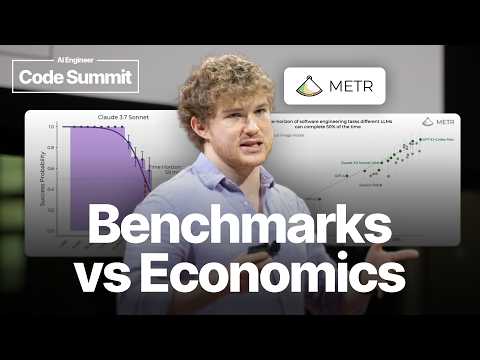
The Macro Shift: Agentic Abstraction. We are moving from Model-as-a-Service to Agent-as-a-Service where the harness is as important as the weights.
The Tactical Edge: Standardize your CLI. Use tools like ripgrep (RG) that models already have "habits" for to see immediate performance gains.
The Bottom Line: The next 12 months will see the end of manual integration engineering as agents become capable of navigating UIs and legacy terminals autonomously.
The commoditization of syntax means architectural judgment is the only remaining moat. As the cost of code hits zero the value of intent skyrockets.
Replace your manual refactoring workflows with a burn and rebuild strategy. Use agents to generate entirely new modules instead of patching old ones.
Seniority is no longer a shield against obsolescence. You must spend the next six months building your agentic intuition or risk being replaced by a PhD student with a prompt.
The Macro Evolution: Standardized communication layers are replacing custom API integrations. This commoditizes the connector market and moves value to the models that best utilize these tools.
The Tactical Edge: Standardize your internal data tools using MCP servers today. This ensures your company is ready for autonomous agents that can discover and use your resources without manual API integration.
The Bottom Line: The agentic stack is consolidating around MCP. Interoperability is no longer a feature; it is the foundation for the next decade of AI utility.
The Macro Shift: From Model-Centric to Eval-Centric. The value is moving from the LLM itself to the proprietary evaluation loops that keep the LLM on the rails.
The Tactical Edge: Export production traces and build a "Golden Set" of 50 hard examples. Use these to run A/B tests on every prompt change before hitting production.
The Bottom Line: Reliability is the product. If you cannot measure how your agent fails, you haven't built a product; you've built a demo.
The transition from chatbots with tools to agents that build tools marks the end of the manual integration era.
Stop building custom model scaffolding and start building on top of opinionated agent layers like the Codex SDK.
In 12 months, the distinction between a coding agent and a general computer user will vanish as the terminal becomes the primary interface for all digital labor.
The Capability-Utility Gap is widening. We see a divergence where models get smarter but the friction of human-AI collaboration keeps productivity flat.
Deploy AI for mid-level engineers or low-context tasks. Avoid forcing AI workflows on your top seniors working in complex legacy systems.
The next year will focus on reliability over raw intelligence. The winners will have models that require the least amount of human babysitting.
Follow the Flows. Ethereum's rally is a direct result of capital firehoses from new treasury companies. This isn't a narrative trade; it's a structural buying pressure that creates its own momentum.
Yield is Widening. As TradFi rates fall, on-chain credit yields are set to expand. The widening spread between traditional and decentralized finance will be a powerful magnet for capital.
The Treasury Gold Rush Has Begun. The explosion of new treasury companies is a land grab for asset accumulation. The real game will be fought on operational efficiency, yield generation, and brand dominance, leading to inevitable consolidation.
ETH is the bellwether for risk. Its current rally is the starting gun for an "ETH alt season." Use ETH's strength as a barometer for when to be aggressive with altcoin allocations.
Buy breakouts, not bottoms. The most profitable strategy is to wait for assets to break their downtrend, then ride the reflexive narrative loop. Aave (AAVE) and Aerodrome (AERO) are prime examples of this setup.
Aerodrome is a conviction play. With superior tokenomics, a dominant position on Base, and a direct pipeline to Coinbase's retail army, Aerodrome has a clear path to becoming a breakout star of this cycle.
Privacy as a Feature, Not a Product. The next major user-facing push will be to embed privacy tools directly into mainstream wallets, shifting privacy from a niche cypherpunk concern to a default user experience.
Scale L1, Anchor L2s. The roadmap focuses on a strong L1 as the ultimate settlement and asset-issuance layer. This keeps the sprawling L2 ecosystem economically aligned and prevents fragmentation by making the L1 indispensable.
ETH is the Economic Glue. A strong ETH is essential for coordinating incentives across the ecosystem. It is the core economic asset that aligns the Foundation, L2s, DeFi apps, and users, preventing the community from fracturing.
**Platform, Not Phones.** Success for Solana Mobile isn't another phone sale; it's getting another manufacturer to adopt its platform. The end goal is to be the crypto equivalent of Android—a foundational layer for a world of hardware.
**Go Global or Go Home.** The US is a sideshow. The real action is in the wildly diverse international market, where hundreds of device makers are looking for a competitive edge. This is where Solana Mobile plans to win.
**Ecosystem as the Engine.** The strategy hinges on empowering the ecosystem to "go nuts." If the core team has to scale massively, it’s a sign of failure. True success is when hardware builders and dApp developers drive the platform’s growth organically.
Specialization Over Generalization. For demanding use cases like exchanges, purpose-built rollups have a massive edge over L1s. They can be hyper-optimized for a single function without being constrained by the needs of a diverse ecosystem.
Performance Is the Product. Sub-10-millisecond finality isn't a vanity metric; it's the fundamental requirement to bring serious financial markets and liquidity on-chain. Sovereign is making on-chain performance competitive with centralized finance.
Revenue Before Token. In a direct rejection of the "launch-and-pray" model, Sovereign is building a sustainable business via a revenue-share on its core technology. The team has no plans for a token until a clear, long-term value accrual mechanism exists.
The Scale is Real: At $28 trillion in annual volume, stablecoins have already surpassed Visa and Mastercard combined, proving the infrastructure is ready for primetime.
B2B is the Killer App: The most powerful immediate use case isn't speculation, but something far more practical: B2B payments. The efficiency gains are too large for corporate treasurers to ignore.
TradFi is Scrambling: Wall Street has moved from dismissal to active investigation. Sell-side analysts are now quantifying the threat stablecoins pose to legacy payment networks, signaling a major paradigm shift.