The Macro Shift: Context management is the new compute. As models get smarter, the winning architecture will be the one that most efficiently partitions and feeds relevant data to sub-agents.
The Tactical Edge: Prioritize reviewability. When building or using agents, focus on tools that provide clear diffs and tours of changes rather than just raw code generation.
The Bottom Line: The developer's role is evolving from a writer to an orchestrator. Success in the next 12 months depends on mastering the skill of agentic review rather than manual syntax.
The Macro Shift: Engineering is moving from a headcount-driven Opex model to an infrastructure-driven autonomy model where validation is the primary capital asset.
The Tactical Edge: Audit your codebase against the eight pillars of automated validation. Start by asking agents to generate tests for existing logic to close the coverage gap.
The Bottom Line: Massive velocity gains are not found in the next model update. They are found in the rigorous internal standards that allow agents to operate without human hand-holding.
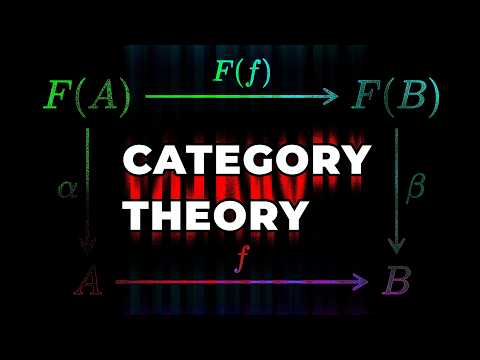
[Algorithmic Convergence]. The gap between symbolic logic and neural networks is closing through category theory. Expect architectures that are "correct by construction" rather than just "likely correct."
[Audit Architecture]. Evaluate new models based on their "algorithmic alignment" rather than just parameter count. Prioritize implementations that bake in non-invertible logic.
The next year will see a shift from scaling data to scaling structural priors. If you aren't thinking about how your model's architecture mirrors the problem's topology, you are just an alchemist in a world about to discover chemistry.
Strategic Implication: The future of software development isn't about *if* we use AI, but *how* we integrate human understanding and architectural discipline to prevent an "infinite software crisis.
Builder/Investor Note: Builders must prioritize deep system understanding and explicit planning over raw generation speed. Investors should favor companies that implement robust human-in-the-loop processes for AI-assisted development.
The "So What?": Over the next 6-12 months, the ability to "see the seams" and manage complexity will differentiate thriving engineering teams from those drowning in unmaintainable, AI-generated code.
Strategic Implication: The market for AI transformation services is expanding rapidly, driven by enterprises seeking to integrate AI for tangible business outcomes.
Builder/Investor Note: Focus on AI solutions with clear, practical applications for mid-market and enterprise clients. Technical talent capable of bridging research with deployment holds significant value.
The "So What?": The next 6-12 months will see increased demand for AI engineers who can implement and scale AI solutions, moving beyond proof-of-concept to widespread adoption.
Compensation Innovation: The traditional compensation playbook for engineers is outdated. New models that directly reward AI-augmented output will attract top talent and drive efficiency.
Builder/Investor Note: Founders should re-evaluate their incentive structures. Investors should seek companies experimenting with these models, as they may achieve outsized productivity.
The "So What?": The productivity gap between AI-augmented and non-AI-augmented engineers will widen. Companies that adapt their incentives will capture disproportionate value in the next 6-12 months.
Strategic Shift: Successful AI integration means identifying and solving *your* organization's specific SDLC bottlenecks, not just boosting code completion.
Builder/Investor Note: Prioritize psychological safety and invest in AI skill development. For builders, this means dedicated learning time; for investors, look for companies that do this well.
The "So What?": The next 6-12 months will separate organizations that merely *adopt* AI from those that *master* its strategic application and measurement, driving real competitive advantage.
Strategic Implication: AI integration is a company-wide transformation, not a feature. Organizations must re-architect processes, tools, and culture to compete.
Builder/Investor Note: Prioritize internal tooling that democratizes AI experimentation. Look for companies establishing "model behavior" as a distinct, cross-functional discipline.
The "So What?": The next 6-12 months will reward builders who bake AI security and user control into product design from day one, recognizing that technical mitigations alone are insufficient.
Structure Over Speed: In the DAT gold rush, avoid the shells. Reverse takeovers are fraught with hidden liabilities; cleaner de-novo SPACs are built for long-term institutional trust and better financing.
Stick to the Winners: The DAT market will consolidate. Bet on pure-play vehicles for top-tier, liquid assets like ETH, as "Frankenstein" and illiquid-token DATs are destined for M&A or failure.
Distribution is Destiny: In the payments war, Stripe’s direct ownership of millions of merchants gives it a crushing advantage over Circle’s middleware approach. Owning the customer is the only moat that matters.
Incoming Institutional Tsunami: An estimated $1.5 billion in institutional capital is poised to enter the ecosystem in the next six months, which could single-handedly 5x the price due to limited exchange liquidity.
The Subnet Demand Spiral: The core mechanics of registering and participating in subnets create a flywheel effect where ecosystem growth directly translates into increased demand and reduced circulating supply for $TAO.
The Halving Supply Shock: A December halving will slash new $TAO emissions by 50%, tightening supply just as multiple demand vectors are peaking, creating a potentially explosive supply-demand imbalance.
**Right vs. Rich:** Stop trying to be right; focus on being profitable. Buy things you think are stupid if you believe the market will value them. The best trades often feel viscerally wrong.
**Master the Modes:** The market operates in two modes. In "Easy Mode," go hard on early trends with concentrated size. In "Hard Mode," your only job is capital preservation. Hit the sell button and wait.
**De-Risk Like a Pro:** When you feel like a genius and start looking at houses, it's time to cash out. Aggressively take 80%+ off the table to lock in your life-changing gains and protect your mental health. Opportunity is constant; your capital is not.
Mission Over Markets: Phantom will only consider an IPO if it directly serves its primary mission of bringing crypto mainstream. The decision is strategic, not reactive to market trends or a desire for validation.
Discipline by Default: The company operates with the financial and operational rigor of a public entity, modeling itself after Coinbase, without taking on the regulatory burdens of an actual IPO.
Complexity is a Cost: Avoiding the operational complexity of a public listing is a competitive advantage, enabling the team to allocate 100% of its resources toward building the business.
Bet on the ETH Ecosystem. The bounce off cycle lows signals the start of an ETH-centric alt season. Look for opportunities within its ecosystem, as rising ETH prices create positive feedback loops for its native DeFi protocols.
Aerodrome is a Top Pick on Base. AERO presents a compelling investment case due to its superior tokenomics, strong product-market fit on Base, lack of VC overhang, and recent technical breakout. It is positioned to capture massive value as Base grows.
On-Chain Adoption Will Come Through CEXs. The most significant long-term catalyst is the seamless integration of on-chain ecosystems into centralized exchanges. This makes Base-native projects the primary beneficiaries of the next wave of retail adoption, driven by Coinbase.
The conversation has shifted from "Can we build this?" to "How do we grow this?" Founders are now focused on shipping products, forging partnerships, and hiring talent, signaling a decisive move from infrastructure to business execution.
Regulation is focusing on code, not conduct. The move to a "control-based" decentralization framework means what matters is how technically neutral your system is, not who is in your Slack channel.
With scaling solved, UX is the new bottleneck. The industry has moved past the gas wars; the next great challenge is creating intuitive user experiences through better wallet design and key management.