The Macro Shift: Scaling laws are hitting a diminishing return on raw data but a massive acceleration in reasoning. The shift from statistical matching to reasoning agents happens when models can recursively check their own logic.
The Tactical Edge: Build for the agentic future by prioritizing high-context data pipelines. Models perform better when you provide massive context rather than relying on zero-shot inference.
The Bottom Line: We are 24 months away from AI that makes unassisted human thought look like navigating London without a map. Prepare for a world where the most valuable skill is directing machine agency rather than performing manual logic.
The transition from model-centric to loop-centric development. Performance is now a function of the feedback cycle rather than just the weights of the frontier model.
Implement an LLM-as-a-judge step that outputs a "Reason for Failure" field. Feed this string directly into a meta-prompt to update your agent's system instructions automatically.
Static prompts are technical debt. Teams that build automated systems to iterate on their agent's instructions will outpace those waiting for the next model training run.
The Macro Shift: The transition from writing to reviewing as the primary engineering activity. As agents generate more code, the human role moves from creator to editor.
The Tactical Edge: Build CLIs for every internal tool to give agents a native text interface. This increases accuracy and speed compared to visual automation.
The Bottom Line: Developer experience is the infrastructure for AI. Investing in clean code and fast feedback loops is the only way to ensure AI productivity gains do not decay over the next 12 months.
The Capability-Productivity Gap. We are entering a period where model intelligence outpaces our ability to integrate it into high stakes production.
Audit your stack. Identify tasks where "good enough" generation is a win versus high context tasks where AI is currently a net negative.
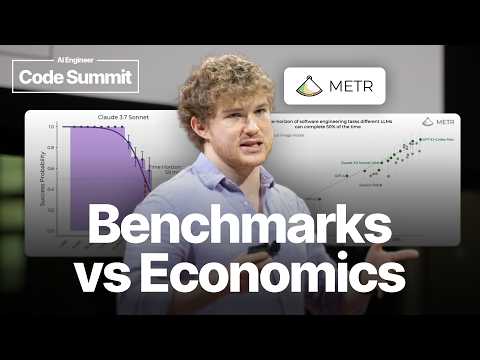
Do not mistake a climbing benchmark for a finished product. For the next year, the biggest wins are not in smarter models but in better verification loops.
The transition from simple Large Language Models to Reasoning Models marks the end of the stochastic parrot era.
Build agentic workflows that utilize high-context windows for recursive problem solving.
We are moving toward a world where intelligence is a commodity. Your value will shift from knowing things to directing outcomes over the next 12 months.
The Macro Pivot: Agentic Abstraction. As the cost of logic hits zero, the value of a developer moves from how to build to what to build.
The Tactical Edge: Adopt Orchestrators. Replace your standard editor with agent-first platforms today to learn the art of directing sub-agents before the 2026 deadline.
The Bottom Line: The next 12 months will reward those who stop writing code and start building the systems that write it for them.
The Macro Movement: The Token Deflation. As compute becomes a commodity, the value of the "Human-in-the-Loop" moves from production to architectural oversight.
The Tactical Edge: Implement Code Maps. Use AI to index and understand your entire repository to ensure every generated line aligns with existing logic.
The Bottom Line: The next year belongs to the "Taste-Driven Developer." If you optimize for volume, you produce slop; if you optimize for accountability, you build a moat.
The Macro Shift: Software development is moving from human-led logic to agent-led verification.
The Tactical Edge: Use sub-agents to isolate testing from creation to prevent context pollution.
The Bottom Line: The technical barrier is evaporating. In the next 12 months, the winning platforms will be those that require the fewest technical decisions from the user.
**Value is a Function of Time:** Bitcoin's greatest asset is its 15-year track record. Lasting value isn't about technology alone; it's about a powerful story that withstands the test of time, creating an insulated brand.
**Self-Custody is the Premise:** The entire value proposition of crypto hinges on eliminating counterparty risk. Compromising on self-custody and security for the sake of convenience is a recurring mistake that "always blows up."
**Adoption Will Be Abstracted:** The future of crypto for the masses is one where the complexity is hidden. Centralized user experiences will run on decentralized rails, delivering the benefits of crypto (lower fees, faster settlement) without the unforgiving user experience.
**Stop Gambling, Start Engineering.** The biggest edge isn’t in predicting price but in finding and exploiting structural market inefficiencies. Focus on trades where you can control or heavily influence the outcome, like RFV plays or creating self-fulfilling prophecies in prediction markets.
**Become the Casino.** The crypto market is filled with speculation. By providing liquidity, farming yields, and taking the other side of gamblers (e.g., selling Pendle PTs), you can generate consistent, lower-risk returns. Farmers, on average, outperform directional traders over the long term.
**Alpha Lives in the Weeds.** The most significant opportunities aren’t on the front page of Twitter. They’re buried in obscure Discord servers, complex protocol mechanics (like Aerodrome’s bribes), and emerging platforms with low capital efficiency like Polymarket.
Private Markets Are the New Public: The real unlock for tokenization isn't just 24/7 stock trading—it's bringing high-growth private companies to retail investors, with or without the company's blessing.
The Great Convergence Is Here: The line between a crypto exchange and a stock brokerage is disappearing. Robinhood and its competitors are converging on a single "financial super app" model where all assets live in one place.
Regulation Has Created a Paradox: The current system allows unlimited speculation on assets with zero fundamental value (memecoins) but blocks access to premier private equity. Robinhood is betting this logic won't hold.
Embrace the Friction: The current difficulty of investing in Bittensor subnets is a feature, not a bug. It’s the moat that has suppressed valuations, creating an opportunity akin to buying Bitcoin on Mt. Gox before Coinbase existed.
A 3-6 Month Catalyst Window: The development of bridges and institutional infrastructure is the primary catalyst. This window represents the final moments to gain exposure before capital can flow in easily, likely re-rating the entire ecosystem.
Think Startups, Not Just Tokens: Evaluate subnets like early-stage companies. Use resources like the *Revenue Search* podcast to analyze financials and projects like Shush (AI inference), Score (AI vision), and Quantum (public quantum computing) as real, venture-style bets.
**Don't Panic Sell.** The current market dip is a sign of a healthy "wall of worry," not a cycle top. Historical on-chain indicators show there is significant room to run.
**Follow the Smart Money.** Institutions are aggressively buying this dip. The real capital from pensions and sovereign wealth funds is still on the sidelines, waiting to enter.
**The Fed is Turning Bullish.** A key Federal Reserve official is now openly advocating for crypto adoption within the regulatory apparatus, signaling a major long-term shift in the US.
**The Dollar Isn't Being Debased; It's Deflationary.** The market is not pricing in inflation or debasement. Instead, key indicators like the interest rate swap market are emphatically signaling a future of much lower interest rates for much longer, which is characteristic of deflationary pressure and a strong dollar.
**Asset Booms Are a Symptom, Not a Solution.** Rising stock and crypto prices are not evidence of a healthy economy or money printing. They reflect a K-shaped recovery where capital flees into financial assets as a hedge against systemic fragility, while the real economy for labor remains stagnant.
**The Contrarian Play Is Long Bonds.** If the global system is starved for safe, liquid collateral and headed toward a deflationary recession, the best-performing assets will be long-duration U.S. Treasuries. Snyder’s advice is the polar opposite of the typical crypto portfolio: be long bonds.