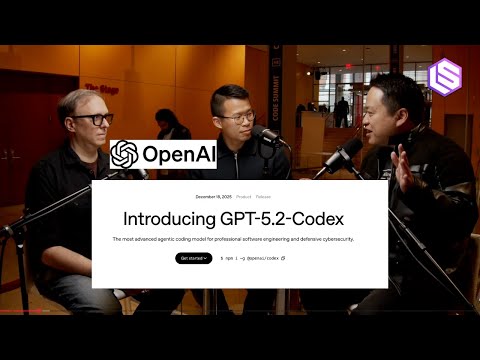
The Macro Shift: Agentic Abstraction. We are moving from Model-as-a-Service to Agent-as-a-Service where the harness is as important as the weights.
The Tactical Edge: Standardize your CLI. Use tools like ripgrep (RG) that models already have "habits" for to see immediate performance gains.
The Bottom Line: The next 12 months will see the end of manual integration engineering as agents become capable of navigating UIs and legacy terminals autonomously.
The commoditization of syntax means architectural judgment is the only remaining moat. As the cost of code hits zero the value of intent skyrockets.
Replace your manual refactoring workflows with a burn and rebuild strategy. Use agents to generate entirely new modules instead of patching old ones.
Seniority is no longer a shield against obsolescence. You must spend the next six months building your agentic intuition or risk being replaced by a PhD student with a prompt.
The Macro Evolution: Standardized communication layers are replacing custom API integrations. This commoditizes the connector market and moves value to the models that best utilize these tools.
The Tactical Edge: Standardize your internal data tools using MCP servers today. This ensures your company is ready for autonomous agents that can discover and use your resources without manual API integration.
The Bottom Line: The agentic stack is consolidating around MCP. Interoperability is no longer a feature; it is the foundation for the next decade of AI utility.
The Macro Shift: From Model-Centric to Eval-Centric. The value is moving from the LLM itself to the proprietary evaluation loops that keep the LLM on the rails.
The Tactical Edge: Export production traces and build a "Golden Set" of 50 hard examples. Use these to run A/B tests on every prompt change before hitting production.
The Bottom Line: Reliability is the product. If you cannot measure how your agent fails, you haven't built a product; you've built a demo.
The transition from chatbots with tools to agents that build tools marks the end of the manual integration era.
Stop building custom model scaffolding and start building on top of opinionated agent layers like the Codex SDK.
In 12 months, the distinction between a coding agent and a general computer user will vanish as the terminal becomes the primary interface for all digital labor.
The Capability-Utility Gap is widening. We see a divergence where models get smarter but the friction of human-AI collaboration keeps productivity flat.
Deploy AI for mid-level engineers or low-context tasks. Avoid forcing AI workflows on your top seniors working in complex legacy systems.
The next year will focus on reliability over raw intelligence. The winners will have models that require the least amount of human babysitting.
**Valuation is Evolving.** The most durable crypto projects will be judged not on tokenomics alone, but on a triad of community strength (Ecosystem), marketing reach (Attention), and real-world cash flow (Revenue).
**Centralization Wins the Consumer.** The next billion users will not navigate a dozen dApps. They will be onboarded through simplified, centralized super-apps that provide a seamless and curated on-chain experience.
**Reward Loyalty, Not Speculation.** Sustainable value is built by aligning with true believers. Founders should design mechanisms that reward long-term holders and actively discourage "farm-and-dump" behavior.
Re-evaluate Risk/Reward. With majors like Ethereum potentially offering symmetrical 50% upside vs. 50% downside, the rationale for holding heavy, levered positions weakens. It's time to take some chips off the table.
Explore Prediction Markets. This sector offers a fresh frontier for alpha. Get active on Polymarket, farm the Limitless airdrop on Base (min. $200 bet), and join Outcome’s risk-free testnet competition to get exposure.
Build a Defensive Core. Adopt assets like JLP on Solana as a portfolio cornerstone. It provides market exposure while protecting capital through its diversified pool and fees generated from retail traders, outperforming most crypto assets in a downturn.
**This Time Might Be Different.** Macro indicators like loosening bank lending standards, mid-range equity valuations, and a dovish Fed signal the business cycle is earlier than many believe, favoring a cycle extension into 2026 over a 2025 peak.
**On-Chain Metrics Show No Signs of a Top.** Key on-chain data is far from euphoric. The Bitcoin Fear & Greed index is neutral, and while long-term holders are selling, it’s being absorbed without triggering the "extreme greed" that defines market tops.
**Build a Concentrated, High-Conviction Portfolio.** Don't "diworsify." Anchor 70%+ of your portfolio in core assets (BTC, ETH), benchmark all other bets against them, and use small "hot sauce" allocations (5-10%) for high-risk plays while always maintaining cash to buy the dips.
**Macro is your north star.** The crypto market's direction is dictated by Fed policy. Rate cuts are the narrative, and trillions are waiting on the sidelines to flood into risk assets.
**Take profits aggressively.** We are in the "stupid" phase of the cycle. Systematically sell portions of your holdings at 20%, 50%, and 100% gains to de-risk before the music stops.
**Scrutinize DAOs.** Many are exit liquidity schemes. Only consider those with strong guardrails, like mandatory fresh capital matching, that bring new money into the ecosystem.
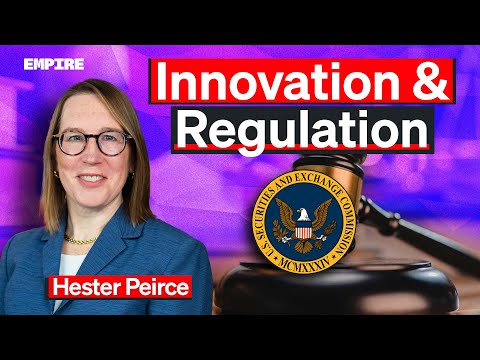
Frameworks, Not Fights: The SEC is shifting from broad prohibitions to creating specific, workable rules for token launches. The goal is to bring this crucial capital formation activity back to the U.S. under a clear and compliant regime.
Decentralization Changes the Game: True decentralization isn't just a buzzword; it fundamentally challenges the existing regulatory model. For truly peer-to-peer protocols, the old playbook of licensing intermediaries may no longer apply.
The Best Defense is Utility: The crypto industry's greatest protection against future regulatory hostility is to build things with real, lasting value. Use this period of clearer skies to create products and services that prove the technology's worth beyond speculation.
Bet on the Ecosystem, Not the Silo: Chainlink’s value is tied to the growth of the entire blockchain space, making it a diversified bet on institutional adoption. XRP’s success is a narrow wager on its own ledger and asset gaining dominance.
Follow the Proof, Not the Promises: Chainlink’s public partnerships with firms like Swift and JP Morgan provide concrete evidence of traction. This stands in sharp contrast to XRP's long-unfulfilled, NDA-shrouded narrative.
Infrastructure is the Ultimate Power Play: By providing a comprehensive suite of essential services (data, cross-chain, compliance), Chainlink is building a defensible moat as the go-to infrastructure platform for Web3, with no direct all-in-one competitor in sight.