Explore compute and memory futures to hedge your operational costs or future revenue streams. For data center operators, leverage residual value products to secure financing and plan hardware refreshes with greater certainty.
The era of speculative AI infrastructure buildout, driven by intuition, is giving way to a financially engineered market. Sophisticated instruments are essential for managing the immense capital and hardware volatility inherent in scaling AI.
Financial tools are no longer a nice-to-have but a must-have for navigating the AI compute market. Understanding and utilizing these instruments will be critical for investors and builders to gain a competitive edge and ensure long-term viability in the next 6-12 months.
The AI compute market is moving from speculative buildouts to financially engineered infrastructure. Capital will flow more efficiently to projects with transparent, hedged risk profiles.
Data center operators and large compute buyers should explore futures and residual value products to de-risk balance sheets and secure better financing terms.
Quantifying future compute demand and hardware value is no longer optional. It's the bedrock for sustainable growth and competitive advantage in the AI infrastructure race.
Explore Ornn's futures and residual value products to lock in compute costs or guarantee hardware resale prices. This can significantly de-risk your AI infrastructure investments and operational budgets.
Financial instruments for compute and memory are not just theoretical; they are becoming essential tools for managing risk and securing capital in the rapidly expanding AI economy.
This shift will bring transparency and predictability to an industry currently defined by supply constraints and demand spikes.
Data center operators and large compute buyers should explore futures contracts for GPUs and memory to lock in costs or revenues, reducing exposure to spot market volatility and securing cheaper financing for infrastructure projects.
The AI compute market is transitioning from opaque, ad-hoc procurement to a commoditized, financially engineered ecosystem. This shift is driven by the need to de-risk massive capital investments in GPUs and data centers, moving from speculative hope to quantifiable, hedged profitability.
The financialization of AI compute is not just about trading; it's about enabling the next wave of AI infrastructure development by providing the certainty needed for long-term investment and efficient resource allocation.
The AI infrastructure buildout is moving from speculative intuition to financially engineered certainty. The commodification of compute and memory is not just about trading; it's about de-risking capital deployment and enabling more efficient, data-driven investment in the foundational layers of AI.
Evaluate your compute procurement and data center investment strategies through a financial hedging lens. Explore Ornn's futures and residual value products to cap costs, secure revenue, and optimize hardware lifecycle management.
The ability to quantify and hedge future compute costs will separate the winners from the hopefuls in the AI race. Integrating financial instruments into your strategic planning over the next 6-12 months is no longer optional; it's a competitive imperative for managing risk and unlocking capital.
The AI compute market is moving from speculative buildouts to financially engineered infrastructure. Transparent pricing and hedging instruments are becoming essential for capital allocation.
Explore Ornn's compute futures and residual value products to de-risk your AI infrastructure investments or operational costs.
Quantifying future compute demand and hardware value unlocks cheaper financing and more strategic data center development, accelerating the entire AI industry.
Financial engineering, specifically futures and residual value products for GPUs and memory, is shifting data center development from speculative bets to data-driven, de-risked investments.
Investors and data center operators should explore Ornn's compute futures and residual value products to hedge against price volatility and hardware obsolescence.
Understanding these new instruments is essential for anyone building, investing in, or consuming AI compute, as they will dictate the pace and cost of AI's physical expansion over the next decade.
Quantify your compute costs: Use Ornn's index to benchmark your current GPU spend and explore futures contracts to cap future expenses or secure future revenue.
Market Infrastructure: Ornn builds a financial exchange for GPU compute and memory, much like a futures market for oil or electricity. This allows data centers and AI labs to hedge against price volatility, capping costs for buyers and setting price floors for sellers.
Non-Linear Value: GPUs lose most of their value in the first 2-3 years, then hold a more stable residual value for another 5-10 years of useful life. Traditional linear depreciation models are naive, misrepresenting asset value and profitability.
The era of speculative AI infrastructure buildout is ending, replaced by a data-driven, financially engineered approach.
Integrate compute futures and residual value insurance into your capital planning.
Quantifying future compute demand and hardware value is no longer optional; it is the bedrock for sustainable growth and competitive advantage in the AI infrastructure race.
**Valuation is Evolving.** The most durable crypto projects will be judged not on tokenomics alone, but on a triad of community strength (Ecosystem), marketing reach (Attention), and real-world cash flow (Revenue).
**Centralization Wins the Consumer.** The next billion users will not navigate a dozen dApps. They will be onboarded through simplified, centralized super-apps that provide a seamless and curated on-chain experience.
**Reward Loyalty, Not Speculation.** Sustainable value is built by aligning with true believers. Founders should design mechanisms that reward long-term holders and actively discourage "farm-and-dump" behavior.
Re-evaluate Risk/Reward. With majors like Ethereum potentially offering symmetrical 50% upside vs. 50% downside, the rationale for holding heavy, levered positions weakens. It's time to take some chips off the table.
Explore Prediction Markets. This sector offers a fresh frontier for alpha. Get active on Polymarket, farm the Limitless airdrop on Base (min. $200 bet), and join Outcome’s risk-free testnet competition to get exposure.
Build a Defensive Core. Adopt assets like JLP on Solana as a portfolio cornerstone. It provides market exposure while protecting capital through its diversified pool and fees generated from retail traders, outperforming most crypto assets in a downturn.
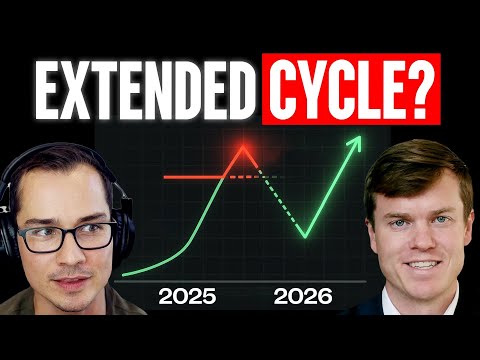
**This Time Might Be Different.** Macro indicators like loosening bank lending standards, mid-range equity valuations, and a dovish Fed signal the business cycle is earlier than many believe, favoring a cycle extension into 2026 over a 2025 peak.
**On-Chain Metrics Show No Signs of a Top.** Key on-chain data is far from euphoric. The Bitcoin Fear & Greed index is neutral, and while long-term holders are selling, it’s being absorbed without triggering the "extreme greed" that defines market tops.
**Build a Concentrated, High-Conviction Portfolio.** Don't "diworsify." Anchor 70%+ of your portfolio in core assets (BTC, ETH), benchmark all other bets against them, and use small "hot sauce" allocations (5-10%) for high-risk plays while always maintaining cash to buy the dips.
**Macro is your north star.** The crypto market's direction is dictated by Fed policy. Rate cuts are the narrative, and trillions are waiting on the sidelines to flood into risk assets.
**Take profits aggressively.** We are in the "stupid" phase of the cycle. Systematically sell portions of your holdings at 20%, 50%, and 100% gains to de-risk before the music stops.
**Scrutinize DAOs.** Many are exit liquidity schemes. Only consider those with strong guardrails, like mandatory fresh capital matching, that bring new money into the ecosystem.
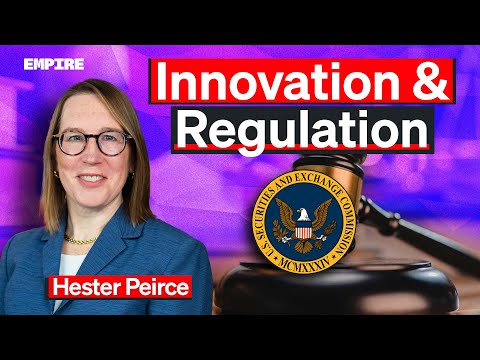
Frameworks, Not Fights: The SEC is shifting from broad prohibitions to creating specific, workable rules for token launches. The goal is to bring this crucial capital formation activity back to the U.S. under a clear and compliant regime.
Decentralization Changes the Game: True decentralization isn't just a buzzword; it fundamentally challenges the existing regulatory model. For truly peer-to-peer protocols, the old playbook of licensing intermediaries may no longer apply.
The Best Defense is Utility: The crypto industry's greatest protection against future regulatory hostility is to build things with real, lasting value. Use this period of clearer skies to create products and services that prove the technology's worth beyond speculation.
Bet on the Ecosystem, Not the Silo: Chainlink’s value is tied to the growth of the entire blockchain space, making it a diversified bet on institutional adoption. XRP’s success is a narrow wager on its own ledger and asset gaining dominance.
Follow the Proof, Not the Promises: Chainlink’s public partnerships with firms like Swift and JP Morgan provide concrete evidence of traction. This stands in sharp contrast to XRP's long-unfulfilled, NDA-shrouded narrative.
Infrastructure is the Ultimate Power Play: By providing a comprehensive suite of essential services (data, cross-chain, compliance), Chainlink is building a defensible moat as the go-to infrastructure platform for Web3, with no direct all-in-one competitor in sight.