The Macro Shift: In an era of rapid technological disruption and diversified portfolios, 3G Capital's success with "old economy" brands highlights the enduring power of deep operational expertise, long-term alignment, and a relentless focus on fundamental business quality, even in non-tech sectors.
The Tactical Edge: Cultivate Ownership: Implement incentive structures that align management with long-term shareholder value, treating company capital as personal capital. This means disproportionately rewarding top performers and fostering a culture of accountability.
The Bottom Line: In a market obsessed with rapid tech cycles, 3G's long-term, deep-operator model suggests that enduring value lies in fundamental business quality, direct customer relationships, and a culture that empowers talent, offering a counter-narrative for builders and investors seeking sustainable alpha.
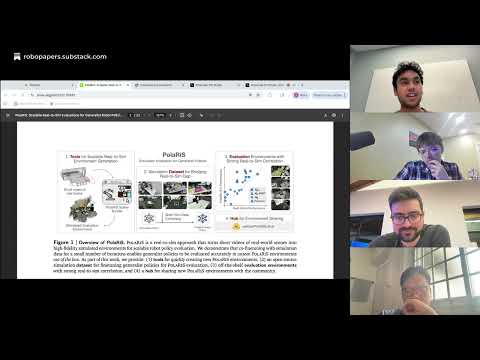
The robotics community is moving from bespoke, task-specific benchmarks to generalist policy evaluation platforms that prioritize real-world correlation and scalability. This mirrors LLM benchmark evolution, demanding tools that enable rapid, diverse testing.
Builders and researchers should prioritize evaluation frameworks that offer easy, real-to-sim environment generation (like PolaRiS's Gaussian splatting) and incorporate small, diverse sim data for distribution alignment. This accelerates policy iteration and ensures applicability.
Scalable, real-world-correlated simulation is the missing link for accelerating generalist robot policy development. Investing in or building on tools like PolaRiS, which democratize environment creation and robust evaluation, will be key to unlocking the next generation of capable robots over the next 6-12 months.
The rise of generalist robot policies demands a new generation of evaluation tools that are both scalable and highly correlated with real-world performance.
Adopt hybrid real-to-sim evaluation frameworks like PolaRiS to accelerate robot policy iteration and ensure real-world applicability.
Reliable, scalable simulation is no longer a pipe dream; it's a present reality for rigid body tasks. This means faster development cycles and more robust robot policies in the next 6-12 months.
The rise of generalist robot policies, trained on large real-world datasets, demands a new evaluation framework. PolaRiS provides a scalable, real-world correlated simulation, moving robotics towards an LLM-like benchmark ecosystem where models are tested for zero-shot generalization across diverse, easily created environments.
Adopt PolaRiS to rapidly iterate on robot policies. Leverage its real-to-sim environment generation and minimal sim-code training to achieve high correlation with real-world performance, significantly cutting development time and cost compared to physical testing.
For builders and investors, PolaRiS means faster, cheaper, and more reliable robot policy development. This tool accelerates the path to deployable, generalist robots, making advanced robotics more accessible and competitive in the next 6-12 months.
The push for generalist robot policies, akin to foundation models in other AI fields, necessitates a shift from bespoke, real-world-only evaluations to scalable, correlated simulation benchmarks.
Adopt PolaRiS for faster policy iteration. Integrate small, diverse sets of *unrelated* sim data into your co-training mix to significantly boost real-to-sim correlation.
Robotics is moving towards LLM-style benchmarking.
While the market obsesses over "bits" and rapid tech disruption, 3G Capital demonstrates that enduring value often resides in "atoms"—physical businesses with strong brands and direct customer relationships. This highlights a counter-cyclical opportunity in overlooked, tangible assets.
Cultivate an owner-operator mentality in your ventures. Focus on attracting and empowering top talent with significant equity, then decentralize execution while maintaining clear strategic alignment.
In the next 6-12 months, prioritize investments in businesses with defensible customer relationships and clear, long-term growth runways, even if they appear "boring." Your ability to instill a true ownership culture will be a differentiator, driving outsized returns where others chase fleeting trends.
In a world where capital is abundant but truly great businesses are rare and often overpriced, 3G's model highlights a strategic pivot: deep, operator-led concentration on defensible, customer-centric assets with long-term growth potential, rather than broad, passive diversification.
Cultivate an "owner operator" mindset within your organization, pushing decision-making closer to the problems and aligning incentives with long-term shareholder value, not just short-term metrics.
Over the next 6-12 months, focus on identifying businesses with strong, direct customer relationships and inherent resistance to technological disruption. These "forever businesses," often family-controlled, offer a more reliable path to compounding returns than pursuing fleeting trends or commoditized assets.
The Macro Shift: In an era of rapid technological change, businesses with strong, direct customer relationships and physical moats are increasingly resilient. Technology should improve, not replace, core offerings.
The Tactical Edge: Cultivate a "brand bigger than the business" mindset. Seek out established brands with global recognition but underperforming operations, then apply rigorous, owner-operator principles to create latent value and growth.
The Bottom Line: Long-term thinking and a relentless focus on people and business quality, even in a concentrated portfolio, remain the most powerful engines for compounding capital. This means patience, deep operational involvement, and a willingness to bet big on exceptional talent.
**Valuation is Evolving.** The most durable crypto projects will be judged not on tokenomics alone, but on a triad of community strength (Ecosystem), marketing reach (Attention), and real-world cash flow (Revenue).
**Centralization Wins the Consumer.** The next billion users will not navigate a dozen dApps. They will be onboarded through simplified, centralized super-apps that provide a seamless and curated on-chain experience.
**Reward Loyalty, Not Speculation.** Sustainable value is built by aligning with true believers. Founders should design mechanisms that reward long-term holders and actively discourage "farm-and-dump" behavior.
Re-evaluate Risk/Reward. With majors like Ethereum potentially offering symmetrical 50% upside vs. 50% downside, the rationale for holding heavy, levered positions weakens. It's time to take some chips off the table.
Explore Prediction Markets. This sector offers a fresh frontier for alpha. Get active on Polymarket, farm the Limitless airdrop on Base (min. $200 bet), and join Outcome’s risk-free testnet competition to get exposure.
Build a Defensive Core. Adopt assets like JLP on Solana as a portfolio cornerstone. It provides market exposure while protecting capital through its diversified pool and fees generated from retail traders, outperforming most crypto assets in a downturn.
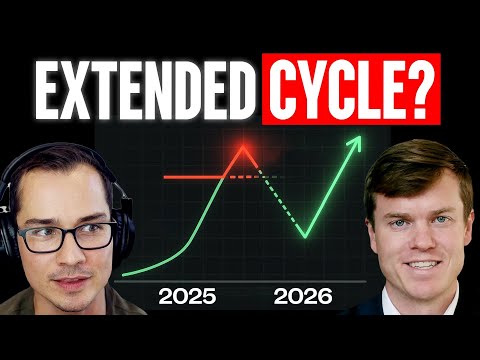
**This Time Might Be Different.** Macro indicators like loosening bank lending standards, mid-range equity valuations, and a dovish Fed signal the business cycle is earlier than many believe, favoring a cycle extension into 2026 over a 2025 peak.
**On-Chain Metrics Show No Signs of a Top.** Key on-chain data is far from euphoric. The Bitcoin Fear & Greed index is neutral, and while long-term holders are selling, it’s being absorbed without triggering the "extreme greed" that defines market tops.
**Build a Concentrated, High-Conviction Portfolio.** Don't "diworsify." Anchor 70%+ of your portfolio in core assets (BTC, ETH), benchmark all other bets against them, and use small "hot sauce" allocations (5-10%) for high-risk plays while always maintaining cash to buy the dips.
**Macro is your north star.** The crypto market's direction is dictated by Fed policy. Rate cuts are the narrative, and trillions are waiting on the sidelines to flood into risk assets.
**Take profits aggressively.** We are in the "stupid" phase of the cycle. Systematically sell portions of your holdings at 20%, 50%, and 100% gains to de-risk before the music stops.
**Scrutinize DAOs.** Many are exit liquidity schemes. Only consider those with strong guardrails, like mandatory fresh capital matching, that bring new money into the ecosystem.
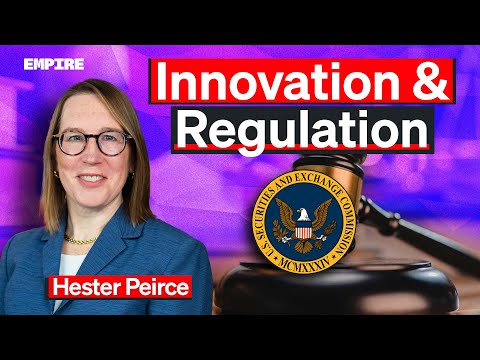
Frameworks, Not Fights: The SEC is shifting from broad prohibitions to creating specific, workable rules for token launches. The goal is to bring this crucial capital formation activity back to the U.S. under a clear and compliant regime.
Decentralization Changes the Game: True decentralization isn't just a buzzword; it fundamentally challenges the existing regulatory model. For truly peer-to-peer protocols, the old playbook of licensing intermediaries may no longer apply.
The Best Defense is Utility: The crypto industry's greatest protection against future regulatory hostility is to build things with real, lasting value. Use this period of clearer skies to create products and services that prove the technology's worth beyond speculation.
Bet on the Ecosystem, Not the Silo: Chainlink’s value is tied to the growth of the entire blockchain space, making it a diversified bet on institutional adoption. XRP’s success is a narrow wager on its own ledger and asset gaining dominance.
Follow the Proof, Not the Promises: Chainlink’s public partnerships with firms like Swift and JP Morgan provide concrete evidence of traction. This stands in sharp contrast to XRP's long-unfulfilled, NDA-shrouded narrative.
Infrastructure is the Ultimate Power Play: By providing a comprehensive suite of essential services (data, cross-chain, compliance), Chainlink is building a defensible moat as the go-to infrastructure platform for Web3, with no direct all-in-one competitor in sight.