Specialized AI models are yielding to unified, multimodal architectures that generalize across diverse tasks. This shift, coupled with hardware-software co-design, makes advanced AI capabilities more powerful and economically viable.
Prioritize low-latency, multi-turn interactions with AI agents over single, complex prompts. This iterative approach, especially with faster "Flash" models, allows for more effective human-AI collaboration and better quality outputs.
The future of AI demands relentless pursuit of both frontier capabilities and extreme efficiency. Builders and investors should focus on infrastructure and model architectures enabling this dual strategy, particularly those leveraging distillation and multimodal input.
Open-source AI is driving a fundamental shift in drug discovery, moving from predicting existing structures to computationally generating novel therapeutic candidates. This democratizes access, accelerating scientific discovery.
Invest in platforms abstracting computational and architectural complexity, offering accessible, high-throughput design. Prioritize solutions demonstrating robust, multi-target experimental validation.
The future of drug discovery is generative. Companies bridging cutting-edge AI with user-friendly, scalable infrastructure and rigorous validation will capture significant value, empowering scientists to design next generation of therapeutics.
The relentless pursuit of AI capability is increasingly intertwined with the engineering discipline of cost-effective, low-latency deployment, driving a full-stack co-evolution of hardware, algorithms, and model architectures.
Prioritize investments in AI systems that excel at distillation and efficient data movement, as these are the keys to scaling advanced capabilities from frontier research to mass-market applications.
The next 6-12 months will see a significant push towards personalized, multimodal AI and highly efficient, low-latency models, fundamentally changing how we interact with and build on AI, making crisp prompt engineering a core skill.
AI is transforming biology from a discovery science into a design discipline, enabling the creation of new molecules rather than just the prediction of existing ones. This shift is driven by specialized generative models and robust validation pipelines.
Invest in platforms that abstract away the computational complexity of AI-driven molecular design, offering scalable infrastructure and user-friendly interfaces. Prioritize tools with extensive, multi-target experimental validation.
The next wave of therapeutic breakthroughs will come from AI-powered generative design, not just predictive models. Companies that democratize access to these tools, coupled with rigorous real-world testing, will capture significant value in the coming years.
Invest in or build systems that prioritize low-latency, multi-turn interactions with AI, leveraging smaller, distilled models for rapid feedback loops. This iterative approach, akin to human-to-human communication, will outcompete monolithic, single-prompt designs.
The future of AI is a tightly coupled dance between hardware and software, where energy efficiency and multimodal understanding are as critical as raw parameter count. This demands a holistic approach to system design, moving beyond isolated model improvements.
The next 6-12 months will see a continued acceleration in AI capabilities, driven by specialized hardware and sophisticated distillation techniques. Focus on multimodal data integration and the development of highly personalized, context-aware AI agents that can act as "installable knowledge" modules, rather than attempting to cram all knowledge into a single model.
Biology is shifting from descriptive science to generative engineering, powered by AI. This means actively designing new biological systems, altering drug discovery.
Invest in platforms abstracting generative AI complexity for biology. Prioritize tools offering robust, multi-modal experimental validation and scalable infrastructure to accelerate therapeutic development.
The future of drug discovery demands accessible, validated generative AI. It empowers scientists to design novel therapeutics at speed and scale, creating massive value for those leveraging these molecular design platforms.
The era of specialized AI models is giving way to unified, multimodal architectures that generalize across tasks, driven by a full-stack approach to hardware and software.
Prioritize low-latency, multi-turn interactions with AI agents, leveraging "flash" models for rapid iteration and human-in-the-loop refinement over single, complex prompts.
The future of AI is personalized, low-latency, and deeply integrated into our digital lives, demanding continuous innovation in both model capabilities and the underlying infrastructure to support trillions of tokens of context.
The biological AI frontier is moving from predicting existing structures to generating novel ones. This transition, exemplified by BoltzGen, means AI is no longer just an analytical tool but a creative engine for molecular discovery, pushing the boundaries of what's possible in drug design.
Invest in or build platforms that abstract away the computational and validation complexities of generative AI for biology. Boltz Lab's focus on high-throughput, experimentally validated design agents and optimized infrastructure offers a blueprint for how to turn cutting-edge models into accessible, impactful tools for scientists, accelerating therapeutic pipelines.
The next 6-12 months will see a critical divergence: those who can effectively wield generative AI for molecular design will gain a significant lead in drug discovery. Companies like Boltz, by providing open-source models and productized infrastructure, are setting the standard for how to translate raw AI power into tangible, validated biological breakthroughs, making it cheaper and faster to find new medicines.
The AI industry is consolidating around general, multimodal models, driven by a relentless pursuit of both frontier capabilities and extreme efficiency. This means the future is less about niche AI and more about broadly capable, adaptable systems.
Invest in infrastructure and talent that understands the full AI stack, from hardware energy costs to prompt engineering. Prioritize low-latency inference for user-facing applications, even if it means iterating with smaller, faster models.
The next 6-12 months will see continued breakthroughs in model capability and efficiency, making personalized, multimodal AI agents a reality. Builders should focus on crafting precise interaction patterns and leveraging modular, general models to unlock new applications.
**Valuation is Evolving.** The most durable crypto projects will be judged not on tokenomics alone, but on a triad of community strength (Ecosystem), marketing reach (Attention), and real-world cash flow (Revenue).
**Centralization Wins the Consumer.** The next billion users will not navigate a dozen dApps. They will be onboarded through simplified, centralized super-apps that provide a seamless and curated on-chain experience.
**Reward Loyalty, Not Speculation.** Sustainable value is built by aligning with true believers. Founders should design mechanisms that reward long-term holders and actively discourage "farm-and-dump" behavior.
Re-evaluate Risk/Reward. With majors like Ethereum potentially offering symmetrical 50% upside vs. 50% downside, the rationale for holding heavy, levered positions weakens. It's time to take some chips off the table.
Explore Prediction Markets. This sector offers a fresh frontier for alpha. Get active on Polymarket, farm the Limitless airdrop on Base (min. $200 bet), and join Outcome’s risk-free testnet competition to get exposure.
Build a Defensive Core. Adopt assets like JLP on Solana as a portfolio cornerstone. It provides market exposure while protecting capital through its diversified pool and fees generated from retail traders, outperforming most crypto assets in a downturn.
**This Time Might Be Different.** Macro indicators like loosening bank lending standards, mid-range equity valuations, and a dovish Fed signal the business cycle is earlier than many believe, favoring a cycle extension into 2026 over a 2025 peak.
**On-Chain Metrics Show No Signs of a Top.** Key on-chain data is far from euphoric. The Bitcoin Fear & Greed index is neutral, and while long-term holders are selling, it’s being absorbed without triggering the "extreme greed" that defines market tops.
**Build a Concentrated, High-Conviction Portfolio.** Don't "diworsify." Anchor 70%+ of your portfolio in core assets (BTC, ETH), benchmark all other bets against them, and use small "hot sauce" allocations (5-10%) for high-risk plays while always maintaining cash to buy the dips.
**Macro is your north star.** The crypto market's direction is dictated by Fed policy. Rate cuts are the narrative, and trillions are waiting on the sidelines to flood into risk assets.
**Take profits aggressively.** We are in the "stupid" phase of the cycle. Systematically sell portions of your holdings at 20%, 50%, and 100% gains to de-risk before the music stops.
**Scrutinize DAOs.** Many are exit liquidity schemes. Only consider those with strong guardrails, like mandatory fresh capital matching, that bring new money into the ecosystem.
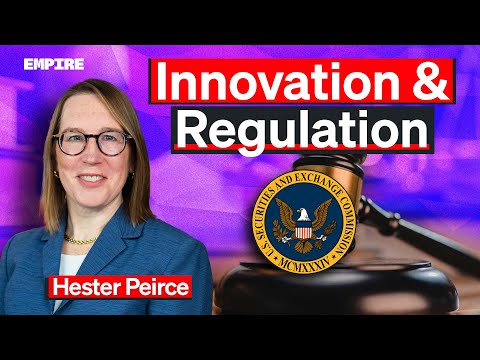
Frameworks, Not Fights: The SEC is shifting from broad prohibitions to creating specific, workable rules for token launches. The goal is to bring this crucial capital formation activity back to the U.S. under a clear and compliant regime.
Decentralization Changes the Game: True decentralization isn't just a buzzword; it fundamentally challenges the existing regulatory model. For truly peer-to-peer protocols, the old playbook of licensing intermediaries may no longer apply.
The Best Defense is Utility: The crypto industry's greatest protection against future regulatory hostility is to build things with real, lasting value. Use this period of clearer skies to create products and services that prove the technology's worth beyond speculation.
Bet on the Ecosystem, Not the Silo: Chainlink’s value is tied to the growth of the entire blockchain space, making it a diversified bet on institutional adoption. XRP’s success is a narrow wager on its own ledger and asset gaining dominance.
Follow the Proof, Not the Promises: Chainlink’s public partnerships with firms like Swift and JP Morgan provide concrete evidence of traction. This stands in sharp contrast to XRP's long-unfulfilled, NDA-shrouded narrative.
Infrastructure is the Ultimate Power Play: By providing a comprehensive suite of essential services (data, cross-chain, compliance), Chainlink is building a defensible moat as the go-to infrastructure platform for Web3, with no direct all-in-one competitor in sight.