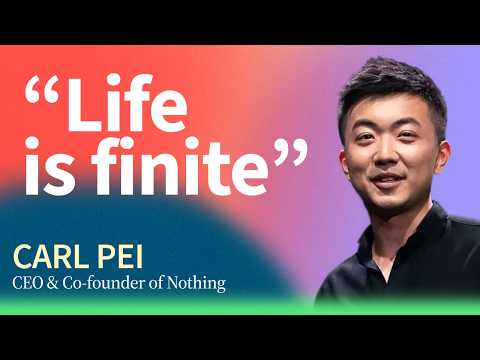
The Macro Shift: Infrastructure Invisibility. As core technologies become background noise, value moves from the pipes to the unique experiences built on top of them.
The Tactical Edge: Reject Mediocrity. Audit your product for average features and replace them with high-conviction improvements that competitors are too lazy to attempt.
The Bottom Line: Building is the only way to ensure the future happens. If you do not create the next version of reality, you are stuck living in an outdated vision.
The transition from hardware specs to emotional hardware where brand identity and OS-native AI become the primary moats.
Prioritize arbitrage opportunities in marketing by finding underpriced attention on platforms like TikTok before they become crowded.
Success in mature markets requires a Genghis Khan method: be a talent scout, stay open-minded to global supply chains, and use design to win the emotional battle for the consumer's pocket.
The transition from centralized cloud training to distributed local inference creates a massive demand for high-bandwidth storage and custom CPUs.
Audit your technical roadmap to prioritize local agentic workflows that reduce latency and data privacy risks.
The next 12 months will favor hardware that enables physical AI and local autonomy. Owning the compute stack is becoming a competitive necessity for builders who want to move faster than the cloud allows.
Intelligence is decoupling from scale. As reasoning becomes a commodity, the value moves from the size of the model to the proprietary nature of the training data.
Use TRL or Unsloth for single-GPU fine-tuning. Prioritize cleaning your instruction sets over increasing your training iterations.
The future belongs to those who own their data pipelines. If you can distill elite reasoning into a 350M parameter model, you win on latency, cost, and privacy.
Software maintenance is moving from a manual craft to an industrial process. As agents handle the toil of migrations and security, human engineers will focus entirely on high-level system design.
Batch by Dependency. Use the OpenHands SDK to visualize your codebase as a graph and deploy agents to solve the leaf nodes first.
Companies that master agent orchestration will clear their tech debt backlogs in weeks instead of years, creating a massive competitive advantage in product velocity.
**Gold's rally is fundamentally driven.** Falling rates and central bank de-dollarization are creating a powerful tailwind for the precious metal, signaling a major shift in global asset allocation.
**Bitcoin is riding gold's coattails.** As the "digital gold" narrative strengthens, a rising gold price is perceived as a bullish leading indicator for BTC, with investors watching the BTC/Gold market cap ratio as a key metric.
**Your past market experiences are blinding you.** Investors must actively identify and challenge their "childhood curses"—biases formed during previous market cycles—to capitalize on new trends.
**The 10-Minute Rule:** If you’re not in a memecoin launch within the first 10 minutes, you are the exit liquidity. The game is rigged by snipers with privileged information.
**Deception is the Default:** Insiders use sophisticated tactics like one-sided LPs to hide their selling, making it crucial for investors to look beyond simple price charts.
**Self-Policing is the Only Way:** Don't wait for regulators. The crypto community must build its own systems of accountability to expose and sideline repeat offenders.
**Fiscal Is King.** The government, not the Fed, is in the driver's seat. Higher interest rates are now stimulative, as higher interest payments on government debt inject more cash directly into the private sector.
**The Market Is The Economy.** Passive flows have rewired capital allocation, turning the stock market into an automated utility that concentrates wealth in mega-cap companies, making traditional valuation metrics less relevant.
**Invest in Scarcity.** In a world of unlimited fiat currency and financially repressed bond yields, assets with a fixed supply, such as gold and crypto, become critical portfolio components, while traditional fixed income loses its appeal.
Fade the Crowd. Widespread retail despair is a signal of an underexposed market, creating a powerful contrarian buying opportunity.
Macro Is the Driver. Pro-crypto deregulation and future rate cuts are the real forces to watch, not short-term price action.
Alpha Demands Work. The era of easy altcoin gains is over. The new "wealth hack" is to develop deep expertise by embedding yourself in a project's ecosystem.
**Incentives Define the Game:** Arjun’s 10-year compensation plan isn't just a detail; it’s a strategy. It forces long-term thinking and aligns the entire organization around monumental growth targets, a stark contrast to the short-term focus of many public companies.
**Win the "Meaty Middle":** While competitors fight over retail users or institutional whales, Kraken is cornering the market of professional traders. This overlooked segment is the engine of global liquidity and the key to building a durable, high-volume exchange.
**On-Chain IPOs Are Coming:** The future of capital markets is global, on-chain, and permissionless. Traditional companies are already looking to bypass Wall Street for venues like Kraken, signaling a fundamental shift in how businesses access capital.
**The 2:1 Rule for Valuing ETH:** The simplest institutional valuation model correlates ETH's market cap to the value it secures. For every $2 in assets (stablecoins, RWAs) on Ethereum, ETH's value historically grows by $1, providing a clear framework for its future potential.
**Productive Assets Win:** Ether’s ability to generate yield through staking makes it a fundamentally superior treasury reserve asset compared to non-productive alternatives. This allows companies like Sharplink (ESBET) to generate revenue, compound holdings, and attract public market multiples.
**Tokenization Unlocks Trillions:** The shift to on-chain, atomically settled assets will free up tens of trillions in capital currently locked in settlement risk, counterparty risk, and collateral management, creating an overwhelming incentive for institutional adoption on secure networks like Ethereum.