The Macro Shift: Agentic Abstraction. We are moving from Model-as-a-Service to Agent-as-a-Service where the harness is as important as the weights.
The Tactical Edge: Standardize your CLI. Use tools like ripgrep (RG) that models already have "habits" for to see immediate performance gains.
The Bottom Line: The next 12 months will see the end of manual integration engineering as agents become capable of navigating UIs and legacy terminals autonomously.
The commoditization of syntax means architectural judgment is the only remaining moat. As the cost of code hits zero the value of intent skyrockets.
Replace your manual refactoring workflows with a burn and rebuild strategy. Use agents to generate entirely new modules instead of patching old ones.
Seniority is no longer a shield against obsolescence. You must spend the next six months building your agentic intuition or risk being replaced by a PhD student with a prompt.
The Macro Evolution: Standardized communication layers are replacing custom API integrations. This commoditizes the connector market and moves value to the models that best utilize these tools.
The Tactical Edge: Standardize your internal data tools using MCP servers today. This ensures your company is ready for autonomous agents that can discover and use your resources without manual API integration.
The Bottom Line: The agentic stack is consolidating around MCP. Interoperability is no longer a feature; it is the foundation for the next decade of AI utility.
The Macro Shift: From Model-Centric to Eval-Centric. The value is moving from the LLM itself to the proprietary evaluation loops that keep the LLM on the rails.
The Tactical Edge: Export production traces and build a "Golden Set" of 50 hard examples. Use these to run A/B tests on every prompt change before hitting production.
The Bottom Line: Reliability is the product. If you cannot measure how your agent fails, you haven't built a product; you've built a demo.
The transition from chatbots with tools to agents that build tools marks the end of the manual integration era.
Stop building custom model scaffolding and start building on top of opinionated agent layers like the Codex SDK.
In 12 months, the distinction between a coding agent and a general computer user will vanish as the terminal becomes the primary interface for all digital labor.
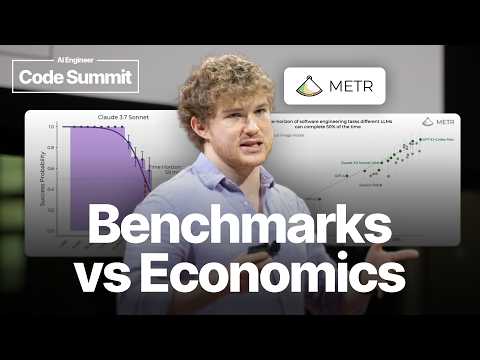
The Capability-Utility Gap is widening. We see a divergence where models get smarter but the friction of human-AI collaboration keeps productivity flat.
Deploy AI for mid-level engineers or low-context tasks. Avoid forcing AI workflows on your top seniors working in complex legacy systems.
The next year will focus on reliability over raw intelligence. The winners will have models that require the least amount of human babysitting.
**Prediction markets are not a niche crypto game; they are a multi-trillion dollar industry gunning for the securities market** by financializing the world's most valuable asset: information.
**True tokenization will be won on open, permissionless blockchains** that enable new market structures, not closed systems offering mere efficiency gains. Institutions like BlackRock are already betting on this "open internet" thesis.
**Creator tokens are a flawed model with a built-in expiration date tied to relevance.** The smarter trade is to own the casino (the platform's token), not the individual player's chips.
Distribution is the New Kingmaker. Protocols with significant user bases and transaction volume (like Hyperliquid) now have the leverage to command value from stablecoin issuers and other service providers, not the other way around.
The Stablecoin Revenue Model is Broken. The era of stablecoin issuers keeping 100% of the yield from reserves is over. Expect a race to the bottom on revenue sharing, forcing issuers to innovate on product rather than just collecting yield.
The Crypto IPO Window is Wide Open. With Figure’s successful public offering and Gemini’s upcoming listing, public markets are showing a strong appetite for crypto-native businesses, likely triggering a wave of IPOs from companies like Kraken, BitGo, and others.
**Consolidate or Compete.** Sub-subnets allow teams to build diversified businesses under a single token, while deregistration means underperforming projects will be pruned. The message is clear: innovate and perform, or be replaced.
**Investment Thesis Evolves.** Subnet tokens are no longer "eternal." Deregistration fundamentally changes the risk profile, making active development and market traction paramount for long-term viability.
**Governance is Coming.** The network is on a clear path to decentralization. The planned shift to Proof-of-Stake and a more democratic governance structure will steadily transfer power to subnet owners and stakers, making community participation more critical than ever.
Global liquidity is the ultimate macro signal. As long as the global liquidity chart goes up and to the right, the crypto bull market has the fuel it needs to continue its run.
Ethereum isn't losing; it's quietly winning the RWA war. With 93% market share, Ethereum has become the de facto settlement layer for tokenized real-world assets, a lead that continues to grow as institutions like Fidelity build directly on its L1.
The new blockchain business model is asset management. Chains like Hyperliquid and Mega ETH are pioneering a shift away from relying solely on blockspace fees. By integrating native stablecoins, they are capturing a percentage of the yield from assets on-chain, effectively turning the protocol itself into a revenue-generating asset manager.
LSTs Are a Distribution Play: For protocols, launching an LST is less about staking yield and more about attracting SOL to gain a strategic advantage in securing blockspace and landing transactions.
Infrastructure Follows the User: Sanctum's pivot to transaction services was not a top-down mandate but a direct response to the needs of its largest partners, proving that the most durable infrastructure is built by solving the immediate, pressing problems of your customers.
Aggregation Is King: Just as Jupiter won by aggregating DEXs for users, Sanctum’s Gateway aims to win by aggregating fragmented transaction delivery networks for developers, creating a simpler and more efficient experience.
Patience is Your Superpower. This cycle rewards thesis-driven investing over hyperactive trading. Identify assets with strong value, momentum, and fundamentals, and give them time to play out.
Bet on the On-Chain Casino. The gambling economy is real, profitable, and growing. Look for platforms that facilitate high-asymmetry games (memecoins, raffles) as they capture a powerful cultural trend.
Find Alpha in the Illiquid. The next frontier is tokenizing real-world value. Platforms creating liquid markets for previously stuck assets—from collectibles to crime—are building foundational infrastructure for a much larger on-chain world.