The decoupling of parameter count from active compute via sparsity means intelligence is becoming a software optimization problem as much as a hardware one.
Audit your agentic workflows for turn efficiency rather than just cost per token.
In a world of infinite tokens, the winner is the one who can verify the truth the fastest.
The Macro Pivot: The transition from LLMs as chat interfaces to LLMs as logic engines. As models move from text prediction to logic execution, the value moves from the model itself to the verification systems surrounding it.
The Tactical Edge: Audit the stack. Prioritize the integration of agentic coding tools like Jules to shorten the feedback loop between ideation and deployment.
The Bottom Line: Code is the only medium where AI can self-correct and scale without human intervention. The next 12 months will be defined by who can turn raw model power into reliable, self-healing code.
The Macro Transition: We are moving from "fire-and-forget" prompts to durable execution environments where state is as important as the model itself.
The Tactical Edge: Wrap your existing tool calls in the `useStep` function to gain instant retry logic and execution history.
The Bottom Line: Reliability is the primary moat in the agent market. Builders who adopt durable workflows will move to production while others are still debugging local scripts.
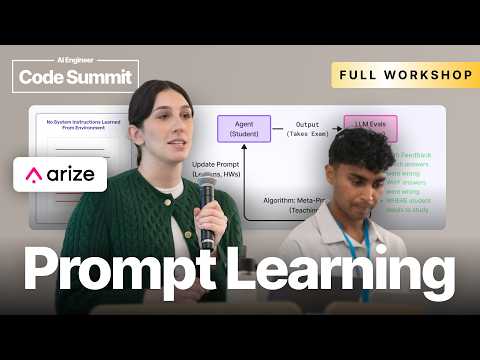
The move from manual prompt engineering to automated prompt learning. As models become commodities, the proprietary loop that refines them becomes the moat.
Implement a Train-Test Split for your prompts. Use a subset of failure data to generate new rules and validate them against a separate holdout set to ensure the logic holds.
Reliability is the only metric that matters for agent adoption. If you are not using a feedback loop to update your system instructions, you are building on sand.
The move from industrial management to creative inspiration. As AI automates routine tasks, the only remaining value is high-variance human creativity.
Apply the Keeper Test today. Ask your leads which team members they would fight for and provide generous exits for the rest to reset your talent bar.
Scaling doesn't require more rules. It requires better people. If you can maintain talent density, you can run fast while your competitors choke on their own handbooks.
Profit, Don't HODL. The current market is a trader’s paradise, not an investor’s dream. The strategy is to ride the seasonal Q4 pump and exit by January, refusing to get caught in another brutal bear cycle.
Fade the Old, Farm the New. Capital is mercenary, flowing from established tokens to the next hot airdrop farm or launch. The relentless hunt for volatility means older coins are treated as exit liquidity for the next shiny object.
Unlocks Are the Silent Killer. Before investing, map out the token unlock schedule. Even fundamentally sound projects with strong revenue face a massive gravitational pull on their price from insider and team unlocks.
**Stablecoins Are Rebranding Crypto.** The FinTech industry is adopting stablecoin technology not as a niche crypto asset, but as the foundational layer for "FinTech 3.0," poised to overhaul global payments.
**The EVM Is The New COBOL.** Specialized payments chains are standardizing the EVM as the backend for modern finance, creating high-throughput, compliant on-ramps that will bring trillions in TradFi volume on-chain.
**Payments Are Just The Beginning.** Once the world rebuilds its payments infrastructure on stablecoins, the floodgates will open for the complete tokenization of all financial assets, forever blurring the line between crypto and finance.
Onchain Rails Create New Economies. By digitizing physical assets on high-performance chains like Solana, you eliminate friction around custody, settlement, and global access, unlocking novel business models like the Gotcha Machine.
Real-World Logistics Are the Ultimate Moat. While anyone can build a smart contract, Collector Crypt’s defensibility comes from its physical supply chain—dealer relationships and automated acquisition tools that secure inventory below market price.
Novel Oracles Unlock the Next Wave of DeFi. The future of onchain finance depends on reliably pricing illiquid, real-world assets. Developing proprietary oracles, like Collector Crypt’s, is the first step to building DeFi for everything.
**De-Risk Your Alts.** Crypto is showing significant weakness by failing to rally with equities. Ethereum's lower high is a major red flag for the altcoin market; it's time to reduce leverage and concentrate into Bitcoin or cash.
**Hunt for Value in TradFi.** Traditional markets are offering powerful narrative-driven plays with crypto-like upside. Focus on assets like Tesla (robotics), Robinhood (gambling culture), and commodities like uranium (energy independence).
**Fade the ETF Narrative.** The institutional "sugar high" from ETFs is wearing off as the front-running trade becomes crowded and inflows wane. The market needs a new, more durable catalyst to move higher.
Subnets are becoming more complex. The introduction of sub-subnets will allow for more sophisticated, multi-faceted incentive mechanisms within a single subnet, effectively turning them into "mixtures of experts."
Performance is now paramount. Subnet deregistration creates a "perform or perish" dynamic. Underperforming subnets risk being automatically removed, with their assets returned to token holders as TAO.
Decentralization is on the horizon. The shift to Proof-of-Stake and a formal on-chain governance structure are actively being developed, marking a deliberate move toward placing control in the hands of the community.
Recessions Are Canceled, Inflation Is Not: Perpetual government stimulus will prevent deep downturns, but it locks in higher inflation. Plan for a ~3% floor and a market that swings between boom and stagflation.
The US Super Cycle Is Over: After a historic 15-year run, US market dominance has peaked. The next decade’s alpha will be found in undervalued international markets benefiting from a weakening dollar.
Build a Debasement-Proof Portfolio: Ditch long-duration bonds. Hold cash for opportunity, stay invested in global equities, and overweight hard assets like gold and crypto to preserve purchasing power.