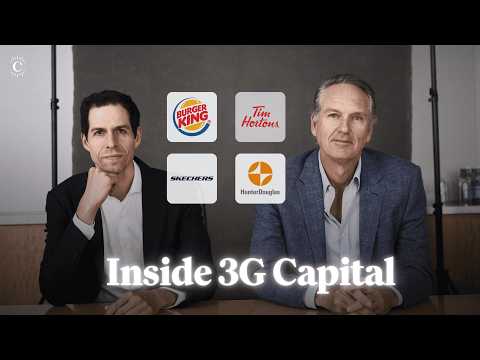
3G commits to one investment per fund, deploying significant internal capital alongside partners. This focus allows for rigorous downside analysis and patience, ensuring only truly exceptional businesses are acquired.
3G partners are seasoned operators who step into businesses, aligning incentives with ownership. This hands-on approach ensures decisions serve the business's long-term health, not just short-term management goals.
3G prioritizes businesses that directly own their customer relationships, like Burger King or Hunter Douglas. This direct connection reduces disintermediation risk from retailers or new technologies.
As capital markets become increasingly efficient and competitive, the edge moves from financial engineering to deep operational expertise and long-term, owner-aligned management.
Prioritize identifying and enabling high-potential individuals early in their careers, granting them significant responsibility and ownership.
Disciplined focus, patient relationship building, and an unwavering commitment to operational excellence in established, defensible businesses can still yield generational wealth.
The Macro Trend: In a world obsessed with digital disruption, 3G Capital's success with "atoms over bits" businesses highlights a strategic pivot: enduring value often resides in established brands with proprietary customer relationships, where operational excellence and long-term thinking create moats against fleeting tech trends.
The Tactical Edge: Identify businesses with strong, direct customer relationships and a clear path for operational improvement, even if they appear "boring." Prioritize deep, hands-on involvement to drive value, rather than relying solely on financial engineering.
The Bottom Line: The future of outsized returns may not be in chasing the next big tech wave, but in patiently acquiring and meticulously operating businesses that own their customer relationships, leveraging technology to enhance, not redefine, their core value. This strategy offers a more predictable, less volatile path to compounding capital.
The Macro Shift: In a world obsessed with digital disruption, 3G Capital's success highlights the enduring power of "hard" businesses with strong customer relationships. Their focus on foundational consumer brands, managed by operator-investors who prioritize long-term ownership and disciplined execution, offers a robust counter-narrative to the "bits over atoms" trend.
The Tactical Edge: Cultivate an extreme ownership culture by aligning incentives deeply, empowering young talent with real responsibility, and fostering a relentless bias for action.
The Bottom Line: For investors and builders, the lesson is clear: patience, deep operational involvement, and a fanatical focus on talent in defensible, "boring" businesses can yield extraordinary, long-term value, even in expensive markets.
Extreme Focus: 3G Capital commits to one investment per fund, deploying significant internal capital alongside partners. This singular focus forces rigorous downside analysis and patience, ensuring they only pursue truly exceptional opportunities.
Owner Operators: 3G partners are seasoned operators who step into businesses, aligning incentives with ownership. This means leaders act like shareholders, making decisions for the business's long-term health, not just short-term management goals.
Disruption Defense: 3G prioritizes businesses with strong customer relationships and physical components, making them less susceptible to digital disintermediation. They seek enduring brands like Hunter Douglas, where the sun will always rise and set, ensuring a consistent need for their product.
In an era of rapid technological change, businesses with strong, direct customer relationships and physical moats are increasingly valuable. 3G's focus on these "atoms" businesses, enhanced by strategic tech adoption, provides a blueprint for durable value creation.
Cultivate an ownership culture by aligning incentives deeply, empowering young talent with real responsibility, and prioritizing long-term value over short-term gains.
The future belongs to patient, operator-led investors who can identify and transform enduring businesses by focusing on fundamental quality, people, and strategic technological integration, rather than chasing fleeting trends.
3G Capital's model counters this by doubling down on "atoms" businesses with strong customer relationships and defensible positions, then applying rigorous operational excellence.
Cultivate an owner-operator mindset within your organization, even if you are not a private equity firm. Identify and back high-potential young talent with significant responsibility and aligned incentives, providing mentorship to maximize their success.
In a world obsessed with speed and diversification, 3G Capital proves that deep, patient, operator-led concentration on high-quality, defensible businesses, combined with a culture of ownership and meritocracy, remains a powerful engine for outsized value creation.
The era of celebrity endorsements is evolving into one of celebrity ownership, driven by a growing understanding of equity's compounding power and enabled by new technologies that lower the barrier to business creation.
Prioritize building a diverse, expert team and actively seek out "boring" businesses or underserved markets with clear, unmet demand.
The next 6-12 months will see an acceleration of talent leveraging their brand for equity stakes, particularly in tech-enabled ventures. Position yourself to either participate in these deals or build the tools that empower this new class of owner-operators.
Survive First, Profit Later. The market always presents new opportunities, but only for those who preserve capital. Avoid leverage and hold significant stablecoin allocations to capitalize on moments of extreme fear, not become a victim of them.
Find Your Asymmetric Edge: Farm, Don't Buy. Retail investors cannot out-trade funds with insider information. The real edge is in airdrop farming—getting into promising protocols early and selling the token to the masses who buy on inflated centralized exchange listings.
The Altcoin Reckoning is Here. The belief that a rising Bitcoin lifts all boats is a dangerous assumption. Most alts are overvalued and lack a fundamental thesis beyond momentum. Prepare for a future where Bitcoin grinds higher while most of the altcoin market bleeds out.
Founder Vision Outweighs Everything. Polymarket’s story proves that a founder with an unwavering, maniacal vision can overcome technical hurdles, regulatory threats, and brutal bear markets. Shane won by being an unstoppable evangelist.
Abstraction Is the Key to Mass Adoption. The best crypto apps don't feel like crypto apps. Polymarket’s success comes from hiding the blockchain complexity, a lesson for every builder aiming for mainstream relevance.
Bet on Second-Order Effects. The surge in BNB isn't about BSC's tech; it's a proxy bet on CZ's return. Smart investors look past the immediate narrative to trade the powerful undercurrents shaping the market.
Security Through Adversity: Targon’s "PTSD" from battling malicious miners forced them to build a cryptographically secure compute layer using TEEs, making their platform more resilient than siloed, trusted alternatives.
DeFi Meets DePIN: They are building a transparent financial market for compute, complete with order books and derivatives. The goal isn’t just to rent GPUs; it’s to create the pricing infrastructure for the entire compute economy.
The Foundational Layer: Targon is providing a verifiable, secure, and cost-effective compute service that other BitTensor subnets can build upon, potentially supercharging the entire network’s growth and competitive advantage.
**The L1 War Is Won.** Don't bet on new L1s. The network effects, developer mindshare, and ecosystem infrastructure of chains like Solana and Base have created an insurmountable moat.
**DATs Are the Trojan Horse for TradFi.** Digital Asset Treasury companies are the key to unlocking Wall Street capital. Expect Solana DATs to drive a massive TVL re-rating in 2026 as their superior yield generation becomes undeniable.
**SOL to $2,000 Is the Base Case.** This price target isn't based on meme-fueled hype, but on a model where Solana captures just 10% of the projected multi-trillion-dollar tokenized asset market by 2030.
Regulation by Exhaustion: The SEC's primary weapon was not legal action but a relentless process designed to drain builders' time, energy, and will to continue.
The Target Is Always Moving: Regulators will continuously shift their focus—from token to revenue to the product itself—until they find a viable angle of attack.
Innovation Was the Real Target: This "shotgun approach" against hundreds of projects was a de facto industry crackdown that successfully chased many legitimate builders away, achieving a policy goal without ever going to court.
Stop Pricing in Fiat: The BTC/Gold ratio is the clearest signal of Bitcoin’s fundamental adoption, stripping away the distortion of dollar debasement.
Mean Reversion Points to $150k+: The established BTC/Gold trend channel since 2023 is screaming higher. A simple return to the channel’s midpoint targets a $150k–$160k Bitcoin price by year-end.
Gold's Rally is Bitcoin's Tailwind: Gold’s new role as a de-dollarization hedge for nations and the subsequent portfolio rebalancing from gold profits into BTC create powerful dual-demand drivers for Bitcoin.