An AGI Moonshot, Not an LLM Factory: Hone’s singular focus is solving the ARC-AGI benchmark to achieve true generalization. This is a high-risk, high-reward play for a step-function leap in AI, not just another incremental improvement.
Architecture Over Data: The strategy is to out-innovate, not out-collect. By exploring novel architectures like JEPA, Hone aims to create models that think more efficiently and don't depend on ever-expanding datasets, sidestepping the data moat of centralized giants.
The Business Model is the Breakthrough: There is no immediate revenue. The investment thesis is straightforward: solve AGI, earn the ultimate bragging rights, and then monetize the world’s first truly intelligent model through distribution partners like Targon.
Vertical Integration is Non-Negotiable: To build AGI, the old model of horizontal specialization is dead. Owning the stack—from research to infrastructure to product—is the only way to move fast enough.
Ship to Socialize: Don't build AGI in a lab and drop it on an unsuspecting world. Products like Sora are deliberate steps to co-evolve technology with society, managing impact through iterative, public-facing releases.
The Real Turing Test is Science: The true measure of AI's power is its ability to make novel scientific discoveries. Altman believes GPT-5 is already approaching this milestone, which will have a more profound impact on humanity than any chatbot.
Stop Fearing Parameters. When in doubt, go bigger. Scale is not just about capacity; it’s a tool for inducing a powerful simplicity bias that improves generalization and paradoxically reduces overfitting.
Trade Hard Constraints for Soft Biases. Instead of rigidly constraining your model architecture, use gentle encouragements. An expressive model with a soft simplicity bias will find the simple solution if the data supports it, while retaining the flexibility to capture true complexity.
Think Like a Bayesian. Even if you don't run complex MCMC, adopt the core principle of marginalization. Techniques like ensembling or stochastic weight averaging approximate the benefits of considering multiple solutions, leading to more robust and generalizable models.
Reward Function is Everything. Mantis’s success hinges on its information-gain-based reward system, which attributes value based on a miner’s marginal contribution to a collective ensemble, not just their individual accuracy.
Inherent Sybil Resistance. By rewarding unique signals, the incentive mechanism naturally discourages miners from running the same model across many UIDs, solving a critical vulnerability in decentralized AI networks.
The Product is Verifiable Alpha. The endgame is not just to build a subnet but to produce a monetizable product: high-quality financial signals, auctioned to the highest bidder and backed by an immutable on-chain performance record.
Incentives Dictate Intelligence. Mantis's breakthrough is its reward function. By precisely measuring a miner's marginal contribution, it makes unique alpha the only profitable strategy and naturally defends against Sybil attacks.
The Ensemble is the Alpha. The network’s power lies not in finding one genius quant, but in combining many good-enough signals into one great one. The collective intelligence is designed to be far more valuable than any individual participant.
The Future is Verifiable, On-Chain Alpha. Mantis plans to monetize by auctioning its predictive signals, creating a transparent marketplace for intelligence and proving that a decentralized network can produce a product valuable enough to compete with Wall Street's top firms.
Google's "Tax on GDP" Is Under Threat. AI is eroding the informational searches that feed Google's funnel and will eventually intercept high-intent commercial queries, redirecting economic power to new agentic platforms.
The Future of Shopping Is Agentic, Not Search-Based. Consumers will delegate research and purchasing to specialized AI agents that optimize every variable, from product choice to payment method, fundamentally changing how brands acquire customers.
Trust Is the Ultimate Moat. In a world of automated "crap," business models built on human trust and strict curation, like Costco's, become exceptionally defensible.
AI's next frontier isn't just language; it's simulating life. The "virtual cell"—a model that predicts how to change a cell's state—is the industry's next "AlphaFold moment," aiming to compress drug discovery from years of lab work into forward passes of a neural network.
Biology's core bottleneck is physical, not digital. Unlike pure software, progress is gated by the "lab-in-the-loop" reality: every AI prediction must be validated by slow, expensive physical experiments. Solving this requires new platforms that can scale the generation of high-quality biological data.
The biotech business model needs a new playbook. With a 90% clinical trial failure rate, the economics are broken. The future belongs to companies that either A) use AI to drastically improve the hit rate of drug targets or B) tackle massive markets like obesity, where GLP-1s proved the prize is worth the squeeze.
Enterprise AI is a Services Business. The best models are not enough. Success requires deep integration via "Forward Deployed Engineers" who build the necessary data scaffolding and orchestration layers.
GPT-5 Was Co-developed with Customers. Its focus on "craft" (behavior, tone) over raw benchmarks was a direct result of an intensive feedback loop with enterprise partners, making it more practical for real-world use.
Bet on Applications, Not Tooling. The speakers are short the entire category of AI tooling (frameworks, vector DBs), arguing the underlying tech stack is evolving too rapidly. Long-term value will accrue to those building applications in high-impact sectors like healthcare.
Intelligence Has a Size Limit: Forget galaxy-spanning superintelligences. The physics of self-organizing systems suggest intelligence thrives at a specific scale, unable to exist when systems become too large or too small.
True Agency is Self-Inference: The crucial leap to higher intelligence is not just modeling the world, but modeling yourself as a cause within it. This recursive "strange loop" is the foundation of planning and agentic behavior.
Hardware is the Software: Consciousness is not an algorithm you can run on any machine. It likely requires a specific physical substrate where memory and processing are unified, making the body and brain inseparable from the mind.
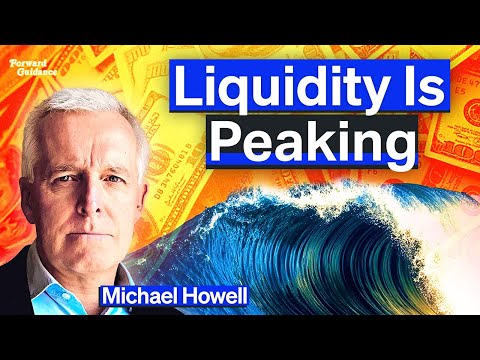
Hard Assets Are The Only Exit. Governments must monetize their staggering debt, making monetary inflation hedges like gold and crypto essential. Gold’s recent surge is the canary in the coal mine, signaling a major catch-up move for Bitcoin is imminent.
Forget the Trade War; Watch the Capital War. The real global conflict is financial. The US is building its future on digital dollars (stablecoins), while China is anchoring its system to gold. This divergence will define capital flows for the next decade.
The Bitcoin 4-Year Cycle Is Dead. Treat Bitcoin as a global macro asset driven by liquidity and its relationship with gold. Its recent price consolidation is a sign of distribution from old hands to new institutional players, setting the stage for its next major move.
Utility Trumps Scarcity: The most valuable crypto asset will be the one powering the most economic activity, not simply the one with the most predictable supply.
Solana’s Technical Roadmap is Key: A future state with multiple concurrent block producers will give Solana a decisive advantage in censorship resistance and performance over its rivals.
Bet on SOL to Flip BTC: Samani’s core investment thesis is that as Solana’s real-world adoption becomes undeniable over the next decade, SOL is positioned to become the world’s number one crypto asset.
Consolidation is Coming: The recent retail wipeout will likely funnel capital into higher-quality assets, with Bitcoin positioned to front-run altcoins in a reversal of typical bull market cycles.
Reframe Debasement as Purification: The simultaneous rise of gold and Bitcoin isn't just a hedge; it's a fundamental repricing of value and a cleansing of a broken financial system, driven by geopolitical strategy.
DATs are Not ETFs: Digital Asset Treasuries offer an active approach to crypto exposure, with smaller players uniquely positioned to capture on-chain alpha that is impossible for mega-holders to access.
**The Game Has Changed.** Stop trying to win by spot-buying overvalued altcoins in a market dominated by insiders. The real, sustainable edge is found on-chain through airdrop farming, which allows you to acquire tokens at a low cost basis and sell them to market hype.
**Become an All-Weather Farmer.** Structure your portfolio defensively. A 50%+ stablecoin allocation is not being sidelined; it's a dry powder reserve that allows you to farm, hedge, and survive while others get wiped out. Your upside comes from farming, not from being 100% long.
**Airdrops Are Your Asymmetric Bet.** Treat airdrop points as a call option on the entire crypto market. This allows you to stay risk-off with a large stablecoin position while retaining explosive upside potential if the market runs, creating a win-win scenario.
The Crash Was Technical, Not Existential: This wasn't another Luna. It was a liquidity-driven cascade originating from centralized exchanges that wiped out leveraged retail, while DeFi infrastructure proved its mettle. The fundamental bull case remains intact.
Bitcoin is a Different Animal: The stark performance divergence between a resilient Bitcoin and collapsing altcoins is the clearest signal yet that BTC now plays in a different, institutionalized league. The speculative fervor in "useless alts" is dead for the foreseeable future.
Institutions Are Buying the Debasement Story, Not the Dip: Professional investors, insulated by ETFs, completely missed the weekend's volatility. Their focus is unchanged: allocating more capital (now 3-5%) to the "purification trade" as a hedge against unstoppable fiat debasement.
Supply Shock Imminent: Corporate ETH accumulation is happening faster and with greater relative market impact than Bitcoin's history, creating a coiled spring for price.
The Stage is Set: Profit-taking from old holders is complete, hype has died down, and leverage has been wiped out. The path of least resistance for ETH is now up.
Follow the Smart Money: ETH is not just a crypto play; it's a macro-correlated, high-beta bet endorsed by some of the world's sharpest investors.