The decoupling of parameter count from active compute via sparsity means intelligence is becoming a software optimization problem as much as a hardware one.
Audit your agentic workflows for turn efficiency rather than just cost per token.
In a world of infinite tokens, the winner is the one who can verify the truth the fastest.
The Macro Pivot: The transition from LLMs as chat interfaces to LLMs as logic engines. As models move from text prediction to logic execution, the value moves from the model itself to the verification systems surrounding it.
The Tactical Edge: Audit the stack. Prioritize the integration of agentic coding tools like Jules to shorten the feedback loop between ideation and deployment.
The Bottom Line: Code is the only medium where AI can self-correct and scale without human intervention. The next 12 months will be defined by who can turn raw model power into reliable, self-healing code.
The Macro Transition: We are moving from "fire-and-forget" prompts to durable execution environments where state is as important as the model itself.
The Tactical Edge: Wrap your existing tool calls in the `useStep` function to gain instant retry logic and execution history.
The Bottom Line: Reliability is the primary moat in the agent market. Builders who adopt durable workflows will move to production while others are still debugging local scripts.
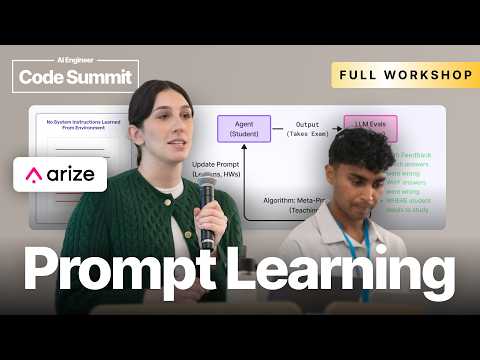
The move from manual prompt engineering to automated prompt learning. As models become commodities, the proprietary loop that refines them becomes the moat.
Implement a Train-Test Split for your prompts. Use a subset of failure data to generate new rules and validate them against a separate holdout set to ensure the logic holds.
Reliability is the only metric that matters for agent adoption. If you are not using a feedback loop to update your system instructions, you are building on sand.
The move from industrial management to creative inspiration. As AI automates routine tasks, the only remaining value is high-variance human creativity.
Apply the Keeper Test today. Ask your leads which team members they would fight for and provide generous exits for the rest to reset your talent bar.
Scaling doesn't require more rules. It requires better people. If you can maintain talent density, you can run fast while your competitors choke on their own handbooks.
From Voting to Value: Futarchy transforms governance from a popularity contest into a pure value-maximization engine, where the only thing that matters is whether a decision increases the token's price.
Investor Protection on-Chain: By locking funds in a market-governed treasury, Futarchy offers automated, code-enforced investor protections that mimic—and may even surpass—traditional shareholder rights.
The End of the Rug Pull Era: Platforms like MetaDAO create a new asset class of "ownership coins" where the incentive to rug is eliminated, signaling a potential turning point for the quality and reliability of crypto investments.
**Invisible Blockchain is the Endgame.** The biggest barrier to mass adoption is user experience. The ultimate winners will make crypto so seamless that users don't even realize they're using it.
**Revenue Beats Hype.** The industry is maturing from extractive schemes to sustainable businesses. Valuations must follow suit, focusing on ecosystem health, attention, and earned revenue—not just mints.
**Coordination Creates Wealth.** Crypto's core innovation is "human coordination on steroids," a force powerful enough to potentially trigger the largest single wealth creation event in the internet's history.
**The Four-Year Cycle Is Dead.** The absence of a parabolic, post-halving rally confirms a new paradigm. Investors should expect more sustained, multi-year growth fueled by institutional adoption and macro trends, pointing to a strong 2026.
**Stablecoins Are Capital Formation Engines.** The primary use case isn't peer-to-peer payments; it's a new financial primitive for funding real-world assets. This is crypto’s killer app for institutions.
**DeFi's Transparency Wins.** The recent liquidations proved that while CeFi remains a house of cards with opaque risks and preferential treatment for insiders, DeFi’s transparent, on-chain systems offer superior resilience.
**The Great Bifurcation Is Here.** Institutional capital is flowing into Bitcoin and Ethereum, but the flash crash proved the altcoin market is a liquidity desert. Do not mistake ETF inflows for broad market support.
**DeFi Won the Battle, CeFi Won the War (For Now).** Protocols like Aave performed perfectly, but the system's reliance on centralized exchange oracles was the critical point of failure. The future is hybrid, but the current integration is dangerously fragile.
**Cash Flow Is King.** The era of vaporware is ending. From DATs to new tokens, the market will no longer tolerate projects without a clear path to revenue. The music has stopped for assets without a viable business model.
Leverage is the market's double-edged sword. The $19B flash crash was a cascade failure driven by leverage, not fundamentals. It exposed the fragility of perpetual exchanges and the critical risk of Auto-Deleveraging (ADL) even for sophisticated traders.
Wall Street is tokenizing everything. Larry Fink and BlackRock are building the operating system to move trillions in traditional assets on-chain. This isn't a speculative bet; it's a core strategy to capture a massive, untapped global market.
Infrastructure is maturing, but risks are shifting. While core DeFi protocols proved bulletproof under stress, centralized exchanges and their oracle dependencies remain a systemic weak point, as shown by Binance's API failures and the resulting market chaos.
Altcoins Are Cooked. A decimated retail buyer base combined with relentless selling pressure from insider token unlocks creates a structurally bearish environment for the entire altcoin complex.
Farm, Don't Buy. Stop being exit liquidity. The winning strategy is to farm airdrops to acquire tokens for free and become the one who sells at launch.
Capital Preservation is King. The "one more 2x" mentality is a trap. Protect your gains by holding significant stablecoin reserves and acting quickly to de-risk. Take care of the downside, and the upside will take care of itself.