The Macro Shift: Context management is the new compute. As models get smarter, the winning architecture will be the one that most efficiently partitions and feeds relevant data to sub-agents.
The Tactical Edge: Prioritize reviewability. When building or using agents, focus on tools that provide clear diffs and tours of changes rather than just raw code generation.
The Bottom Line: The developer's role is evolving from a writer to an orchestrator. Success in the next 12 months depends on mastering the skill of agentic review rather than manual syntax.
The Macro Shift: Engineering is moving from a headcount-driven Opex model to an infrastructure-driven autonomy model where validation is the primary capital asset.
The Tactical Edge: Audit your codebase against the eight pillars of automated validation. Start by asking agents to generate tests for existing logic to close the coverage gap.
The Bottom Line: Massive velocity gains are not found in the next model update. They are found in the rigorous internal standards that allow agents to operate without human hand-holding.
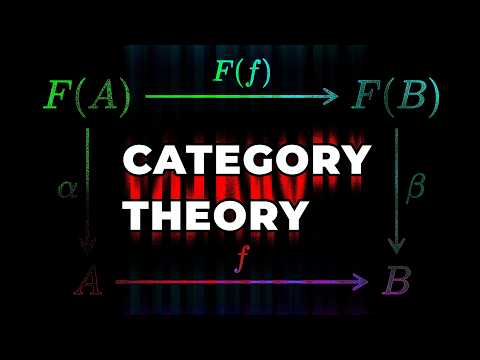
[Algorithmic Convergence]. The gap between symbolic logic and neural networks is closing through category theory. Expect architectures that are "correct by construction" rather than just "likely correct."
[Audit Architecture]. Evaluate new models based on their "algorithmic alignment" rather than just parameter count. Prioritize implementations that bake in non-invertible logic.
The next year will see a shift from scaling data to scaling structural priors. If you aren't thinking about how your model's architecture mirrors the problem's topology, you are just an alchemist in a world about to discover chemistry.
Strategic Implication: The future of software development isn't about *if* we use AI, but *how* we integrate human understanding and architectural discipline to prevent an "infinite software crisis.
Builder/Investor Note: Builders must prioritize deep system understanding and explicit planning over raw generation speed. Investors should favor companies that implement robust human-in-the-loop processes for AI-assisted development.
The "So What?": Over the next 6-12 months, the ability to "see the seams" and manage complexity will differentiate thriving engineering teams from those drowning in unmaintainable, AI-generated code.
Strategic Implication: The market for AI transformation services is expanding rapidly, driven by enterprises seeking to integrate AI for tangible business outcomes.
Builder/Investor Note: Focus on AI solutions with clear, practical applications for mid-market and enterprise clients. Technical talent capable of bridging research with deployment holds significant value.
The "So What?": The next 6-12 months will see increased demand for AI engineers who can implement and scale AI solutions, moving beyond proof-of-concept to widespread adoption.
Compensation Innovation: The traditional compensation playbook for engineers is outdated. New models that directly reward AI-augmented output will attract top talent and drive efficiency.
Builder/Investor Note: Founders should re-evaluate their incentive structures. Investors should seek companies experimenting with these models, as they may achieve outsized productivity.
The "So What?": The productivity gap between AI-augmented and non-AI-augmented engineers will widen. Companies that adapt their incentives will capture disproportionate value in the next 6-12 months.
Strategic Shift: Successful AI integration means identifying and solving *your* organization's specific SDLC bottlenecks, not just boosting code completion.
Builder/Investor Note: Prioritize psychological safety and invest in AI skill development. For builders, this means dedicated learning time; for investors, look for companies that do this well.
The "So What?": The next 6-12 months will separate organizations that merely *adopt* AI from those that *master* its strategic application and measurement, driving real competitive advantage.
Strategic Implication: AI integration is a company-wide transformation, not a feature. Organizations must re-architect processes, tools, and culture to compete.
Builder/Investor Note: Prioritize internal tooling that democratizes AI experimentation. Look for companies establishing "model behavior" as a distinct, cross-functional discipline.
The "So What?": The next 6-12 months will reward builders who bake AI security and user control into product design from day one, recognizing that technical mitigations alone are insufficient.
Question Sacred Cows: The path to breakthrough performance lies in challenging foundational assumptions. For Layer 2s, this means recognizing that sequencer decentralization may be a solution in search of a problem.
Focus and Outsource: MegaETH’s strategy is simple: be the best at performance by outsourcing the hardest part—consensus—to Ethereum. This allows them to build a hyper-optimized execution environment without compromising on security.
Hire Outside the Echo Chamber: The next major blockchain innovation may not come from a crypto veteran. Expertise from adjacent fields like low-latency computing can provide the first-principles thinking needed to solve the industry’s most entrenched problems.
**Allocations Are Multiplying:** The standard institutional crypto allocation is moving from a timid 1% to a more confident 3-5%, driven by crypto's declining volatility and the fading fear of a "go-to-zero" event.
**The ETF Universe is Exploding:** New SEC guidelines will unleash a wave of crypto ETFs, from single assets to index funds. This will reshape market structure and provide traditional investors with simple on-ramps to the entire ecosystem.
**Stablecoins are the Real Trojan Horse:** Beyond Bitcoin, institutional demand for stablecoins is immense. They aren't just an asset; they are recognized as the critical settlement layer for a tokenized, 24/7 global market.
Becoming the Capital Stack: Coinbase's endgame is not just being a crypto exchange but providing the full, end-to-end infrastructure for any company—crypto or traditional—to issue, manage, and raise capital on-chain.
Acquire Missionaries, Not Mercenaries: Their M&A success hinges on a proactive, culture-first approach. They identify strategic needs, hunt for the best teams, and integrate them deeply, ensuring founders stay long after their earnouts expire.
Prediction Markets are the Next Trojan Horse: Coinbase is betting big on prediction markets to onboard the next wave of mainstream users, using familiar activities like sports betting as an accessible entry point into the crypto ecosystem.
Leverage Overload, Fundamental Weakness. Record leverage created a "house of cards" structure. Without strong underlying spot volume and new buyers, the market became highly susceptible to cascading liquidations.
The Profits Are In. Long-term Bitcoin holders have already cashed out nearly twice the profit they did last cycle ($900B vs. $500B), indicating the "wealth distribution" phase is well underway.
The Line in the Sand. The key level to watch is Bitcoin's 50-week moving average (around $102k). As long as Bitcoin holds above it, the bull market structure remains intact; two weekly closes below it would be a strong confirmation that the cycle is over.
**Volume is the Best Validation**: Meme coins proved Solana isn't just fast in theory; it can handle transactional loads that surpass major centralized exchanges, making it a credible platform for serious financial assets.
**Simplicity Wins**: Solana’s killer feature is its seamless user experience. By eliminating the bridging and multi-chain complexities of rivals, it has created a low-friction environment that attracts both developers and mainstream users.
**The Next Frontier is Tokenization**: The meme coin craze was the chaotic opening act. The main event is the tokenization of real-world assets, and Solana’s proven performance has positioned it as the frontrunner to become the settlement layer for this new market.
Stop Reacting, Start Anticipating: The market’s direction is a better economic predictor than official data. Focus on forward guidance, not rearview-mirror analysis.
Bitcoin Is a Macro Asset: The primary thesis for assets like Bitcoin stems from the structural debasement of fiat currencies. Analyze it through the lens of global liquidity and monetary policy.
Trust the Market, Not the Fed: The bond market can and will reject central bank policy. When market signals contradict official narratives, pay attention—the market is often right.