The Macro Shift: Context management is the new compute. As models get smarter, the winning architecture will be the one that most efficiently partitions and feeds relevant data to sub-agents.
The Tactical Edge: Prioritize reviewability. When building or using agents, focus on tools that provide clear diffs and tours of changes rather than just raw code generation.
The Bottom Line: The developer's role is evolving from a writer to an orchestrator. Success in the next 12 months depends on mastering the skill of agentic review rather than manual syntax.
The Macro Shift: Engineering is moving from a headcount-driven Opex model to an infrastructure-driven autonomy model where validation is the primary capital asset.
The Tactical Edge: Audit your codebase against the eight pillars of automated validation. Start by asking agents to generate tests for existing logic to close the coverage gap.
The Bottom Line: Massive velocity gains are not found in the next model update. They are found in the rigorous internal standards that allow agents to operate without human hand-holding.
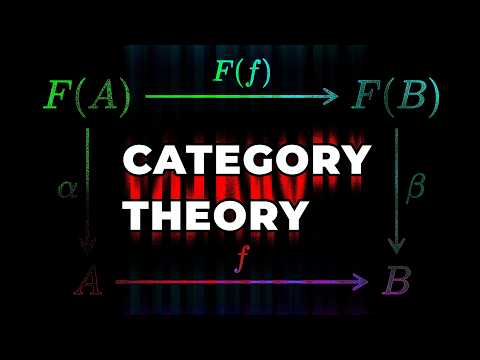
[Algorithmic Convergence]. The gap between symbolic logic and neural networks is closing through category theory. Expect architectures that are "correct by construction" rather than just "likely correct."
[Audit Architecture]. Evaluate new models based on their "algorithmic alignment" rather than just parameter count. Prioritize implementations that bake in non-invertible logic.
The next year will see a shift from scaling data to scaling structural priors. If you aren't thinking about how your model's architecture mirrors the problem's topology, you are just an alchemist in a world about to discover chemistry.
Strategic Implication: The future of software development isn't about *if* we use AI, but *how* we integrate human understanding and architectural discipline to prevent an "infinite software crisis.
Builder/Investor Note: Builders must prioritize deep system understanding and explicit planning over raw generation speed. Investors should favor companies that implement robust human-in-the-loop processes for AI-assisted development.
The "So What?": Over the next 6-12 months, the ability to "see the seams" and manage complexity will differentiate thriving engineering teams from those drowning in unmaintainable, AI-generated code.
Strategic Implication: The market for AI transformation services is expanding rapidly, driven by enterprises seeking to integrate AI for tangible business outcomes.
Builder/Investor Note: Focus on AI solutions with clear, practical applications for mid-market and enterprise clients. Technical talent capable of bridging research with deployment holds significant value.
The "So What?": The next 6-12 months will see increased demand for AI engineers who can implement and scale AI solutions, moving beyond proof-of-concept to widespread adoption.
Compensation Innovation: The traditional compensation playbook for engineers is outdated. New models that directly reward AI-augmented output will attract top talent and drive efficiency.
Builder/Investor Note: Founders should re-evaluate their incentive structures. Investors should seek companies experimenting with these models, as they may achieve outsized productivity.
The "So What?": The productivity gap between AI-augmented and non-AI-augmented engineers will widen. Companies that adapt their incentives will capture disproportionate value in the next 6-12 months.
Strategic Shift: Successful AI integration means identifying and solving *your* organization's specific SDLC bottlenecks, not just boosting code completion.
Builder/Investor Note: Prioritize psychological safety and invest in AI skill development. For builders, this means dedicated learning time; for investors, look for companies that do this well.
The "So What?": The next 6-12 months will separate organizations that merely *adopt* AI from those that *master* its strategic application and measurement, driving real competitive advantage.
Strategic Implication: AI integration is a company-wide transformation, not a feature. Organizations must re-architect processes, tools, and culture to compete.
Builder/Investor Note: Prioritize internal tooling that democratizes AI experimentation. Look for companies establishing "model behavior" as a distinct, cross-functional discipline.
The "So What?": The next 6-12 months will reward builders who bake AI security and user control into product design from day one, recognizing that technical mitigations alone are insufficient.
Embrace Financial Autonomy: Athletes are adopting crypto not just for gains, but for control. They are tired of a financial system where they are told to "shut your mouth and go play basketball" while trusting strangers with their money.
Regulation is a Two-Front War: The crypto industry must fight defensively to protect wins like stablecoin rewards while also playing offense to ensure new regulations don't stifle DeFi innovation before it can mature.
Prediction Markets are Information Markets: Their true disruption isn't just taking on FanDuel; it's creating a more efficient, decentralized, and transparent way to surface truth in real-time, for everything from sports to politics.
**Buy the Blood:** Massive open interest liquidations have historically been powerful buy signals, not a reason to panic. The data shows strong positive returns in the 30-120 days following such events.
**Invest in Token Factories:** The convergence of AI and crypto is creating a new paradigm. The most valuable companies will be those that control proprietary "token supplies" for identity, data, and assets, making the world machine-readable.
**Pick Your Winners:** The market is maturing. As barriers to entry rise, capital will consolidate around established leaders. Shift focus from chasing the "next new thing" to identifying compounding winners in categories like L1s and exchanges.
Capital Formation is the New Battleground: Coinbase’s Echo deal is a $400M bet to own the token launch pipeline, directly challenging Binance's Launchpad dominance.
Banks are Officially on Defense: The Fed’s "skinny master account" proposal threatens to let fintechs bypass banks entirely, a disruption so real that bank CEOs are publicly admitting innovators will win.
Prediction Markets are Going Mainstream: DraftKings' partnership with Polymarket validates the model as a legitimate workaround for complex state-level gambling laws, signaling a massive new distribution channel.
Sell the News, Buy the Self-Own. Eclipse’s price action demonstrates that in crypto, counter-narrative marketing can be more effective than traditional hype. When a project publicly acknowledges its own failures, it can signal a market bottom.
Culture is Strategy. The contrast between Ethereum’s perceived complacency and Solana’s hungry underdog ethos directly impacts developer incentives and innovation speed. Ecosystems with a clear, aggressive mission attract and retain talent differently.
Watch the SKR Token. As only the second token from Solana Labs, the SKR launch carries significant reputational weight. Investors should monitor its mechanics, as it will likely set a new standard for ecosystem projects launched by a parent company.
Fade the Cycle Narrative: The influx of new, cycle-agnostic capital via ETFs means the market's rhythm has changed. Sideways price action is the new up, signaling strong demand is absorbing OG selling.
Buy Picks, Shovels, and Yield: The era of riding hyped, valueless memecoins is over. The durable strategy is to own the infrastructure (Robin Hood) or assets that generate and return real fees to holders (Shuffle, Aerodrome).
Arbitrage Information Gaps: Find your edge in niche markets. Exploitable alpha exists in prediction markets, whether through contrarian betting, language advantages, or AI-powered analysis.
Stablecoins Are The Trojan Horse. They have achieved undeniable product-market fit, rivaling legacy payment rails and becoming a key tool for U.S. dollar dominance. They are the gateway for both institutional players and everyday users in emerging markets.
Usage is Divorced From Speculation. For the first time, practical on-chain activity is being driven by users in developing nations who *need* crypto, while speculation is led by those in developed nations who *want* it. The next bull run will be driven by products that bridge this divide.
The Bottleneck is No Longer Technology. With scalability largely solved (blockchains now process over 3,400 TPS), the primary barriers to adoption have shifted from infrastructure to product design, user experience, and regulatory clarity.