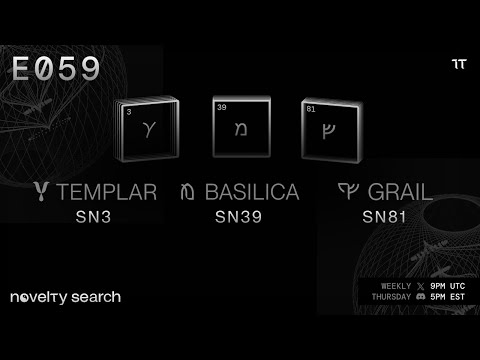
Sovereign AI is Non-Negotiable. The ecosystem cannot depend on centralized entities for foundational models. Templar’s `Sparse Loco` optimizer is the technological key to unlocking truly permissionless, large-scale model pre-training.
Services are the Moat, Not Compute. Basilica’s strategy confirms that raw decentralized compute is a tough business. The real value lies in building proprietary services—like verifiable inference and compute-multiplying tech—that nobody else can offer.
Vertical Integration is the Endgame. The strategy is a closed loop: Templar builds the model, Basilica provides the efficient compute, and Grail makes it intelligent. This integrated pipeline is the path to putting a Bittensor-native, state-of-the-art model on the world stage.
Full-Stack Dominance. The synergy between pre-training (Templar), post-training (Grail), and specialized compute (Basilica) creates a powerful flywheel, positioning them to build models and services end-to-end within their own ecosystem.
Research is the Moat. The team’s edge comes from fundamental research breakthroughs like Sparse LoCo and the Grail verification algorithm, creating unique capabilities rather than just competing on price or copying Web2 business models.
Beyond Commodity Compute. The vision for Basilica is clear: evolve beyond rentals and offer unique, high-margin services like verifiable inference and compute optimization that solve critical problems for the entire decentralized AI space.
China Isn't Copying; It's Out-Building. From EVs to AI, China's engineering-led culture and intense internal competition are creating superior products at faster speeds and lower costs.
The Real Battle is at Home. America's biggest obstacle isn't China; it's its own self-imposed friction. Winning requires aggressive domestic reforms that slash red tape and re-ignite a culture of building.
Pragmatism Beats Belligerence. The leaders on the front lines of global business see China with clear eyes. The U.S. must trade uninformed rhetoric for a pragmatic strategy of competing, learning, and accelerating its own innovation race.
Watch the Second Derivative, Not the Deficit. The market cares about the acceleration of money creation. A deficit shrinking from 7% to 5.5% of GDP is a major decelerating force, even if the absolute number remains large.
Tariffs Are a Stealth Tightening. Without larger offsetting stimulus, tariffs act as a significant fiscal drag, effectively tightening financial conditions and creating a headwind for economic growth.
AI Capex is the Bull Market's Wildcard. The single most important driver of private money creation is debt-fueled spending on AI infrastructure. This is the primary force propping up nominal growth and could offset some of the public sector slowdown.
Bittensor is a Capitalism Engine, Not Just an AI Network. TAO's structure incentivizes pure competition and can be used to decentralize any digital business, creating natural, escalating demand for the token as more "subnets" (companies) launch on the platform.
The Public Treasury is the New VC. For niche but high-potential tokens like TAO, a publicly traded treasury company offers a powerful vehicle for capital aggregation and provides retail investors access through traditional markets. The key metric isn't AUM, but increasing tokens per share.
Obsession is the Only Moat. In a world of constant change, the only sustainable advantage is a deep, relentless obsession. Altucher's career proves that diving into niche interests with total focus is the path to reinvention and success.
**AI's Cartesian Error:** Modern AI treats intelligence as software, ignoring the critical role of hardware and environment. This "computational dualism" is a fundamental mistake; true intelligence is embodied and enactive.
**Biology's Stack is Smarter:** Biological systems are hyper-efficient because they delegate adaptation across a full "stack" of abstraction layers (cells, organs, organism). Today’s AI systems are rigid bureaucracies that only learn at the top.
**Intelligence Requires Consciousness:** Consciousness is a necessary adaptation for navigating the world, not a mystical add-on. Truly intelligent and adaptive agents will, by necessity, be conscious.
Product and Distribution Are King: Having a proprietary model is not a prerequisite for success. More than half of the top-performing "AI All-Stars" thrive by building superior user experiences on top of existing models, proving that UI and community are powerful moats.
Vibe Coding Is the New Killer App: The explosive growth and unprecedented retention of vibe coding platforms signal a major new trend. These tools are empowering a new generation of builders and rapidly bridging the gap between consumer and prosumer use cases.
The Platform Wars Are Just Beginning: Don't count the incumbents out. Google's strong debut with four products shows the fight for AI dominance is a multi-front war, while Chinese firms are proving adept at competing in both domestic and international markets simultaneously.
**Automate Humans, Don't Replace Software.** The biggest opportunities are in augmenting human workflows that have never been codified in software. This requires a hands-on, problem-solving approach, not an off-the-shelf product.
**'Forward Deployed' Teams are the New Kingmakers.** This hybrid role—part builder, part consultant, part visionary—is the essential bridge for getting complex AI into production within large enterprises, closing the gap between platform potential and real-world customer needs.
**Sacrifice Near-Term Margin for Long-Term Moat.** In this platform shift, obsessive margin-chasing is a fatal error. The winning move is to do the messy, hands-on implementation work to embed your solution, own the critical data layer, and build a truly defensible business.
Embrace Specialization, Not Generalization. The most effective AI systems are emerging from a “system of many agents” approach. Instead of chasing a single AGI, the trend is toward building and orchestrating multiple deep experts, each with a narrow focus.
AI Augments Experts, It Doesn't Replace Novices. The biggest productivity gains are going to those who already have domain expertise. AI is a tool whose value is unlocked by a user who can provide precise prompts and critically evaluate the output.
The Next Thousand Unicorns are Agent Companies. The startup playbook is clear: go deep on a single, vertical workflow and build an agent that does it better than anyone else. Just as APIs like Twilio and Stripe unbundled services, agents will unbundle workflows, creating entire companies from what was once a feature.
Social Proof is the New Alpha. FOMO’s core bet is that transparently tracking successful wallets is a more powerful discovery mechanism than traditional research. By making on-chain activity legible and social, it unlocks a new paradigm for retail investing.
User Experience Wins the Next Cycle. The next 100 million crypto users will not be onboarded with seed phrases and gas fees. By abstracting away all technical friction and mirroring the seamlessness of Web2 apps, FOMO provides a blueprint for mass adoption.
Trading is Becoming a Spectator Sport. By turning trading performance into a form of content, FOMO is building a new financial creator economy. The best traders are the new influencers, and their alpha is the content that drives the entire ecosystem.
The Internet Gets Its Native Wallet. x402 uses crypto to finally fulfill the internet's original vision of direct, peer-to-server payments, unlocking an economy of micropayments for everything from accessing an article to running an AI model.
The Ad-Supported Web Is Obsolete. AI agents that retrieve information without viewing ads are killing the web's 20-year-old business model. x402 provides the new economic rails for a pay-per-use internet where value is exchanged for resources, not attention.
Build Composable Money Legos. The biggest opportunity lies in creating simple, single-purpose APIs that agents can easily discover and compose. Think of it as building for the App Store of the emerging AI agent economy.
Despite the brutal sentiment, both speakers remain bullish, predicting a sharp reversal and a new all-time high for Bitcoin by the end of the year once macro clarity emerges.
Macro is King. Bitcoin's fate is now tied to the broader economy. Forget four-year cycles; the key catalyst is a resolution to the government shutdown, which could unlock pent-up energy in the market.
The Treasury Trade is Toast. The era of companies boosting their stock by simply buying Bitcoin is over. Expect a painful shakeout as the market demands real utility and revenue, leading to more forced selling.
Distribution is the prize, not payments. The real money in gaming isn't in payment rails, which are being competed down to zero. The scarcest and most valuable asset is user attention, and Open Game Protocol is designed to monetize distribution.
Decouple to survive. Tying a single game to a single token creates a fatal dependency. A flexible, many-to-many protocol allows ecosystems to thrive by spreading risk and aligning incentives across multiple games and communities.
Content abundance requires new discovery. As AI makes game creation cheap and fast, the bottleneck shifts from production to discovery. Integrating games directly into high-intent surfaces like crypto wallets creates a powerful, non-advertising-based discovery channel.
**Follow the Suits, Not the Shouts.** The market’s real signal is the massive disconnect between gloomy retail sentiment on social media and the unprecedented optimism from financial advisors and institutional platforms.
**Distribution is the New Kingmaker.** From Ripple buying prime brokerages to Tether leveraging its global south dominance, the primary battle is for distribution channels. The technical "best" solution is irrelevant if it can't reach users.
**Regulation Will Be a Slow Grind, Not a Big Bang.** Comprehensive crypto legislation is politically gridlocked. The industry’s integration into legacy finance will continue brick-by-brick through regulated products like ETFs, not sweeping bills from Congress.
Tokenized Funds Are a Real-World Unlock. Unlike many crypto narratives, bringing funds on-chain solves a tangible, expensive problem in traditional finance, creating massive operational efficiencies and new financial primitives.
The Bitcoin Holder Base Is Shifting. The ongoing "Bitcoin IPO" via ETFs means the asset is moving from the hands of early adopters to institutional portfolios. This structural shift will define its future trajectory.
Cash Is Your Best Hedge. In a market with fewer winners, holding cash is a strategic imperative. It prevents forced liquidation and provides the dry powder needed to seize high-conviction opportunities as they arise.