Strategic Implication: The next decade will be defined by who builds the core infrastructure for intelligence. This is where the most significant value and influence will accrue.
Builder/Investor Note: Direct capital and talent towards foundational AI components—chips, models, and interoperable systems. Avoid the temptation to only build at the application layer.
The So What?: The window for shaping the future of intelligence is now. Engage in the deepest, most complex challenges to secure a footprint in this new era.
Strategic Implication: The global AI race is a zero-sum game for foundational models. Europe's best strategy is a "smart second mover" approach, focusing on the implementation layer by ensuring interoperability and data portability.
Builder/Investor Note: Invest in AI that achieves true autonomy and enhances expert productivity. Be wary of markets stifled by over-regulation, which can impede AI adoption and growth.
The "So What?": Europe faces a critical juncture. Without embracing AI-driven growth, its demographic and debt problems will worsen, leading to higher interest rates without the corresponding economic expansion.
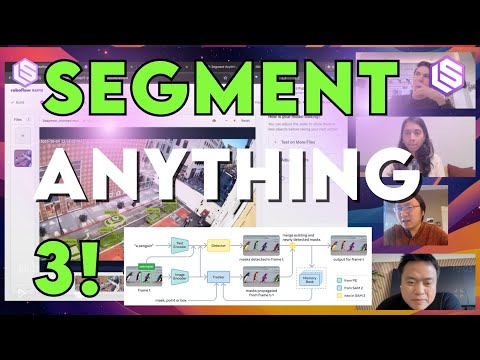
Vision AI Democratization: SAM 3 lowers the barrier for sophisticated vision tasks, making advanced segmentation and tracking accessible for a wider range of applications.
Builder/Investor Note: Focus on domain-specific adaptations and tooling that enhance human-AI interaction for ambiguous visual concepts. The "last mile" of user intent is a key differentiator.
The "So What?": SAM 3 accelerates the development of multimodal AI, particularly in robotics and video analysis, by providing a robust, scalable visual foundation for the next generation of intelligent systems.
Strategic Shift: The next frontier in robotics is less about pure algorithmic breakthroughs and more about building robust, scalable data infrastructure and full-stack product systems that can handle the messy physical world.
Builder/Investor Note: Prioritize companies solving the "boring" but critical data and systems problems. Look for practical, "scrappy" companies deploying robots in specific industrial niches, rather than just those with flashy, general-purpose demos.
The "So What?": The gap between impressive demos and deployable products will narrow over the next 6-12 months as data pipelines mature and product-focused companies gain traction. Expect to see more robust, self-correcting robots performing longer, more complex tasks in controlled environments.
Ecosystem Dominance: NVIDIA's strategy extends beyond hardware; they are building an end-to-end ecosystem of software, open-source models, and direct support, making them indispensable for national AI initiatives.
Builder Opportunity: Leverage NVIDIA's open-source Blueprints for agentic AI and Nemotron models for high-performance, customizable solutions. Prioritize local context in model training and data.
Strategic Imperative: Sovereign AI is a growing global trend. Nations and companies that can build and control AI tailored to their specific cultural, linguistic, and regulatory environments will gain a significant advantage in the coming years.
The democratization of RL fine-tuning will accelerate the development and deployment of more reliable and sophisticated AI agents across industries.
Builders should explore open-source LLMs combined with RL fine-tuning as a cost-effective strategy to achieve specific performance benchmarks, especially where latency and cost are critical.
Platforms abstracting infrastructure complexity and providing integrated tooling for the entire AI development lifecycle are crucial for the next phase of AI agent deployment.
Pre-Training is the New Frontier: The next leap in AI capabilities, particularly for agentic systems, will come from fundamental advancements in pre-training, not just post-training tweaks.
Builders & Investors: Focus on teams rethinking loss objectives, curating high-quality reasoning data, and developing dynamic benchmarks for agentic capabilities. Be wary of "agentic" claims that lack foundational pre-training innovation.
The "So What?": Over the next 6-12 months, expect a push for new benchmarks and data strategies that explicitly train models for multi-step planning, long-form reasoning, and error recovery, moving beyond simple next-token prediction.
Strategic Implication: AI fundamentally changes the economics of software development. Organizations must re-evaluate what constitutes "high-quality" engineering and adapt their processes.
Builder/Investor Note: Prioritize platforms that provide guardrails and guidance for AI tool usage, focusing on deterministic verification and robust testing. Uncontrolled AI deployment risks technical debt.
The "So What?": The next 6-12 months will see a bifurcation: companies that strategically integrate AI into their engineering culture and platforms will gain significant efficiency, while those that don't will struggle with quality and adoption.
Workflow Automation is the New Frontier: The real value of AI in developer tools comes from orchestrating entire workflows, not just individual point solutions.
Embed for Adoption: Tools must integrate seamlessly into existing workflows and IDEs (like Cursor) to achieve high usage.
Support as a Code-Shipping Powerhouse: Empowering non-traditional roles with AI-driven code generation leverages their unique, real-time context, creating significant operational leverage.
Social Proof is the New Alpha. FOMO’s core bet is that transparently tracking successful wallets is a more powerful discovery mechanism than traditional research. By making on-chain activity legible and social, it unlocks a new paradigm for retail investing.
User Experience Wins the Next Cycle. The next 100 million crypto users will not be onboarded with seed phrases and gas fees. By abstracting away all technical friction and mirroring the seamlessness of Web2 apps, FOMO provides a blueprint for mass adoption.
Trading is Becoming a Spectator Sport. By turning trading performance into a form of content, FOMO is building a new financial creator economy. The best traders are the new influencers, and their alpha is the content that drives the entire ecosystem.
The Internet Gets Its Native Wallet. x402 uses crypto to finally fulfill the internet's original vision of direct, peer-to-server payments, unlocking an economy of micropayments for everything from accessing an article to running an AI model.
The Ad-Supported Web Is Obsolete. AI agents that retrieve information without viewing ads are killing the web's 20-year-old business model. x402 provides the new economic rails for a pay-per-use internet where value is exchanged for resources, not attention.
Build Composable Money Legos. The biggest opportunity lies in creating simple, single-purpose APIs that agents can easily discover and compose. Think of it as building for the App Store of the emerging AI agent economy.
Despite the brutal sentiment, both speakers remain bullish, predicting a sharp reversal and a new all-time high for Bitcoin by the end of the year once macro clarity emerges.
Macro is King. Bitcoin's fate is now tied to the broader economy. Forget four-year cycles; the key catalyst is a resolution to the government shutdown, which could unlock pent-up energy in the market.
The Treasury Trade is Toast. The era of companies boosting their stock by simply buying Bitcoin is over. Expect a painful shakeout as the market demands real utility and revenue, leading to more forced selling.
Distribution is the prize, not payments. The real money in gaming isn't in payment rails, which are being competed down to zero. The scarcest and most valuable asset is user attention, and Open Game Protocol is designed to monetize distribution.
Decouple to survive. Tying a single game to a single token creates a fatal dependency. A flexible, many-to-many protocol allows ecosystems to thrive by spreading risk and aligning incentives across multiple games and communities.
Content abundance requires new discovery. As AI makes game creation cheap and fast, the bottleneck shifts from production to discovery. Integrating games directly into high-intent surfaces like crypto wallets creates a powerful, non-advertising-based discovery channel.
**Follow the Suits, Not the Shouts.** The market’s real signal is the massive disconnect between gloomy retail sentiment on social media and the unprecedented optimism from financial advisors and institutional platforms.
**Distribution is the New Kingmaker.** From Ripple buying prime brokerages to Tether leveraging its global south dominance, the primary battle is for distribution channels. The technical "best" solution is irrelevant if it can't reach users.
**Regulation Will Be a Slow Grind, Not a Big Bang.** Comprehensive crypto legislation is politically gridlocked. The industry’s integration into legacy finance will continue brick-by-brick through regulated products like ETFs, not sweeping bills from Congress.
Tokenized Funds Are a Real-World Unlock. Unlike many crypto narratives, bringing funds on-chain solves a tangible, expensive problem in traditional finance, creating massive operational efficiencies and new financial primitives.
The Bitcoin Holder Base Is Shifting. The ongoing "Bitcoin IPO" via ETFs means the asset is moving from the hands of early adopters to institutional portfolios. This structural shift will define its future trajectory.
Cash Is Your Best Hedge. In a market with fewer winners, holding cash is a strategic imperative. It prevents forced liquidation and provides the dry powder needed to seize high-conviction opportunities as they arise.