The decoupling of parameter count from active compute via sparsity means intelligence is becoming a software optimization problem as much as a hardware one.
Audit your agentic workflows for turn efficiency rather than just cost per token.
In a world of infinite tokens, the winner is the one who can verify the truth the fastest.
The Macro Pivot: The transition from LLMs as chat interfaces to LLMs as logic engines. As models move from text prediction to logic execution, the value moves from the model itself to the verification systems surrounding it.
The Tactical Edge: Audit the stack. Prioritize the integration of agentic coding tools like Jules to shorten the feedback loop between ideation and deployment.
The Bottom Line: Code is the only medium where AI can self-correct and scale without human intervention. The next 12 months will be defined by who can turn raw model power into reliable, self-healing code.
The Macro Transition: We are moving from "fire-and-forget" prompts to durable execution environments where state is as important as the model itself.
The Tactical Edge: Wrap your existing tool calls in the `useStep` function to gain instant retry logic and execution history.
The Bottom Line: Reliability is the primary moat in the agent market. Builders who adopt durable workflows will move to production while others are still debugging local scripts.
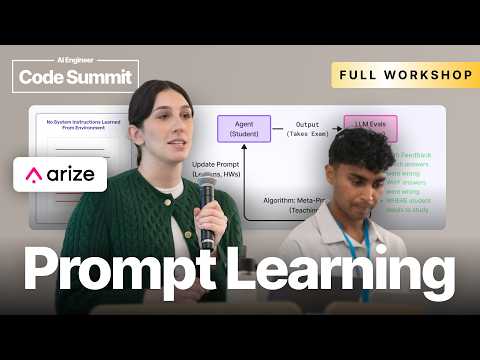
The move from manual prompt engineering to automated prompt learning. As models become commodities, the proprietary loop that refines them becomes the moat.
Implement a Train-Test Split for your prompts. Use a subset of failure data to generate new rules and validate them against a separate holdout set to ensure the logic holds.
Reliability is the only metric that matters for agent adoption. If you are not using a feedback loop to update your system instructions, you are building on sand.
The move from industrial management to creative inspiration. As AI automates routine tasks, the only remaining value is high-variance human creativity.
Apply the Keeper Test today. Ask your leads which team members they would fight for and provide generous exits for the rest to reset your talent bar.
Scaling doesn't require more rules. It requires better people. If you can maintain talent density, you can run fast while your competitors choke on their own handbooks.
Capital Efficiency Is King. In the perps world, platforms offering unified margin will win. Aggregators that fragment capital are a structural disadvantage, making trading terminals the more logical endgame.
Onboard Hobbies, Not Traders. Crypto’s growth depends on moving beyond unsustainable, zero-sum trading narratives. The next million users will be onboarded through "hobbyified" social and entertainment apps, not another DEX.
Cash Now, Builders Later. In this environment, cash is king. Use this quiet period to identify teams grinding through the bear market, especially those with performance-locked incentives like MetaDAO projects. They are the asymmetric bets of the next cycle.
**Solve the Privacy Bug.** Institutions will not move sensitive operations onto fully transparent ledgers. The future is permissioned visibility, where regulators and involved parties can see data, but the public cannot.
**Composability is the Killer App.** The true unlock for on-chain finance is the ability to atomically combine different assets and workflows without operational risk. Fragmented L2s endanger this core value proposition.
**The Next Wave is Capital Markets Infrastructure.** The long-term moat for any network targeting institutional finance is not just its tech, but its ecosystem of interconnected banks, funds, and market makers operating in a compliant, private environment.
Stop Obsessing Over the Fed. The dominant force driving market liquidity is the geopolitical rivalry between the U.S. and China, which dictates massive cross-border capital flows and underpins U.S. asset valuations.
This Is a Repricing, Not a Recession. The current market drawdown is a healthy positioning unwind, not a crisis. The lack of a fear bid in long-term bonds signals this is an opportunity to buy the dip in a structural bull market.
Bitcoin Failed the Safe-Haven Test. Gold remains the premier asset for hedging geopolitical risk. Bitcoin has demonstrated it is a high-beta risk asset, with its recent rally driven more by speculative corporate treasury activity than a fundamental macro role.
Value is Decoupling from EBITDA. A brand's true worth is increasingly measured by its cultural impact, not just its revenue. Tokenization provides the mechanism to price and trade this cultural capital.
Memecoins are a Feature, Not a Bug. They are the earliest, purest form of tokenized culture, proving that a financial layer can supercharge a community's growth and alignment.
Invest in Cultural Arbitrage. The biggest opportunities are in projects and brands whose cultural influence dramatically outweighs their current financial metrics. This gap between impact and income is where tokenization creates exponential value.
Transparency Is the Best Moderator. Instead of policing content, Dune makes the underlying source code for every analysis public, empowering the community to self-regulate and verify data quality.
Build With the Ethos of the Ecosystem. Dune succeeded by embracing crypto's open-source nature, creating a collaborative platform that felt native to the space, unlike closed-source competitors.
Incentives Don't Have to Be Financial. Reputation, influence, and the ability to contribute to a shared body of knowledge are powerful motivators for community participation in open platforms.
**Short Everything But Bitcoin.** The vast majority of crypto assets trade at unjustifiable multiples based on cyclical, speculative revenue. Bitcoin, as a "digital gold" macro hedge, is the only asset with a durable investment thesis that stands apart from the overvalued tech plays.
**The L1 Thesis is Dead.** Investing in L1s is a bet on obsolete infrastructure. Future returns will be captured by killer applications that build real businesses and bring non-speculative users on-chain, not by the commoditized blockspace they run on.
**Acquire Users, Don't Wait For Them.** Crypto's central problem is its failure to grow its user base. The winning strategy is to buy existing businesses with real customers and integrate blockchain technology, thereby acquiring distribution rather than trying to build it from scratch in a hyper-competitive market.