Strategic Implication: The value in software development shifts from manual coding to high-level architectural design and prompt engineering.
Builder/Investor Note: Experiment with AI Studio's agentic and design capabilities. Focus on describing desired functionality rather than low-level code.
The "So What?": The next 6-12 months will see a surge in AI-powered, full-stack applications built by a broader range of creators, disrupting traditional development paradigms.
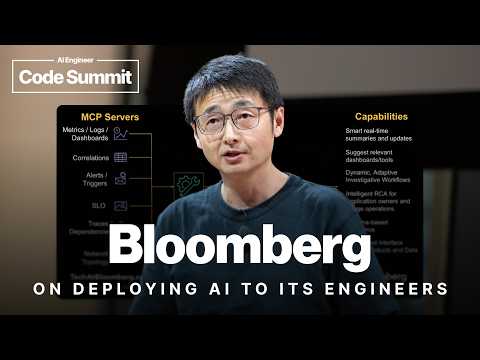
Strategic Shift: AI's impact extends beyond simple productivity. The real opportunity lies in fundamentally changing the cost function of engineering, making previously expensive or undesirable tasks cheap and feasible.
Platform Imperative: For large organizations, a "golden path" platform is not optional. It's how you manage complexity, ensure quality, and scale AI adoption safely and efficiently.
Human-Centric Adaptation: Technology is only half the battle. Investing in cultural adaptation, community building, and leadership training is crucial for realizing AI's full potential.
Strategic Implication: Companies integrating AI-driven code generation into non-engineering roles will see significant efficiency gains and improved product reliability.
Builder/Investor Note: Focus on building AI tools that deeply embed into existing workflows. Orchestration of multiple AI tools into an agent-like system is key for adoption and value.
The "So What?": The next 6-12 months will see a redefinition of "support" from reactive reporting to proactive, code-shipping problem-solving, unlocking new talent pools and accelerating development cycles.
Strategic Implication: The AI era will disproportionately reward existing businesses that deeply integrate AI to create unassailable cost structures, not just new AI-native ventures.
Builder/Investor Note: Seek out resilient "Act II" leaders who embrace the "and" business—growth, innovation, and profitability—and are willing to navigate public market scrutiny for long-term alignment.
The "So What?": Over the next 6-12 months, expect market volatility to create opportunities to invest in disciplined companies leveraging AI for fundamental operational shifts, rather than just hype.
Strategic Implication: The next wave of industrial growth will come from applying manufacturing principles to large-scale infrastructure, not just consumer goods.
Builder/Investor Note: Focus on companies that are standardizing designs and processes for physical assets, particularly those leveraging AI to navigate regulatory complexity and accelerate deployment.
The "So What?": The rapid build-out of data centers is a live experiment for a broader industrial renaissance, providing a blueprint for how America can rebuild its capacity to build at scale over the next 6-12 months.
Strategic Implication: The "AI safety" narrative is shifting from content moderation to systemic security. Focus on hardening the entire AI ecosystem, not just restricting model outputs.
Builder/Investor Note: Be wary of "AI security" products that claim to "secure the model" through guardrails. These are likely security theater. Invest in full-stack AI security solutions, red teaming services, and platforms that facilitate open-source adversarial research.
The "So What?": The future of AI security is not about building higher walls around models, but about understanding and hardening the entire ecosystem in which they operate. Open collaboration and adversarial testing are the fastest paths to robust AI.
Strategic Implication: The quality and sophistication of LLM evaluation frameworks are now as critical as the models themselves. This is a foundational layer for AI progress.
Builder/Investor Note: Builders must adopt adaptive evaluation. Investors should scrutinize how LLM performance is measured, not just the headline numbers.
The "So What?": As LLMs gain complex reasoning and instruction-following abilities, evaluation frameworks that can accurately measure these capabilities will be essential for identifying true innovation and avoiding misallocated resources in the next 6-12 months.
Sovereign AI is Real: Nations are investing in domestic AI capabilities to counter linguistic bias and ensure data control. This creates opportunities for specialized models and infrastructure.
Builder's Edge: Meticulous parameter tuning, high-quality data curation, and innovative architectures like MoE are crucial for achieving top-tier LLM performance.
The Agentic Future: AI agents are rapidly becoming indispensable tools in research and education, demanding robust, reliable, and culturally relevant LLM backbones.
Strategic Implication: The future of AI code generation hinges on dynamic, robust evaluation systems that adapt to evolving model capabilities and detect sophisticated exploitation.
Builder/Investor Note: Invest in or build evaluation infrastructure that incorporates dynamic problem sets, LLM-driven hack detection, and granular, human-centric metrics.
The "So What?": Relying on static benchmarks is a losing game. The next 6-12 months will see a push towards more sophisticated, real-world-aligned evaluation methods, separating genuinely capable models from those that merely game the system.
The industry shifts from speculative infrastructure to chains prioritizing real user experiences and sustainable models.
Builders should create "10x applications" only possible on high-performance chains like MegaETH, utilizing ultra-low latency and abundant block space for novel experiences in DeFi, gaming, social.
MegaETH's patient, app-first approach, backed by a performance-driven architecture and stablecoin-centric economic model, positions it to capture mainstream users and capital as the market demands utility.
The ongoing legislative push for crypto market structure is not just about compliance; it's about defining the very nature of digital innovation. The distinction between neutral software and regulated financial services will determine where talent and capital flow for the next decade.
Engage with policy discussions around the BRCA and similar legislation. Support organizations advocating for clear, principles-based regulation that protects open source development, ensuring your projects operate within a predictable legal framework.
Regulatory clarity for developers is the bedrock for crypto's future. Without it, innovation stalls, talent leaves, and the industry remains trapped in a legal gray area, unable to deliver on its promise of a more open and efficient financial system over the next 6-12 months.
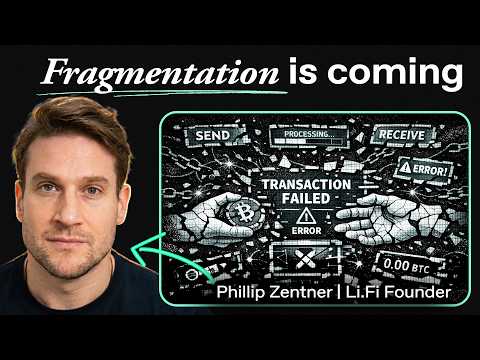
The inevitable migration of real-world assets onto blockchain networks (tokenization) is currently bottlenecked by the technical friction of a fragmented multi-chain environment.
Investigate protocols building multi-chain transaction rails that abstract away complexity. These solutions will capture significant value by enabling seamless asset flow.
The ability to execute complex cross-chain operations in a single, secure transaction is a critical infrastructure piece. This will unlock the next wave of tokenized financial products and drive mainstream adoption over the next 6-12 months.
AI-driven intent detection, powered by decentralized networks, is transforming sales from a volume game to a precision operation.
Investigate AI-powered lead generation platforms that prioritize buyer intent and real-time validation.
The future of sales is about quality conversations, not quantity of calls. Prioritizing high-signal leads will define competitive advantage in the next 6-12 months.
The crypto industry is transitioning from a purely speculative, crypto-native phase to one deeply intertwined with traditional finance, driven by regulatory pushes and VC capital seeking tangible, compliant use cases.
Engage with policymakers: Call your representatives and advocate for clear, innovation-friendly crypto regulation. Your voice matters more than you think in shaping the final bill.
The next 6-12 months will define crypto's regulatory foundation in the US, impacting everything from stablecoin utility to DeFi developer liability.
Token Taxonomy: Old token categories (utility, governance, network) are increasingly irrelevant. Investors now evaluate tokens with equity-like frameworks, focusing on product usage and future growth.
Market Demand: Financial markets currently reward projects implementing token buybacks. This addresses a low-trust environment where investors seek clear, demonstrable value accrual.
Core Value: A token's price ultimately depends on a good business and a product people use. Without genuine demand, buybacks alone are insufficient to offset token emissions or create lasting value.