The Macro Shift: Agentic Abstraction. We are moving from Model-as-a-Service to Agent-as-a-Service where the harness is as important as the weights.
The Tactical Edge: Standardize your CLI. Use tools like ripgrep (RG) that models already have "habits" for to see immediate performance gains.
The Bottom Line: The next 12 months will see the end of manual integration engineering as agents become capable of navigating UIs and legacy terminals autonomously.
The commoditization of syntax means architectural judgment is the only remaining moat. As the cost of code hits zero the value of intent skyrockets.
Replace your manual refactoring workflows with a burn and rebuild strategy. Use agents to generate entirely new modules instead of patching old ones.
Seniority is no longer a shield against obsolescence. You must spend the next six months building your agentic intuition or risk being replaced by a PhD student with a prompt.
The Macro Evolution: Standardized communication layers are replacing custom API integrations. This commoditizes the connector market and moves value to the models that best utilize these tools.
The Tactical Edge: Standardize your internal data tools using MCP servers today. This ensures your company is ready for autonomous agents that can discover and use your resources without manual API integration.
The Bottom Line: The agentic stack is consolidating around MCP. Interoperability is no longer a feature; it is the foundation for the next decade of AI utility.
The Macro Shift: From Model-Centric to Eval-Centric. The value is moving from the LLM itself to the proprietary evaluation loops that keep the LLM on the rails.
The Tactical Edge: Export production traces and build a "Golden Set" of 50 hard examples. Use these to run A/B tests on every prompt change before hitting production.
The Bottom Line: Reliability is the product. If you cannot measure how your agent fails, you haven't built a product; you've built a demo.
The transition from chatbots with tools to agents that build tools marks the end of the manual integration era.
Stop building custom model scaffolding and start building on top of opinionated agent layers like the Codex SDK.
In 12 months, the distinction between a coding agent and a general computer user will vanish as the terminal becomes the primary interface for all digital labor.
The Capability-Utility Gap is widening. We see a divergence where models get smarter but the friction of human-AI collaboration keeps productivity flat.
Deploy AI for mid-level engineers or low-context tasks. Avoid forcing AI workflows on your top seniors working in complex legacy systems.
The next year will focus on reliability over raw intelligence. The winners will have models that require the least amount of human babysitting.
The industry shifts from speculative infrastructure to chains prioritizing real user experiences and sustainable models.
Builders should create "10x applications" only possible on high-performance chains like MegaETH, utilizing ultra-low latency and abundant block space for novel experiences in DeFi, gaming, social.
MegaETH's patient, app-first approach, backed by a performance-driven architecture and stablecoin-centric economic model, positions it to capture mainstream users and capital as the market demands utility.
The ongoing legislative push for crypto market structure is not just about compliance; it's about defining the very nature of digital innovation. The distinction between neutral software and regulated financial services will determine where talent and capital flow for the next decade.
Engage with policy discussions around the BRCA and similar legislation. Support organizations advocating for clear, principles-based regulation that protects open source development, ensuring your projects operate within a predictable legal framework.
Regulatory clarity for developers is the bedrock for crypto's future. Without it, innovation stalls, talent leaves, and the industry remains trapped in a legal gray area, unable to deliver on its promise of a more open and efficient financial system over the next 6-12 months.
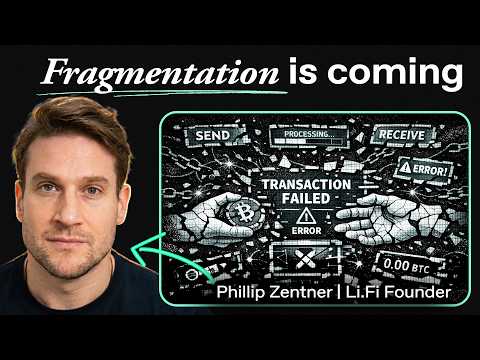
The inevitable migration of real-world assets onto blockchain networks (tokenization) is currently bottlenecked by the technical friction of a fragmented multi-chain environment.
Investigate protocols building multi-chain transaction rails that abstract away complexity. These solutions will capture significant value by enabling seamless asset flow.
The ability to execute complex cross-chain operations in a single, secure transaction is a critical infrastructure piece. This will unlock the next wave of tokenized financial products and drive mainstream adoption over the next 6-12 months.
AI-driven intent detection, powered by decentralized networks, is transforming sales from a volume game to a precision operation.
Investigate AI-powered lead generation platforms that prioritize buyer intent and real-time validation.
The future of sales is about quality conversations, not quantity of calls. Prioritizing high-signal leads will define competitive advantage in the next 6-12 months.
The crypto industry is transitioning from a purely speculative, crypto-native phase to one deeply intertwined with traditional finance, driven by regulatory pushes and VC capital seeking tangible, compliant use cases.
Engage with policymakers: Call your representatives and advocate for clear, innovation-friendly crypto regulation. Your voice matters more than you think in shaping the final bill.
The next 6-12 months will define crypto's regulatory foundation in the US, impacting everything from stablecoin utility to DeFi developer liability.
Token Taxonomy: Old token categories (utility, governance, network) are increasingly irrelevant. Investors now evaluate tokens with equity-like frameworks, focusing on product usage and future growth.
Market Demand: Financial markets currently reward projects implementing token buybacks. This addresses a low-trust environment where investors seek clear, demonstrable value accrual.
Core Value: A token's price ultimately depends on a good business and a product people use. Without genuine demand, buybacks alone are insufficient to offset token emissions or create lasting value.