The decoupling of parameter count from active compute via sparsity means intelligence is becoming a software optimization problem as much as a hardware one.
Audit your agentic workflows for turn efficiency rather than just cost per token.
In a world of infinite tokens, the winner is the one who can verify the truth the fastest.
The Macro Pivot: The transition from LLMs as chat interfaces to LLMs as logic engines. As models move from text prediction to logic execution, the value moves from the model itself to the verification systems surrounding it.
The Tactical Edge: Audit the stack. Prioritize the integration of agentic coding tools like Jules to shorten the feedback loop between ideation and deployment.
The Bottom Line: Code is the only medium where AI can self-correct and scale without human intervention. The next 12 months will be defined by who can turn raw model power into reliable, self-healing code.
The Macro Transition: We are moving from "fire-and-forget" prompts to durable execution environments where state is as important as the model itself.
The Tactical Edge: Wrap your existing tool calls in the `useStep` function to gain instant retry logic and execution history.
The Bottom Line: Reliability is the primary moat in the agent market. Builders who adopt durable workflows will move to production while others are still debugging local scripts.
The move from manual prompt engineering to automated prompt learning. As models become commodities, the proprietary loop that refines them becomes the moat.
Implement a Train-Test Split for your prompts. Use a subset of failure data to generate new rules and validate them against a separate holdout set to ensure the logic holds.
Reliability is the only metric that matters for agent adoption. If you are not using a feedback loop to update your system instructions, you are building on sand.
The move from industrial management to creative inspiration. As AI automates routine tasks, the only remaining value is high-variance human creativity.
Apply the Keeper Test today. Ask your leads which team members they would fight for and provide generous exits for the rest to reset your talent bar.
Scaling doesn't require more rules. It requires better people. If you can maintain talent density, you can run fast while your competitors choke on their own handbooks.
The industry shifts from speculative infrastructure to chains prioritizing real user experiences and sustainable models.
Builders should create "10x applications" only possible on high-performance chains like MegaETH, utilizing ultra-low latency and abundant block space for novel experiences in DeFi, gaming, social.
MegaETH's patient, app-first approach, backed by a performance-driven architecture and stablecoin-centric economic model, positions it to capture mainstream users and capital as the market demands utility.
The ongoing legislative push for crypto market structure is not just about compliance; it's about defining the very nature of digital innovation. The distinction between neutral software and regulated financial services will determine where talent and capital flow for the next decade.
Engage with policy discussions around the BRCA and similar legislation. Support organizations advocating for clear, principles-based regulation that protects open source development, ensuring your projects operate within a predictable legal framework.
Regulatory clarity for developers is the bedrock for crypto's future. Without it, innovation stalls, talent leaves, and the industry remains trapped in a legal gray area, unable to deliver on its promise of a more open and efficient financial system over the next 6-12 months.
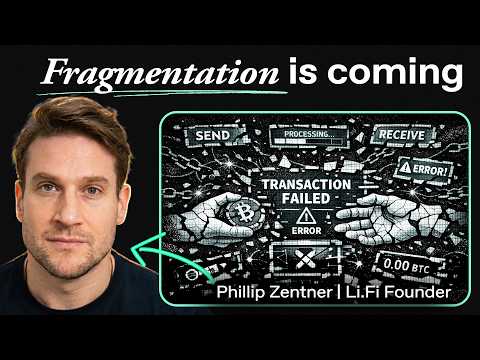
The inevitable migration of real-world assets onto blockchain networks (tokenization) is currently bottlenecked by the technical friction of a fragmented multi-chain environment.
Investigate protocols building multi-chain transaction rails that abstract away complexity. These solutions will capture significant value by enabling seamless asset flow.
The ability to execute complex cross-chain operations in a single, secure transaction is a critical infrastructure piece. This will unlock the next wave of tokenized financial products and drive mainstream adoption over the next 6-12 months.
AI-driven intent detection, powered by decentralized networks, is transforming sales from a volume game to a precision operation.
Investigate AI-powered lead generation platforms that prioritize buyer intent and real-time validation.
The future of sales is about quality conversations, not quantity of calls. Prioritizing high-signal leads will define competitive advantage in the next 6-12 months.
The crypto industry is transitioning from a purely speculative, crypto-native phase to one deeply intertwined with traditional finance, driven by regulatory pushes and VC capital seeking tangible, compliant use cases.
Engage with policymakers: Call your representatives and advocate for clear, innovation-friendly crypto regulation. Your voice matters more than you think in shaping the final bill.
The next 6-12 months will define crypto's regulatory foundation in the US, impacting everything from stablecoin utility to DeFi developer liability.
Token Taxonomy: Old token categories (utility, governance, network) are increasingly irrelevant. Investors now evaluate tokens with equity-like frameworks, focusing on product usage and future growth.
Market Demand: Financial markets currently reward projects implementing token buybacks. This addresses a low-trust environment where investors seek clear, demonstrable value accrual.
Core Value: A token's price ultimately depends on a good business and a product people use. Without genuine demand, buybacks alone are insufficient to offset token emissions or create lasting value.