The digital experience economy is moving from static content to dynamic, AI-driven co-experience platforms, where user interaction data becomes the core asset for training next-generation virtual intelligence.
Invest in platforms that offer robust, cloud-connected infrastructure and proprietary, vectorized user data for AI training, as these will be the engines for future immersive content and agentic AI development.
Roblox's long-term vision, powered by its unique data moat and AI investments, positions it to define the future of virtual co-experience, making it a critical player to watch for investors and builders in the AI and gaming space over the next 6-12 months.
The exponential reduction in the cost of intelligence, coupled with open-source proliferation, is pushing AI into every corner of society, creating a collective action problem where market incentives for "engaging" AI clash with the need for societal safety and control.
Get hands-on with AI now. "Vibe coding" and actively experimenting with AI tools builds "AI muscle," inoculating users against psychosis risks and building a deeper understanding of AI's capabilities and limitations.
AI is here to stay and will redefine work and interaction. Understanding its "hyperobject" nature, advocating for clear regulatory boundaries, and actively engaging with the technology are critical for navigating the near future without falling for its simulated charms.
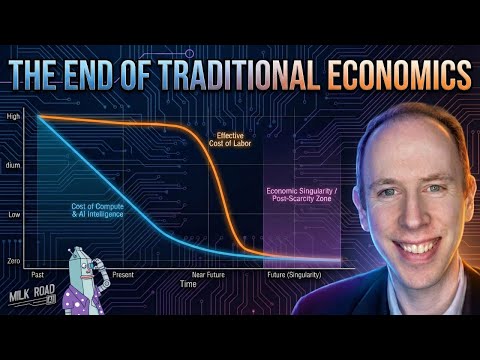
AI-driven hyperdeflation will fundamentally alter economic structures, leading to a post-scarcity future where the primary challenge shifts from production to distribution and the integration of human and machine economies.
Invest in infrastructure that bridges human and AI economies, or prepare for a future where AI agents become a significant, crypto-native economic force.
The next 6-12 months will see continued acceleration of AI capabilities, pushing us closer to a future where traditional labor and intelligence are nearly free. Understanding this change is crucial for navigating the emerging economic landscape and identifying new value creation opportunities.
The era of opaque, black-box AI is ending; the future demands intentionally designed models with human understanding and control. This shift is driven by reliability in high-stakes applications and extracting novel insights.
Investigate interpretability tools (like Goodfire's platform) to gain granular control over model behavior, moving beyond basic fine-tuning for critical applications.
Interpretability is not a niche; it's the missing piece for scaling AI safely into mission-critical domains. Mastering model understanding and intentional design will yield unprecedented capabilities and competitive advantage.
Robotics is moving from bespoke, data-hungry behavior cloning to generalized, human-informed learning via world models. This shift, mirroring the success of LLMs, means robots can use the vast, unstructured data of human experience to acquire new skills.
Invest in platforms and data pipelines that facilitate multi-modal, multi-stage training for humanoid robots. Prioritize systems that can generate synthetic data and use world models for high-throughput, targeted policy evaluation.
World models are the engine for scalable robot intelligence. They promise a future where robots learn faster, generalize wider, and self-improve through iterative simulation, making widespread humanoid deployment a near-term reality.
The Macro Shift: AI is collapsing the time horizon for technological deployment and market dominance, shifting the competitive advantage from pure innovation to a combination of innovation, capital, and rapid infrastructure deployment.
The Tactical Edge: Invest in companies that are not just building AI, but are fundamentally rethinking existing industries with AI-first principles, recognizing that traditional software moats are eroding.
The Bottom Line: The next 12-24 months will see AI's broad impact kick in, creating unprecedented opportunities for those who understand its new "laws of physics" and the critical role of policy in shaping its trajectory.
The healthcare system is moving from reactive, acute care to proactive, preventative interventions, driven by the unsustainable costs of chronic disease and a growing understanding of environmental health.
Build infrastructure that financially incentivizes lifestyle interventions, such as TrueMed's HSA/FSA payment rails for health-promoting products and services.
The next decade will see hundreds of billions of dollars redirected towards preventative health. Companies that bridge the gap between lifestyle choices and healthcare financing will capture significant market share.
The Macro Shift: Global energy demand, driven by AI, forces a strategic re-evaluation of nuclear power. This creates a window for nations to re-shore critical energy infrastructure, moving from reliance on adversaries to domestic, cost-competitive solutions.
The Tactical Edge: Investigate companies addressing foundational supply chain gaps in critical industries like energy. Look for teams with a "first principles" engineering approach and a track record of commercializing hard tech.
The Bottom Line: America's energy independence and its ability to power future technological growth, like AI, hinge on rebuilding domestic nuclear fuel enrichment. This is not just an industrial opportunity; it is a national security imperative.
The industry shifts from speculative infrastructure to chains prioritizing real user experiences and sustainable models.
Builders should create "10x applications" only possible on high-performance chains like MegaETH, utilizing ultra-low latency and abundant block space for novel experiences in DeFi, gaming, social.
MegaETH's patient, app-first approach, backed by a performance-driven architecture and stablecoin-centric economic model, positions it to capture mainstream users and capital as the market demands utility.
The ongoing legislative push for crypto market structure is not just about compliance; it's about defining the very nature of digital innovation. The distinction between neutral software and regulated financial services will determine where talent and capital flow for the next decade.
Engage with policy discussions around the BRCA and similar legislation. Support organizations advocating for clear, principles-based regulation that protects open source development, ensuring your projects operate within a predictable legal framework.
Regulatory clarity for developers is the bedrock for crypto's future. Without it, innovation stalls, talent leaves, and the industry remains trapped in a legal gray area, unable to deliver on its promise of a more open and efficient financial system over the next 6-12 months.
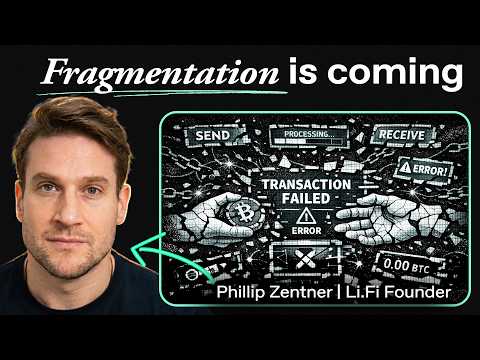
The inevitable migration of real-world assets onto blockchain networks (tokenization) is currently bottlenecked by the technical friction of a fragmented multi-chain environment.
Investigate protocols building multi-chain transaction rails that abstract away complexity. These solutions will capture significant value by enabling seamless asset flow.
The ability to execute complex cross-chain operations in a single, secure transaction is a critical infrastructure piece. This will unlock the next wave of tokenized financial products and drive mainstream adoption over the next 6-12 months.
AI-driven intent detection, powered by decentralized networks, is transforming sales from a volume game to a precision operation.
Investigate AI-powered lead generation platforms that prioritize buyer intent and real-time validation.
The future of sales is about quality conversations, not quantity of calls. Prioritizing high-signal leads will define competitive advantage in the next 6-12 months.
The crypto industry is transitioning from a purely speculative, crypto-native phase to one deeply intertwined with traditional finance, driven by regulatory pushes and VC capital seeking tangible, compliant use cases.
Engage with policymakers: Call your representatives and advocate for clear, innovation-friendly crypto regulation. Your voice matters more than you think in shaping the final bill.
The next 6-12 months will define crypto's regulatory foundation in the US, impacting everything from stablecoin utility to DeFi developer liability.
Token Taxonomy: Old token categories (utility, governance, network) are increasingly irrelevant. Investors now evaluate tokens with equity-like frameworks, focusing on product usage and future growth.
Market Demand: Financial markets currently reward projects implementing token buybacks. This addresses a low-trust environment where investors seek clear, demonstrable value accrual.
Core Value: A token's price ultimately depends on a good business and a product people use. Without genuine demand, buybacks alone are insufficient to offset token emissions or create lasting value.