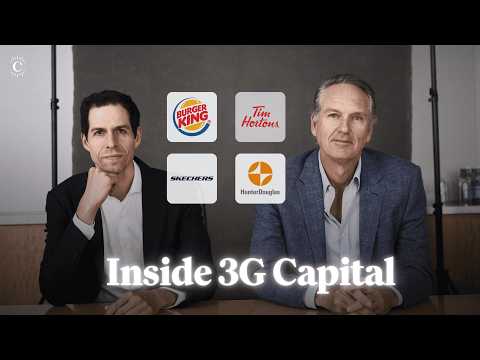
As markets become more complex and tech-driven, the ability to identify and deeply operate businesses with enduring customer relationships becomes a critical differentiator. 3G's model shows that concentration on "forever businesses" with strong brands and operational upside can outperform broad diversification.
Cultivate an owner-operator mindset within your organization, pushing decision-making closer to the problem and aligning incentives with long-term value creation. Prioritize hiring and empowering high-potential talent early, providing mentorship to maximize their success.
In a world obsessed with speed and scale, 3G Capital's patient, concentrated, and operationally intensive approach to investing in high-quality, customer-owning businesses offers a powerful blueprint for compounding capital and building lasting value over the next decade.
The Macro Shift: Celebrity and athlete capital is migrating from transactional endorsements to strategic equity investments, driven by a desire for long-term wealth creation and direct ownership. This trend is amplified by AI and blockchain tools, which enable individuals to build high-value enterprises with leaner teams.
The Tactical Edge: Cultivate a robust, diverse network by actively engaging with dealmakers, even in "boring" settings. Prioritize equity-based opportunities in overlooked markets or early-stage, foundational technologies with clear demand.
The Bottom Line: The next 6-12 months will see increased convergence of brand power, strategic capital, and advanced tech. Investors and founders who embrace long-term vision, smart partnerships, and a willingness to invest in "unsexy" but essential sectors will capture disproportionate value.
The celebrity-as-investor model, driven by equity over endorsements, is mainstream, creating new avenues for capital and brand influence in high-growth ventures.
Cultivate diverse mentors and partners, prioritize long-term relationships, and seek "boring" businesses in underserved markets with clear demand.
Success in the next 6-12 months hinges on strategic investment in capital and relationships, using AI for efficiency, and building teams that execute on sustained growth.
The era of celebrity endorsements is yielding to a new paradigm where high-profile individuals become active equity investors and brand builders, leveraging their influence for long-term capital appreciation rather than short-term cash.
Cultivate a diverse network of experts and mentors, prioritizing relationships over immediate transactions, and be prepared to invest your own capital to secure high-potential, often "boring," opportunities.
Future wealth creation hinges on strategic partnerships, a willingness to invest in overlooked markets, and a deep understanding of equity's power.
The convergence of celebrity influence, patient capital, and technological advancements (AI, blockchain) is creating a new class of asset owners and builders. This evolution prioritizes long-term equity and strategic value-add over transactional endorsements, fundamentally altering how wealth is created and distributed.
Cultivate a "dealmaker's rolodex" by consistently networking and seeking out mentors. Prioritize investments in businesses that address clear, underserved market demands, even if they appear "boring," and always be ready to put capital to work for equity.
The future of high-growth investing lies in understanding that "boring" can be brilliant, partnerships amplify potential, and a winning mindset applies equally to sports and startups. Position your capital and network to capture value from these enduring principles, especially as AI accelerates business creation and efficiency.
The traditional athlete-endorsement model is giving way to an equity-driven, ownership-first approach. This reflects a broader economic trend where brand power translates directly into capital formation and long-term asset appreciation, particularly in sports and tech.
Cultivate a "give-first" network by consistently seeking out and engaging with top-tier dealmakers and founders, even when immediate returns are not apparent. Prioritize early, strategic investments in "boring" or overlooked sectors with high demand, and be prepared to commit capital and expertise.
The convergence of athlete-investors, tech innovation (AI/blockchain), and appreciating asset classes (sports teams) creates a fertile ground for exponential wealth creation. Position yourself to participate in this shift by building a smart team, embracing long-term equity plays, and identifying high-demand, underserved markets.
The convergence of celebrity capital, AI-driven efficiency, and insatiable demand for sports content creates fertile ground. New ventures can scale faster with smaller teams and benefit from high-profile, strategic investors.
Prioritize long-term equity over short-term cash, cultivate a diverse network, and invest heavily in core product and customer experience.
Success hinges on identifying overlooked markets, building expert teams, and adopting strategic partnerships beyond mere capital.
The industry shifts from speculative infrastructure to chains prioritizing real user experiences and sustainable models.
Builders should create "10x applications" only possible on high-performance chains like MegaETH, utilizing ultra-low latency and abundant block space for novel experiences in DeFi, gaming, social.
MegaETH's patient, app-first approach, backed by a performance-driven architecture and stablecoin-centric economic model, positions it to capture mainstream users and capital as the market demands utility.
The ongoing legislative push for crypto market structure is not just about compliance; it's about defining the very nature of digital innovation. The distinction between neutral software and regulated financial services will determine where talent and capital flow for the next decade.
Engage with policy discussions around the BRCA and similar legislation. Support organizations advocating for clear, principles-based regulation that protects open source development, ensuring your projects operate within a predictable legal framework.
Regulatory clarity for developers is the bedrock for crypto's future. Without it, innovation stalls, talent leaves, and the industry remains trapped in a legal gray area, unable to deliver on its promise of a more open and efficient financial system over the next 6-12 months.
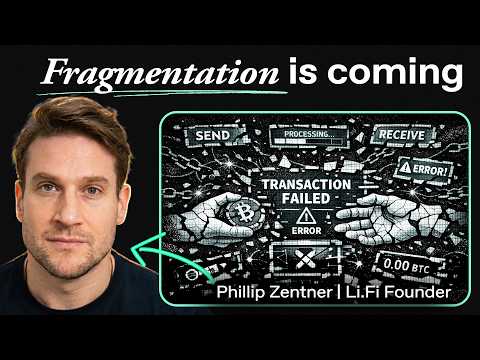
The inevitable migration of real-world assets onto blockchain networks (tokenization) is currently bottlenecked by the technical friction of a fragmented multi-chain environment.
Investigate protocols building multi-chain transaction rails that abstract away complexity. These solutions will capture significant value by enabling seamless asset flow.
The ability to execute complex cross-chain operations in a single, secure transaction is a critical infrastructure piece. This will unlock the next wave of tokenized financial products and drive mainstream adoption over the next 6-12 months.
AI-driven intent detection, powered by decentralized networks, is transforming sales from a volume game to a precision operation.
Investigate AI-powered lead generation platforms that prioritize buyer intent and real-time validation.
The future of sales is about quality conversations, not quantity of calls. Prioritizing high-signal leads will define competitive advantage in the next 6-12 months.
The crypto industry is transitioning from a purely speculative, crypto-native phase to one deeply intertwined with traditional finance, driven by regulatory pushes and VC capital seeking tangible, compliant use cases.
Engage with policymakers: Call your representatives and advocate for clear, innovation-friendly crypto regulation. Your voice matters more than you think in shaping the final bill.
The next 6-12 months will define crypto's regulatory foundation in the US, impacting everything from stablecoin utility to DeFi developer liability.
Token Taxonomy: Old token categories (utility, governance, network) are increasingly irrelevant. Investors now evaluate tokens with equity-like frameworks, focusing on product usage and future growth.
Market Demand: Financial markets currently reward projects implementing token buybacks. This addresses a low-trust environment where investors seek clear, demonstrable value accrual.
Core Value: A token's price ultimately depends on a good business and a product people use. Without genuine demand, buybacks alone are insufficient to offset token emissions or create lasting value.