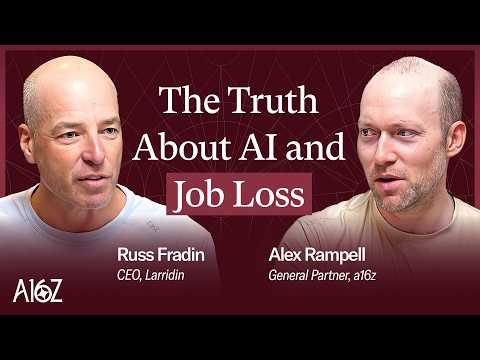
Measure Usage, Not Just Spend. The biggest failure in enterprise AI is tracking software purchases as a proxy for progress. The focus must shift to measuring actual tool usage correlated with output.
Solve for Fear, Not Features. Employee adoption hinges on psychological safety. The most powerful tools will fail if users are afraid of looking incompetent or getting fired for making a mistake.
Competition Drives Augmentation, Not Unemployment. The "AI will take our jobs" narrative is a red herring. Companies will reinvest AI-driven productivity gains to crush competitors, not just to cut headcount.
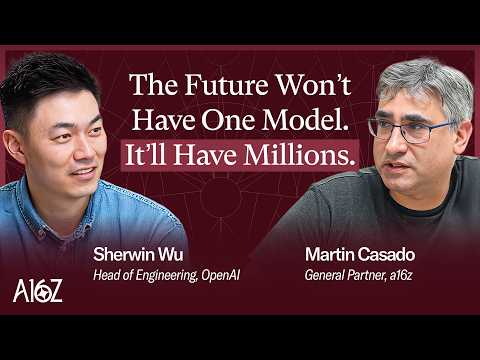
**The "One Model" Thesis Is Dead.** The future belongs to a portfolio of specialized models. This creates distinct opportunities for both foundational labs and companies that can leverage proprietary data to build best-in-class models for niche applications.
**Data Is the Ultimate Differentiator.** Reinforcement learning fine-tuning elevates proprietary data from a simple input for RAG systems to the core ingredient for building a defensible, state-of-the-art product.
**Agents Will Specialize.** The agent ecosystem is bifurcating into two primary types: open-ended, creative agents for knowledge work and deterministic, procedural agents designed for enterprise automation where reliability and adherence to standard operating procedures are critical.
Politics Will Trump Tech. Expect a policy pivot ahead of the 2024 election. The administration’s singular focus on AI stimulus is creating populist backlash, forcing a shift toward policies that support the broader labor market to secure votes.
The AI Trade Is Evolving. The "Mag 7" may soon become regulated utilities. The next wave of winners will be legacy companies that successfully integrate AI to boost margins and the overlooked players in the AI supply chain, such as power and commodity providers.
Prepare for a New Monetary Regime. The era of "QE Infinity" is ending. A post-Powell Fed is expected to move credit creation from its own balance sheet back to commercial banks, using deep rate cuts and deregulation to stimulate the economy.
AI Demand Is Not Cyclical; It's Infinite. Forget boom-and-bust. The mission to solve humanity's greatest problems—from disease to space travel—creates limitless demand for intelligence, underpinning a durable, multi-decade investment cycle.
Scrap GDP; Watch Profit Margins. The widening chasm between the astronomical profit margins of tech companies and the rest of the economy is the single most important macroeconomic signal today.
Bitcoin Is the Apex Predator of Moats. In a world where AI can replicate any business model, the only defensible moats are those built on time-tested belief and mathematical scarcity. Bitcoin is the emerging winner for the digital age.
AI's Physical Footprint is Astronomical: Individual AI data centers are now multi-billion dollar megaprojects, with construction timelines accelerating to as little as one year for a gigawatt-scale facility.
Power is a Solvable Problem, Not a Hard Cap: AI firms will pay whatever it takes to secure electricity, making power costs a secondary concern to the price of GPUs. The real constraint is getting chips, not watts.
Open-Source Intelligence Unveils All: By combining satellite imagery, public permits, and news reports, the physical expansion of the AI industry can be tracked in near real-time, providing unprecedented transparency.
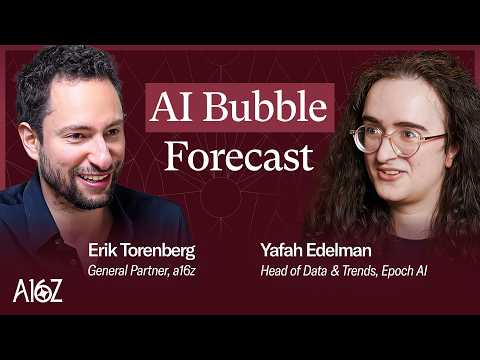
AI Isn't a Bubble; It's a Buildout. The market is rational. Massive spending is backed by real revenue from inference. The true bottleneck is the speed at which capital can be deployed to build city-sized data centers.
Brace for Economic Whiplash. A sudden, AI-driven unemployment spike is the most likely trigger for massive government intervention. The political response will be swift, decisive, and potentially radical.
Superintelligence is a Hardware Problem. The path to 2045 runs through physical infrastructure. Progress is gated by the brute-force economics of building data centers, not a quest for a magical algorithm.
**Escape the Architecture Lottery.** The inertia behind Transformers is immense. A new model must be demonstrably superior across the board to justify a paradigm shift.
**Nature's Algorithms are the Next Frontier.** The CTM proves that biologically-inspired principles like neuron synchronization can unlock powerful capabilities like adaptive computation and better calibration naturally.
**Reasoning is Deeper Than Scaling.** The Sudoku Bench benchmark shows that current SOTA models cannot perform the creative, nuanced reasoning humans do. Brute-force scaling has hit a wall against truly complex problems.
Your Data is the New Oil, and You're Giving It Away. Every smart device, social media post, and email you create is a valuable asset used to build multi-billion dollar AI empires, yet you receive no compensation.
The Creator Economy is Facing an Existential Threat. The outcome of lawsuits like *NYT vs. OpenAI* will determine whether creative work remains intellectual property or becomes free raw material for AI, potentially decimating entire professions.
Reclaim Your Digital Sovereignty. Losing control of your data isn't just a privacy issue; it's a slide into "digital feudalism." The podcast champions decentralized technologies as a tool to break these data monopolies and reassert individual ownership.
AI's Debt Rally vs. Fed's Tight Grip. The AI boom is now fueled by credit markets, making it highly sensitive to the Fed's hawkish policy and rising real rates. An epic battle between tech momentum and macro gravity is brewing.
The Fed's Playbook Is Evolving. Forget immediate QE. The Fed is signaling a long-term plan to steepen the yield curve by offloading its long-duration assets. This strategy aims to ease pressure on "Main Street" while making financing more expensive for "Wall Street."
Crypto Is in a Historic Washout. On-chain and ETF flow data paint a picture of extreme capitulation. Both new and old hands are selling heavily, suggesting a major market reset is underway before the next cycle can truly begin.
Privacy Intents Beat Liquidity Fragmentation: Aztec’s architecture blankets existing Ethereum DeFi with privacy, bypassing the need to bootstrap a siloed ecosystem and turning it into a universal privacy utility layer.
ZK Passport Is Web3's Answer to AI Deepfakes: By leveraging hardware-level passport verification, ZK Passport offers a cryptographically secure solution to identity verification, enabling compliant privacy without trusting intermediaries.
Decentralization Is a Baseline Requirement: Aztec is launching as a fully decentralized L2, arguing that for a privacy network, neutrality and censorship resistance are not future goals but non-negotiable starting conditions.
Leverage is the Real Trigger. The BOJ pivot was just the spark. The crypto market’s bonfire was fueled by excessive leverage, turning a macro ripple into a tidal wave and signaling a broader rotation from high-beta assets to value.
Narrative Trumps Fundamentals (For Now). MicroStrategy’s CEO stated a basic corporate finance reality—they’d sell BTC if required to service debt—and the market tanked. This proves that in retail-driven markets, violating the "diamond hands" story is more damaging than a weak balance sheet.
TradFi's Glass House. While legacy finance lobbies against crypto’s perceived risks, its own critical infrastructure is failing due to mundane issues like a broken air conditioner, making a powerful, real-time case for decentralized resilience.
Leverage is the Accelerant: The market's violent reaction to predictable macro news reveals a system still prone to painful, cascading deleveraging events driven by over-leveraged players.
Narratives are Fragile Assets: MicroStrategy’s stumble shows that in crypto, narrative integrity is as critical as financial solvency. A violation can trigger sell-offs regardless of underlying fundamentals.
Old Systems Break While New Ones are Built: The CME outage is a powerful, real-time advertisement for decentralized alternatives, underscoring TradFi's fragility even as its gatekeepers resist change.
Macro is Back in Charge. The era of cheap leverage is facing a global reckoning, with the unwind of the Yen Carry Trade serving as a key trigger. High-beta assets like crypto are the first to feel the pain.
Narrative Trumps Numbers. MicroStrategy's dip wasn't about math; it was about breaking a story. In crypto, violating a core community belief can be more damaging than a weak earnings report.
TradFi's Fragility is Crypto's Calling Card. While crypto fends off FUD, a major institution like the CME went offline for 10 hours due to a failed air conditioner. This is a powerful, real-world advertisement for decentralized resilience.
High-Beta is a Crowded Trade: Crypto, alongside assets like uranium and quantum stocks, is being sold off in unison as investors rotate into value stocks. In this defensive environment, expect Bitcoin to outperform altcoins.
Narrative Trumps Fundamentals (For Now): MicroStrategy’s stock plunged not on a fundamental crisis but on the CEO admitting they *might* sell Bitcoin in a corner case—a direct violation of their "never sell" narrative.
Don't Fight the Central Banks: The BOJ’s tightening signal was the trigger for the dump. Conversely, the Fed's expected rate cuts and potential for future dovish leadership remain the key bullish catalysts to watch.
DEXes Are Winning by Default: The sheer volume of new, on-chain-only tokens is an unstoppable force driving users to DEXes. Centralized exchanges can either integrate or become irrelevant for the long tail of assets.
The Real Money is in the Rails: Don't focus on who will issue the next dominant stablecoin. The biggest opportunity lies in building the interoperability infrastructure that will connect the coming flood of branded, corporate, and national stablecoins.
Bitcoin's Ultimate Bull Case is Geopolitical: In a world of fragmenting currencies and rising geopolitical tensions, Bitcoin's status as a non-sovereign, politically neutral asset makes it the ultimate contender for a global reserve currency.