The Macro Shift: The Great Re-Shoring. National security now depends on domestic production of critical minerals and semiconductors.
The Tactical Edge: Build for Scale. Prioritize manufacturing competence over pure software features to win government contracts.
The Bottom Line: The defense industrial base is being rebuilt from the ground up. The next decade belongs to the builders who can merge Silicon Valley speed with the Pentagon's scale.
The Macro Trend: Biological Sovereignty. As global systems destabilize, the Amazon remains the most critical piece of biological infrastructure on the planet.
The Tactical Edge: Support Jungle Keepers. Direct capital to organizations that convert loggers into rangers to secure land concessions.
The Amazon is a finite asset under active siege. Protecting it requires a blend of primitive survival skills and high-tech surveillance over the next 18 months.
The Macro Pivot: As generative AI masters simulation, the physical world becomes a high-fidelity playground for software.
The Tactical Edge: Invest in the "brain" layer rather than the "limb" layer. Software that can generalize across different hardware forms will capture the most value.
The next decade belongs to embodied AI that reasons in real time. If you are waiting for the hardware to look perfect before paying attention, you will miss the moment the software takes over the physical world.
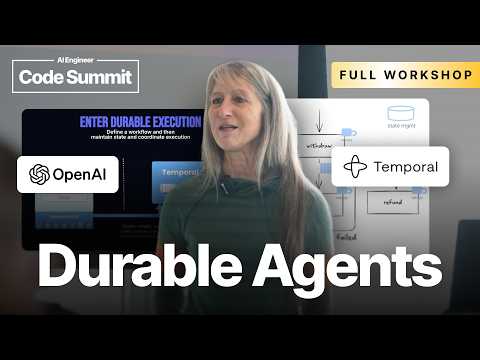
The industry is moving from "Agent as a Script" to "Agent as a Durable Service" where state management is handled by the infrastructure.
Wrap your existing API tools in the `activity_as_tool` function to gain automatic retries and execution history.
Reliability is the only moat in the agentic economy. If your agent cannot survive a server restart during a three-day task, it is not ready for the enterprise.
The Macro Trend: The move from fragmented content libraries to integrated health systems where AI synthesizes biomarkers and movement.
The Tactical Edge: Construct internal LLM tools to categorize qualitative feedback. This turns thousands of raw reviews into a precise roadmap.
The Bottom Line: Building a $100M ARR consumer app requires mastery of both growth loops and product retention. Solve for the daily habit to win the long game.
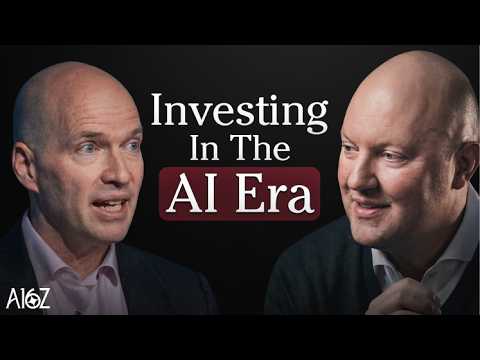
The transition from general-purpose AI to specialized application layers. As foundation models commoditize, value migrates to the "fat tail" of human-centric complexity.
Prioritize building or investing in "DNA of the future" companies that incumbents must eventually acquire to survive. Focus on winning the "point of attack" by staying deep in the technical details.
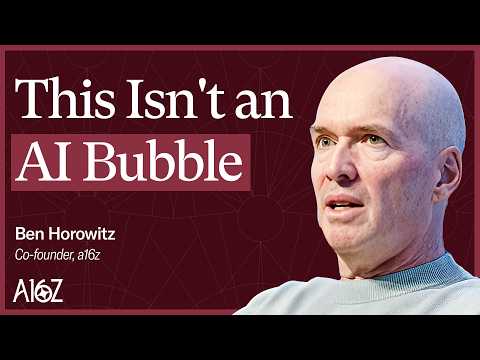
We are in a unique market where demand growth justifies high valuations. Success over the next year depends on identifying founders who are the absolute best in the world at one specific thing.
Privacy Intents Beat Liquidity Fragmentation: Aztec’s architecture blankets existing Ethereum DeFi with privacy, bypassing the need to bootstrap a siloed ecosystem and turning it into a universal privacy utility layer.
ZK Passport Is Web3's Answer to AI Deepfakes: By leveraging hardware-level passport verification, ZK Passport offers a cryptographically secure solution to identity verification, enabling compliant privacy without trusting intermediaries.
Decentralization Is a Baseline Requirement: Aztec is launching as a fully decentralized L2, arguing that for a privacy network, neutrality and censorship resistance are not future goals but non-negotiable starting conditions.
Leverage is the Real Trigger. The BOJ pivot was just the spark. The crypto market’s bonfire was fueled by excessive leverage, turning a macro ripple into a tidal wave and signaling a broader rotation from high-beta assets to value.
Narrative Trumps Fundamentals (For Now). MicroStrategy’s CEO stated a basic corporate finance reality—they’d sell BTC if required to service debt—and the market tanked. This proves that in retail-driven markets, violating the "diamond hands" story is more damaging than a weak balance sheet.
TradFi's Glass House. While legacy finance lobbies against crypto’s perceived risks, its own critical infrastructure is failing due to mundane issues like a broken air conditioner, making a powerful, real-time case for decentralized resilience.
Leverage is the Accelerant: The market's violent reaction to predictable macro news reveals a system still prone to painful, cascading deleveraging events driven by over-leveraged players.
Narratives are Fragile Assets: MicroStrategy’s stumble shows that in crypto, narrative integrity is as critical as financial solvency. A violation can trigger sell-offs regardless of underlying fundamentals.
Old Systems Break While New Ones are Built: The CME outage is a powerful, real-time advertisement for decentralized alternatives, underscoring TradFi's fragility even as its gatekeepers resist change.
Macro is Back in Charge. The era of cheap leverage is facing a global reckoning, with the unwind of the Yen Carry Trade serving as a key trigger. High-beta assets like crypto are the first to feel the pain.
Narrative Trumps Numbers. MicroStrategy's dip wasn't about math; it was about breaking a story. In crypto, violating a core community belief can be more damaging than a weak earnings report.
TradFi's Fragility is Crypto's Calling Card. While crypto fends off FUD, a major institution like the CME went offline for 10 hours due to a failed air conditioner. This is a powerful, real-world advertisement for decentralized resilience.
High-Beta is a Crowded Trade: Crypto, alongside assets like uranium and quantum stocks, is being sold off in unison as investors rotate into value stocks. In this defensive environment, expect Bitcoin to outperform altcoins.
Narrative Trumps Fundamentals (For Now): MicroStrategy’s stock plunged not on a fundamental crisis but on the CEO admitting they *might* sell Bitcoin in a corner case—a direct violation of their "never sell" narrative.
Don't Fight the Central Banks: The BOJ’s tightening signal was the trigger for the dump. Conversely, the Fed's expected rate cuts and potential for future dovish leadership remain the key bullish catalysts to watch.
DEXes Are Winning by Default: The sheer volume of new, on-chain-only tokens is an unstoppable force driving users to DEXes. Centralized exchanges can either integrate or become irrelevant for the long tail of assets.
The Real Money is in the Rails: Don't focus on who will issue the next dominant stablecoin. The biggest opportunity lies in building the interoperability infrastructure that will connect the coming flood of branded, corporate, and national stablecoins.
Bitcoin's Ultimate Bull Case is Geopolitical: In a world of fragmenting currencies and rising geopolitical tensions, Bitcoin's status as a non-sovereign, politically neutral asset makes it the ultimate contender for a global reserve currency.