Trillion-dollar AI compute investments create market divergence: immediate monetization (Meta) is rewarded, while slower conversion (Microsoft) faces skepticism, as geopolitical tensions rise over open-source model parity.
Prioritize AI models balancing raw intelligence with superior user experience and collaborative features, as developer loyalty and enterprise adoption increasingly hinge on usability.
The AI landscape is rapidly reordering. Investors and builders must assess monetization pathways, geopolitical implications, and AI's social contract over the next 6-12 months.
The Macro Trend: The transition from opaque scaling to verifiable reasoning.
The Tactical Edge: Audit your models for brittleness by testing them on edge cases that require first principles logic rather than historical data.
The Bottom Line: The next winners in AI will not have the biggest models but the most verifiable ones. If you cannot prove how a model reached a conclusion, you cannot trust it in production.
The transition from more data to better thinking via inference-time compute. Reasoning is becoming a post-training capability rather than a pre-training byproduct.
Use AI for anti-gravity coding to automate bug fixes and data visualization. Treat the model as a passive aura that buffs the productivity of every senior engineer.
AGI will not be a collection of narrow tools but a single model that reasons its way through any domain. The gap between closed labs and open source is widening as these reasoning tricks compound.
The transition from static LLMs to interactive world models marks the move from AI as a tool to AI as a persistent environment.
Monitor the Hugging Face release of the 2B model to build custom image-to-experience wrappers for niche training or spatial entertainment.
Local world models will become the primary interface for spatial computing within the next year, making high-end local compute more valuable than cloud-based streaming.
The Strategic Pivot: The transition from "Understanding-First" science to "Prediction-First" engineering. We are building artifacts that work perfectly but remain theoretically opaque.
The Tactical Edge: Audit your AI stack for "Leaky Abstractions." Don't assume a model's reasoning capabilities in one domain will hold when the underlying causal structure changes.
AGI isn't just an engineering milestone; it's a philosophical wager. If the brain isn't a computer, we are building a very powerful helicopter, not a synthetic human.
The pivot from "Understanding-First" science to "Prediction-First" engineering creates massive technical liability in our models.
Audit your AI implementations for "Leaky Abstractions" where the model fails to account for physical edge cases.
High-performance automation is not the same as sentient reasoning. Builders who recognize this distinction will avoid the cultural illusion of inevitable AGI.
The transition from deterministic software to agentic networks. Companies are moving from rigid workflows to fluid systems that plan and execute autonomously.
Build an internal LLM gateway early. Centralizing model routing and cost monitoring allows you to swap providers as the model horse race changes without refactoring your product.
AI is not just a feature but a fundamental restructuring of the corporate cost center. Efficiency gains allow a static headcount of 300 engineers to support a business growing 5x.
Privacy Intents Beat Liquidity Fragmentation: Aztec’s architecture blankets existing Ethereum DeFi with privacy, bypassing the need to bootstrap a siloed ecosystem and turning it into a universal privacy utility layer.
ZK Passport Is Web3's Answer to AI Deepfakes: By leveraging hardware-level passport verification, ZK Passport offers a cryptographically secure solution to identity verification, enabling compliant privacy without trusting intermediaries.
Decentralization Is a Baseline Requirement: Aztec is launching as a fully decentralized L2, arguing that for a privacy network, neutrality and censorship resistance are not future goals but non-negotiable starting conditions.
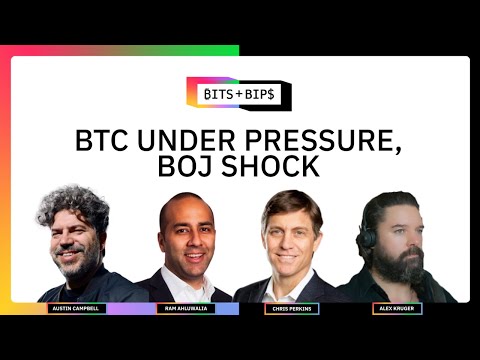
Leverage is the Real Trigger. The BOJ pivot was just the spark. The crypto market’s bonfire was fueled by excessive leverage, turning a macro ripple into a tidal wave and signaling a broader rotation from high-beta assets to value.
Narrative Trumps Fundamentals (For Now). MicroStrategy’s CEO stated a basic corporate finance reality—they’d sell BTC if required to service debt—and the market tanked. This proves that in retail-driven markets, violating the "diamond hands" story is more damaging than a weak balance sheet.
TradFi's Glass House. While legacy finance lobbies against crypto’s perceived risks, its own critical infrastructure is failing due to mundane issues like a broken air conditioner, making a powerful, real-time case for decentralized resilience.
Leverage is the Accelerant: The market's violent reaction to predictable macro news reveals a system still prone to painful, cascading deleveraging events driven by over-leveraged players.
Narratives are Fragile Assets: MicroStrategy’s stumble shows that in crypto, narrative integrity is as critical as financial solvency. A violation can trigger sell-offs regardless of underlying fundamentals.
Old Systems Break While New Ones are Built: The CME outage is a powerful, real-time advertisement for decentralized alternatives, underscoring TradFi's fragility even as its gatekeepers resist change.
Macro is Back in Charge. The era of cheap leverage is facing a global reckoning, with the unwind of the Yen Carry Trade serving as a key trigger. High-beta assets like crypto are the first to feel the pain.
Narrative Trumps Numbers. MicroStrategy's dip wasn't about math; it was about breaking a story. In crypto, violating a core community belief can be more damaging than a weak earnings report.
TradFi's Fragility is Crypto's Calling Card. While crypto fends off FUD, a major institution like the CME went offline for 10 hours due to a failed air conditioner. This is a powerful, real-world advertisement for decentralized resilience.
High-Beta is a Crowded Trade: Crypto, alongside assets like uranium and quantum stocks, is being sold off in unison as investors rotate into value stocks. In this defensive environment, expect Bitcoin to outperform altcoins.
Narrative Trumps Fundamentals (For Now): MicroStrategy’s stock plunged not on a fundamental crisis but on the CEO admitting they *might* sell Bitcoin in a corner case—a direct violation of their "never sell" narrative.
Don't Fight the Central Banks: The BOJ’s tightening signal was the trigger for the dump. Conversely, the Fed's expected rate cuts and potential for future dovish leadership remain the key bullish catalysts to watch.
DEXes Are Winning by Default: The sheer volume of new, on-chain-only tokens is an unstoppable force driving users to DEXes. Centralized exchanges can either integrate or become irrelevant for the long tail of assets.
The Real Money is in the Rails: Don't focus on who will issue the next dominant stablecoin. The biggest opportunity lies in building the interoperability infrastructure that will connect the coming flood of branded, corporate, and national stablecoins.
Bitcoin's Ultimate Bull Case is Geopolitical: In a world of fragmenting currencies and rising geopolitical tensions, Bitcoin's status as a non-sovereign, politically neutral asset makes it the ultimate contender for a global reserve currency.