The decoupling of parameter count from active compute via sparsity means intelligence is becoming a software optimization problem as much as a hardware one.
Audit your agentic workflows for turn efficiency rather than just cost per token.
In a world of infinite tokens, the winner is the one who can verify the truth the fastest.
The Macro Pivot: The transition from LLMs as chat interfaces to LLMs as logic engines. As models move from text prediction to logic execution, the value moves from the model itself to the verification systems surrounding it.
The Tactical Edge: Audit the stack. Prioritize the integration of agentic coding tools like Jules to shorten the feedback loop between ideation and deployment.
The Bottom Line: Code is the only medium where AI can self-correct and scale without human intervention. The next 12 months will be defined by who can turn raw model power into reliable, self-healing code.
The Macro Transition: We are moving from "fire-and-forget" prompts to durable execution environments where state is as important as the model itself.
The Tactical Edge: Wrap your existing tool calls in the `useStep` function to gain instant retry logic and execution history.
The Bottom Line: Reliability is the primary moat in the agent market. Builders who adopt durable workflows will move to production while others are still debugging local scripts.
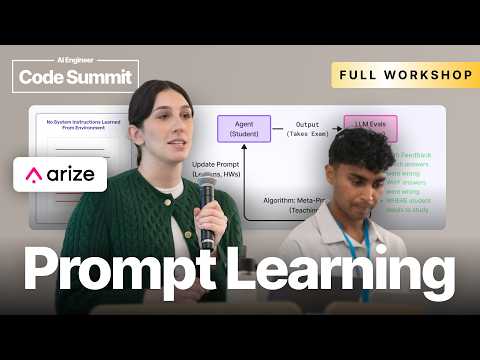
The move from manual prompt engineering to automated prompt learning. As models become commodities, the proprietary loop that refines them becomes the moat.
Implement a Train-Test Split for your prompts. Use a subset of failure data to generate new rules and validate them against a separate holdout set to ensure the logic holds.
Reliability is the only metric that matters for agent adoption. If you are not using a feedback loop to update your system instructions, you are building on sand.
The move from industrial management to creative inspiration. As AI automates routine tasks, the only remaining value is high-variance human creativity.
Apply the Keeper Test today. Ask your leads which team members they would fight for and provide generous exits for the rest to reset your talent bar.
Scaling doesn't require more rules. It requires better people. If you can maintain talent density, you can run fast while your competitors choke on their own handbooks.
Embrace Futarchy: Explore and implement market-driven governance mechanisms to enhance decision-making in decentralized organizations, reducing reliance on traditional, potentially biased, governance models.
Prioritize Investor Protection: Adopt capital formation models, such as MetaDAO's, that offer robust investor protections through market-based checks and balances, mitigating risks associated with centralized control and poorly informed token allocation.
Prepare for Crypto-Native Solutions: Build cryptonative primitives that can compete with traditional financial systems. This can prevent tradFi from dominating the blockchain space.
**Regulation is inevitable:** Crypto's foray into traditional financial activities necessitates regulatory oversight to protect investors and maintain market integrity.
**Compliance is key:** Crypto firms seeking legitimacy and long-term sustainability must prioritize regulatory compliance and address inherent conflicts of interest.
**Philosophical divide persists:** Fundamental disagreements regarding decentralization, code as speech, and the role of intermediaries continue to fuel tensions between the SEC and the crypto industry.
**Seize the Opportunity:** Bitcoin's undervaluation relative to gold presents a strategic entry point for investors who believe in its long-term potential.
**Explore Layer 1 Potential:** Ethereum's enhanced scalability post-Fusaka makes it increasingly viable for developers to build directly on layer 1, unlocking new possibilities.
**Monitor Regulatory Developments:** The evolving regulatory landscape for prediction markets requires careful attention, as state-level challenges could impact their accessibility and operation.
Active DATs are high-fee ETFs in disguise. The only DATs that will survive are those actively using on-chain strategies and unique financing structures to generate yield beyond simple staking, providing value that a passive ETF cannot.
The crypto market is no longer its own island. The four-year cycle is dead. Treat major crypto assets as a leveraged play on the NASDAQ and global liquidity; macro trends now dictate the market's direction.
The Solana vs. Ethereum trade is a conviction play. DFDV's core bet is that Solana's superior fundamentals will inevitably close the massive valuation gap with Ethereum, making it the highest-upside L1 asset.
DATs Must Be More Than ETFs. The DATs that survive won't be passive holders charging high fees. They will be active managers using unique tools like convertible bonds and on-chain yield farming to grow assets per share.
The Solana Flippening Thesis is Real. DFDV's core bet is on a fundamental mismatch: Solana's superior tech and user growth versus Ethereum's legacy valuation. They believe the gap will close, driving massive upside.
Crypto is a Macro Play. The four-year cycle is obsolete. Crypto now acts as a high-beta instrument tied to global liquidity, meaning its performance hinges on macro trends, not just internal events like the halving.