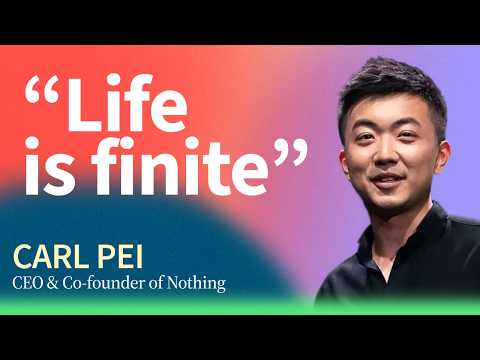
The Macro Shift: Infrastructure Invisibility. As core technologies become background noise, value moves from the pipes to the unique experiences built on top of them.
The Tactical Edge: Reject Mediocrity. Audit your product for average features and replace them with high-conviction improvements that competitors are too lazy to attempt.
The Bottom Line: Building is the only way to ensure the future happens. If you do not create the next version of reality, you are stuck living in an outdated vision.
The transition from hardware specs to emotional hardware where brand identity and OS-native AI become the primary moats.
Prioritize arbitrage opportunities in marketing by finding underpriced attention on platforms like TikTok before they become crowded.
Success in mature markets requires a Genghis Khan method: be a talent scout, stay open-minded to global supply chains, and use design to win the emotional battle for the consumer's pocket.
The transition from centralized cloud training to distributed local inference creates a massive demand for high-bandwidth storage and custom CPUs.
Audit your technical roadmap to prioritize local agentic workflows that reduce latency and data privacy risks.
The next 12 months will favor hardware that enables physical AI and local autonomy. Owning the compute stack is becoming a competitive necessity for builders who want to move faster than the cloud allows.
Intelligence is decoupling from scale. As reasoning becomes a commodity, the value moves from the size of the model to the proprietary nature of the training data.
Use TRL or Unsloth for single-GPU fine-tuning. Prioritize cleaning your instruction sets over increasing your training iterations.
The future belongs to those who own their data pipelines. If you can distill elite reasoning into a 350M parameter model, you win on latency, cost, and privacy.
Software maintenance is moving from a manual craft to an industrial process. As agents handle the toil of migrations and security, human engineers will focus entirely on high-level system design.
Batch by Dependency. Use the OpenHands SDK to visualize your codebase as a graph and deploy agents to solve the leaf nodes first.
Companies that master agent orchestration will clear their tech debt backlogs in weeks instead of years, creating a massive competitive advantage in product velocity.
Embrace Futarchy: Explore and implement market-driven governance mechanisms to enhance decision-making in decentralized organizations, reducing reliance on traditional, potentially biased, governance models.
Prioritize Investor Protection: Adopt capital formation models, such as MetaDAO's, that offer robust investor protections through market-based checks and balances, mitigating risks associated with centralized control and poorly informed token allocation.
Prepare for Crypto-Native Solutions: Build cryptonative primitives that can compete with traditional financial systems. This can prevent tradFi from dominating the blockchain space.
**Regulation is inevitable:** Crypto's foray into traditional financial activities necessitates regulatory oversight to protect investors and maintain market integrity.
**Compliance is key:** Crypto firms seeking legitimacy and long-term sustainability must prioritize regulatory compliance and address inherent conflicts of interest.
**Philosophical divide persists:** Fundamental disagreements regarding decentralization, code as speech, and the role of intermediaries continue to fuel tensions between the SEC and the crypto industry.
**Seize the Opportunity:** Bitcoin's undervaluation relative to gold presents a strategic entry point for investors who believe in its long-term potential.
**Explore Layer 1 Potential:** Ethereum's enhanced scalability post-Fusaka makes it increasingly viable for developers to build directly on layer 1, unlocking new possibilities.
**Monitor Regulatory Developments:** The evolving regulatory landscape for prediction markets requires careful attention, as state-level challenges could impact their accessibility and operation.
Active DATs are high-fee ETFs in disguise. The only DATs that will survive are those actively using on-chain strategies and unique financing structures to generate yield beyond simple staking, providing value that a passive ETF cannot.
The crypto market is no longer its own island. The four-year cycle is dead. Treat major crypto assets as a leveraged play on the NASDAQ and global liquidity; macro trends now dictate the market's direction.
The Solana vs. Ethereum trade is a conviction play. DFDV's core bet is that Solana's superior fundamentals will inevitably close the massive valuation gap with Ethereum, making it the highest-upside L1 asset.
DATs Must Be More Than ETFs. The DATs that survive won't be passive holders charging high fees. They will be active managers using unique tools like convertible bonds and on-chain yield farming to grow assets per share.
The Solana Flippening Thesis is Real. DFDV's core bet is on a fundamental mismatch: Solana's superior tech and user growth versus Ethereum's legacy valuation. They believe the gap will close, driving massive upside.
Crypto is a Macro Play. The four-year cycle is obsolete. Crypto now acts as a high-beta instrument tied to global liquidity, meaning its performance hinges on macro trends, not just internal events like the halving.