Trillion-dollar AI compute investments create market divergence: immediate monetization (Meta) is rewarded, while slower conversion (Microsoft) faces skepticism, as geopolitical tensions rise over open-source model parity.
Prioritize AI models balancing raw intelligence with superior user experience and collaborative features, as developer loyalty and enterprise adoption increasingly hinge on usability.
The AI landscape is rapidly reordering. Investors and builders must assess monetization pathways, geopolitical implications, and AI's social contract over the next 6-12 months.
The Macro Trend: The transition from opaque scaling to verifiable reasoning.
The Tactical Edge: Audit your models for brittleness by testing them on edge cases that require first principles logic rather than historical data.
The Bottom Line: The next winners in AI will not have the biggest models but the most verifiable ones. If you cannot prove how a model reached a conclusion, you cannot trust it in production.
The transition from more data to better thinking via inference-time compute. Reasoning is becoming a post-training capability rather than a pre-training byproduct.
Use AI for anti-gravity coding to automate bug fixes and data visualization. Treat the model as a passive aura that buffs the productivity of every senior engineer.
AGI will not be a collection of narrow tools but a single model that reasons its way through any domain. The gap between closed labs and open source is widening as these reasoning tricks compound.
The transition from static LLMs to interactive world models marks the move from AI as a tool to AI as a persistent environment.
Monitor the Hugging Face release of the 2B model to build custom image-to-experience wrappers for niche training or spatial entertainment.
Local world models will become the primary interface for spatial computing within the next year, making high-end local compute more valuable than cloud-based streaming.
The Strategic Pivot: The transition from "Understanding-First" science to "Prediction-First" engineering. We are building artifacts that work perfectly but remain theoretically opaque.
The Tactical Edge: Audit your AI stack for "Leaky Abstractions." Don't assume a model's reasoning capabilities in one domain will hold when the underlying causal structure changes.
AGI isn't just an engineering milestone; it's a philosophical wager. If the brain isn't a computer, we are building a very powerful helicopter, not a synthetic human.
The pivot from "Understanding-First" science to "Prediction-First" engineering creates massive technical liability in our models.
Audit your AI implementations for "Leaky Abstractions" where the model fails to account for physical edge cases.
High-performance automation is not the same as sentient reasoning. Builders who recognize this distinction will avoid the cultural illusion of inevitable AGI.
The transition from deterministic software to agentic networks. Companies are moving from rigid workflows to fluid systems that plan and execute autonomously.
Build an internal LLM gateway early. Centralizing model routing and cost monitoring allows you to swap providers as the model horse race changes without refactoring your product.
AI is not just a feature but a fundamental restructuring of the corporate cost center. Efficiency gains allow a static headcount of 300 engineers to support a business growing 5x.
Embrace Futarchy: Explore and implement market-driven governance mechanisms to enhance decision-making in decentralized organizations, reducing reliance on traditional, potentially biased, governance models.
Prioritize Investor Protection: Adopt capital formation models, such as MetaDAO's, that offer robust investor protections through market-based checks and balances, mitigating risks associated with centralized control and poorly informed token allocation.
Prepare for Crypto-Native Solutions: Build cryptonative primitives that can compete with traditional financial systems. This can prevent tradFi from dominating the blockchain space.
**Regulation is inevitable:** Crypto's foray into traditional financial activities necessitates regulatory oversight to protect investors and maintain market integrity.
**Compliance is key:** Crypto firms seeking legitimacy and long-term sustainability must prioritize regulatory compliance and address inherent conflicts of interest.
**Philosophical divide persists:** Fundamental disagreements regarding decentralization, code as speech, and the role of intermediaries continue to fuel tensions between the SEC and the crypto industry.
**Seize the Opportunity:** Bitcoin's undervaluation relative to gold presents a strategic entry point for investors who believe in its long-term potential.
**Explore Layer 1 Potential:** Ethereum's enhanced scalability post-Fusaka makes it increasingly viable for developers to build directly on layer 1, unlocking new possibilities.
**Monitor Regulatory Developments:** The evolving regulatory landscape for prediction markets requires careful attention, as state-level challenges could impact their accessibility and operation.
Active DATs are high-fee ETFs in disguise. The only DATs that will survive are those actively using on-chain strategies and unique financing structures to generate yield beyond simple staking, providing value that a passive ETF cannot.
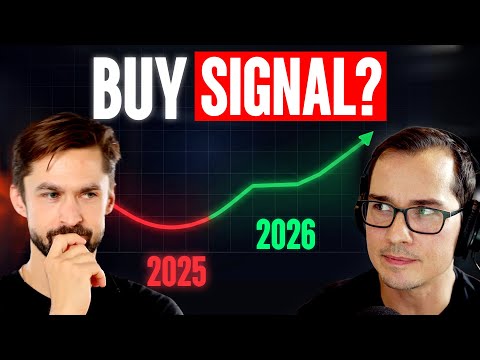
The crypto market is no longer its own island. The four-year cycle is dead. Treat major crypto assets as a leveraged play on the NASDAQ and global liquidity; macro trends now dictate the market's direction.
The Solana vs. Ethereum trade is a conviction play. DFDV's core bet is that Solana's superior fundamentals will inevitably close the massive valuation gap with Ethereum, making it the highest-upside L1 asset.
DATs Must Be More Than ETFs. The DATs that survive won't be passive holders charging high fees. They will be active managers using unique tools like convertible bonds and on-chain yield farming to grow assets per share.
The Solana Flippening Thesis is Real. DFDV's core bet is on a fundamental mismatch: Solana's superior tech and user growth versus Ethereum's legacy valuation. They believe the gap will close, driving massive upside.
Crypto is a Macro Play. The four-year cycle is obsolete. Crypto now acts as a high-beta instrument tied to global liquidity, meaning its performance hinges on macro trends, not just internal events like the halving.