The AI infrastructure buildout is moving from speculative intuition to data-driven financial modeling.
Model your data center's profitability and hardware depreciation with Ornn's indices and residual value products.
The ability to hedge compute costs and monetize future hardware value transforms AI infrastructure from a capital-intensive gamble into a predictable asset class.
The Tactical Edge: Evaluate your compute procurement strategy. Explore futures contracts for H100s or memory to cap your costs and gain predictability in a volatile market.
Profitability Mapping: Futures markets provide forward pricing for compute, allowing data centers to model profitability per chip, per hour, years in advance. This data informs investment decisions, from site selection to chip choice.
Reduced Financing Costs: By guaranteeing a future resale price for hardware, Ornn reduces the risk for lenders. This certainty translates to lower financing costs for data center operators, directly impacting their slim profit margins.
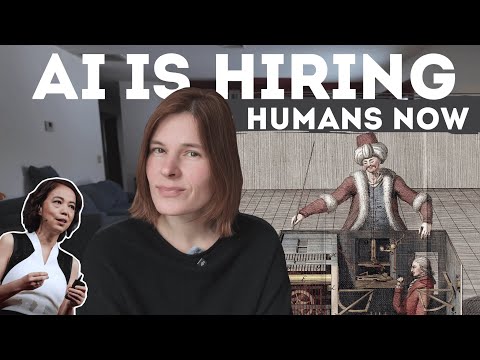
The Macro Shift: AI's digital intelligence now demands physical interaction, creating a "meatspace" layer where human presence becomes a programmable resource. This extends AI's reach beyond code into real-world operations, altering human-AI collaboration.
The Tactical Edge: Invest in platforms abstracting human-AI coordination into simple API calls, enabling AI agents to interact physically. Builders should explore specialized "human-as-a-service" micro-economies for AI-driven physical tasks.
The Bottom Line: AI as a direct employer of human physical labor signals a profound redefinition of work. Over the next 6-12 months, watch for rapid iteration in these "human API" platforms, as they will dictate how quickly AI moves from digital reasoning to tangible impact, opening new markets.
AI is concentrating market power. Companies that embed AI natively into their product and operations are achieving disproportionate growth and efficiency, accelerating the disruption cycle for incumbents.
Re-architect your product and engineering around AI-native tools and workflows. For investors, prioritize companies demonstrating high product engagement and efficiency (ARR per FTE) driven by core AI features, not just marketing spend.
The AI product cycle is just beginning, promising 10-15 years of disruption. Companies that master AI-driven change management and business model innovation will capture immense value, while others will struggle to compete.
The rapid maturation of AI, particularly in vision, language, and action models, is fundamentally redefining "general intelligence" and accelerating the obsolescence of both physical and cognitive labor.
Investigate and build solutions around Universal Basic Services (UBS) and Universal Basic Equity (UBE) models, recognizing that traditional UBI is only a partial answer to the coming post-scarcity economy.
AGI is not a distant threat but a present reality, demanding immediate strategic adjustments in how we approach labor, economic policy, and human-AI coupling over the next 6-12 months.
AI model development is moving from a "generic foundation + specialized fine-tune" paradigm to one where core capabilities, like reasoning, are intentionally embedded during foundational pre-training. This means data curation for pre-training is becoming hyper-critical and specialized.
Invest in or build data pipelines that generate high-quality, domain-specific "thinking traces" for mid-training. This enables smaller, more efficient models to compete with larger, general-purpose ones on specific tasks.
The era of simply fine-tuning a massive foundation model for every task is ending. Success in AI will hinge on sophisticated, intentional data strategies that infuse desired capabilities directly into the model's core, driving a wave of specialized pre-training and more efficient, performant AI.
Geopolitical competition in AI is shifting from raw compute power to the strategic advantage gained through open-source collaboration, demanding a re-evaluation of national AI policy.
Invest in and build on open-source AI frameworks and models, leveraging community contributions to accelerate product development and research breakthroughs.
The next 6-12 months will define whether the US secures its long-term AI leadership by adopting open models, or risks falling behind nations that prioritize collaborative, transparent innovation.
The move from generic, robotic text-to-speech to emotionally intelligent, context-aware synthetic voice is a fundamental redefinition of digital communication. This enables new forms of content creation and personalized interaction.
Builders should prioritize "emotional fidelity" in AI outputs, not just accuracy. Focus on models that capture nuance and context, as this is where true user engagement and differentiation lie.
Voice AI, exemplified by ElevenLabs, is moving beyond simple utility to become a foundational layer for immersive digital experiences. Understanding its technical depth and ethical implications is crucial for investors and builders looking to capitalize on the next wave of human-computer interaction.
The explosion of AI model complexity and scale is creating a critical technical bottleneck in data I/O, shifting the focus from raw compute power to efficient data delivery, making data infrastructure the new competitive battleground.
Prioritize data platforms that offer unified, high-performance access across hybrid cloud environments to eliminate GPU starvation and accelerate AI development cycles.
Investing in advanced "context memory" solutions now is not just an IT upgrade; it's a strategic imperative for any organization aiming to build, train, and deploy competitive AI models over the next 6-12 months.
Embrace Futarchy: Explore and implement market-driven governance mechanisms to enhance decision-making in decentralized organizations, reducing reliance on traditional, potentially biased, governance models.
Prioritize Investor Protection: Adopt capital formation models, such as MetaDAO's, that offer robust investor protections through market-based checks and balances, mitigating risks associated with centralized control and poorly informed token allocation.
Prepare for Crypto-Native Solutions: Build cryptonative primitives that can compete with traditional financial systems. This can prevent tradFi from dominating the blockchain space.
**Regulation is inevitable:** Crypto's foray into traditional financial activities necessitates regulatory oversight to protect investors and maintain market integrity.
**Compliance is key:** Crypto firms seeking legitimacy and long-term sustainability must prioritize regulatory compliance and address inherent conflicts of interest.
**Philosophical divide persists:** Fundamental disagreements regarding decentralization, code as speech, and the role of intermediaries continue to fuel tensions between the SEC and the crypto industry.
**Seize the Opportunity:** Bitcoin's undervaluation relative to gold presents a strategic entry point for investors who believe in its long-term potential.
**Explore Layer 1 Potential:** Ethereum's enhanced scalability post-Fusaka makes it increasingly viable for developers to build directly on layer 1, unlocking new possibilities.
**Monitor Regulatory Developments:** The evolving regulatory landscape for prediction markets requires careful attention, as state-level challenges could impact their accessibility and operation.
Active DATs are high-fee ETFs in disguise. The only DATs that will survive are those actively using on-chain strategies and unique financing structures to generate yield beyond simple staking, providing value that a passive ETF cannot.
The crypto market is no longer its own island. The four-year cycle is dead. Treat major crypto assets as a leveraged play on the NASDAQ and global liquidity; macro trends now dictate the market's direction.
The Solana vs. Ethereum trade is a conviction play. DFDV's core bet is that Solana's superior fundamentals will inevitably close the massive valuation gap with Ethereum, making it the highest-upside L1 asset.
DATs Must Be More Than ETFs. The DATs that survive won't be passive holders charging high fees. They will be active managers using unique tools like convertible bonds and on-chain yield farming to grow assets per share.
The Solana Flippening Thesis is Real. DFDV's core bet is on a fundamental mismatch: Solana's superior tech and user growth versus Ethereum's legacy valuation. They believe the gap will close, driving massive upside.
Crypto is a Macro Play. The four-year cycle is obsolete. Crypto now acts as a high-beta instrument tied to global liquidity, meaning its performance hinges on macro trends, not just internal events like the halving.