The transition from general-purpose LLMs to specialized coding agents that operate on the entire codebase rather than isolated snippets.
Audit your current stack for agentic readiness. Prioritize tools that integrate with Gemini 3 or similar high-reasoning models to automate repetitive pull requests.
Code is the substrate of the digital world. If you control the means of AI code generation, you control the speed of innovation for every other industry.
The move from a singular "Universe" view to a "Multiverse" perspective mirrors the transition from centralized monoliths to fragmented, interoperable ecosystems.
Build systems that fail gracefully when hitting Gödelian limits.
Truth is a vast ocean while proof is a small boat. Your roadmap must account for the reality that your system will eventually encounter truths it cannot verify.
The Macro Pivot: Outcome-Based Intelligence. We are moving from AI as a Service to Results as a Service where software value is tied to revenue generation rather than seat licenses.
The Tactical Edge: Verticalize the Data. Build in sectors with non-public outcome data to create a compounding moat that resists commoditization by foundation models.
The winners of 2026 will be those who use AI to solve core human needs for connection and discovery while building defensible, data-rich business models.
The Macro Transition: Moving from "Big Model" monoliths to "Lots of Little Models" where distributed Bayesian assets represent specific physical objects.
The Tactical Edge: Prioritize "Object-Centered" architectures that track uncertainty. This allows robots to "phone a friend" when encountering novel data.
The LLM era is hitting a wall of implicit representation. The next 12 months belong to those building explicit, causal world models grounded in physics rather than language.
The Macro Trend: The transition from static benchmarks to live human-in-the-loop evaluation. As models saturate fixed tests, the only remaining signal is subjective human preference at scale.
The Tactical Edge: Monitor secret model drops on Arena to spot frontier capabilities before official releases. This provides a lead time advantage for builders choosing their tech stack.
The Bottom Line: Arena is the new kingmaker. If you are building AI products, their expert-tier data is the most reliable map for navigating the frontier.
The move from small models to medium models (15B to 70B) suggests that reasoning capability is outstripping the desire for low-latency edge deployment.
Implement instruction-following re-rankers to prune your context window. This prevents the model from getting confused by irrelevant data.
Stop building toys. The next year belongs to those who can build full agentic systems that handle billions of tokens without losing the plot.
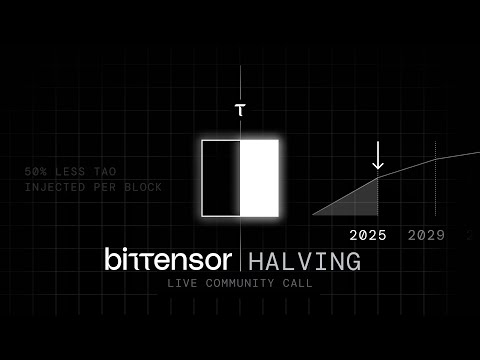
TAO's Centrality: The halving reinforces TAO's role as the ecosystem's core asset, with its scarcity driving value for all denominated subnet tokens.
Builder/Investor Note: Focus on subnet "flow" and long-term vision over immediate revenue. Identify projects with strong community and innovative tech, as TAO Flow will accelerate the decline of underperforming subnets.
The "So What?": Bittensor is entering a more mature, capital-efficient phase. The halving and technical upgrades create a more elastic market, rewarding genuine innovation and stake accumulation, while weeding out less viable projects.
Strategic Shift: The battle for privacy is a battle for power asymmetry. Companies with transparent, privacy-aligned business models (e.g., Proton's hybrid non-profit/for-profit structure) offer a viable alternative to surveillance capitalism.
Builder/Investor Note: Invest in and build open-source, privacy-preserving infrastructure and applications with strong technical guarantees. The shrinking gap between open-source and proprietary AI makes this increasingly feasible and competitive.
The "So What?": Your digital identity is paramount. Switching your primary email from a Big Tech provider (like Gmail) to a privacy-focused one (like Proton Mail) is a high-impact, low-effort action to opt out of pervasive data consolidation and reclaim agency in the digital age.
Proactive Tax Planning: Engage in tax loss harvesting now, leveraging the current wash sale exemption (with economic substance).
Meticulous Record Keeping: The 1099-DA will be incomplete. Investors must maintain robust personal records for all crypto activity, especially for ETPs and DeFi.
Software Opportunity: The complexity creates a massive market for sophisticated crypto tax software that can aggregate data and reconcile discrepancies.
Strategic Implication: Crypto is moving past its "everything is beta" phase. Expect greater dispersion in asset performance, rewarding fundamental analysis over broad market exposure.
Builder/Investor Note: Focus on projects with clear paths to productivity, durable advantages, and strong, substance-backed narratives. Opportunities exist in fixing token market inefficiencies and integrating crypto into existing consumer distribution channels.
The "So What?": The market demands a more sophisticated approach. Investors and builders who can identify and execute on real-world value creation, rather than relying on hype cycles, will capture the most significant returns in the next 6-12 months.
Compute is King (for now): The race for compute and data center capacity will intensify until the fundamental scaling laws of AI hit a wall.
Agents are Coming, with Caveats: Expect significant agentic progress in 2026, but real-world, fully autonomous agents require breakthroughs in reliability and new human-computer interaction data.
Privacy as a Differentiator: Decentralized AI offering true data privacy will become a critical value proposition as centralized platforms inevitably monetize user data.
Strategic Implication: The market is a casino. Success hinges on understanding market cycles, personal psychology, and the art of strategic entry and exit, not blind loyalty.
Builder/Investor Note: Prioritize identifying early narratives and catalysts. For smaller capital, focus on "grind drops" over TVL-based airdrops to maintain liquidity.
The "So What?": In the next 6-12 months, expect continued volatility. The ability to adapt strategies between "easy" and "hard" market modes, coupled with disciplined profit-taking, will define success.