Intent Over Implementation: The value in software creation shifts from low-level coding to clearly defining intent and design, with AI handling the technical execution.
Rapid Prototyping: Builders can now rapidly prototype and deploy complex, full-stack applications, significantly compressing development cycles and lowering entry barriers.
New Creator Economy: Expect a surge in non-technical creators building sophisticated applications, driving innovation in UI/UX and personalized content.
Strategic Shift: The "factory-first" mindset is a strategic reorientation towards physical production, enabled by AI, extending beyond traditional manufacturing to all large-scale infrastructure.
Builder/Investor Note: Focus on companies applying modular design, AI-driven process optimization, and automation to sectors like housing, energy, and mining. Data centers are a leading indicator for these trends.
The "So What?": Rebuilding America's industrial capacity through these methods offers a competitive advantage, impacting defense, consumer goods, and commercial sectors in the next 6-12 months.
Strategic Implication: The future of AI agents hinges on practical utility and adaptive reasoning, not just raw scale. Models that integrate expert feedback and iterative thinking will outperform those focused solely on benchmarks.
Builder/Investor Note: Builders should prioritize robust generalization through diverse training perturbations. Investors should seek models that demonstrate real-world adoption and cost-effective scalability for multi-agent architectures.
The So What?: The next 6-12 months will see a shift towards smaller, highly specialized, and deeply integrated AI models that function as reliable co-workers, driving efficiency in developer workflows and complex agentic tasks.
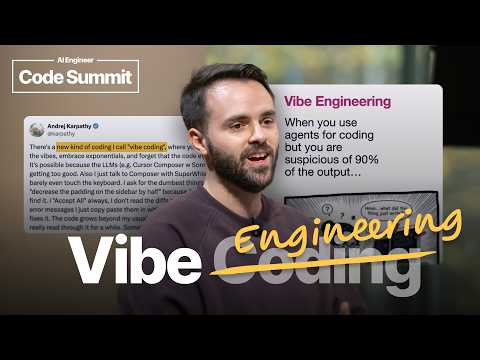
Strategic Shift: The industry is moving from code generation to code orchestration. The value lies in guiding AI, not just prompting it.
Builder/Investor Note: Invest in tools that enhance "vibe engineering" (real-time steering, context management) and education for senior developers. Avoid strategies that solely rely on AI to replace junior talent without skilled oversight.
The "So What?": Over the next 6-12 months, the ability to effectively "vibe engineer" will become a critical differentiator, separating high-performing teams from those drowning in AI-generated "slop."
Strategic Implication: The next frontier in AI involves a fundamental shift from statistical compression to genuine abstraction and understanding.
Builder/Investor Note: Focus on research and development that grounds AI in first principles, leading to more robust, efficient, and interpretable systems, rather than solely scaling existing empirical architectures.
The "So What?": The pursuit of mathematically derived, parsimonious, and self-consistent AI architectures offers a path to overcome current limitations, enabling systems that truly learn, adapt, and reason in the next 6-12 months and beyond.
Data Scarcity is a Feature, Not a Bug: Be wary of narratives built on incomplete data. Just because a dataset (on-chain, AI training) is all we have, doesn't mean it's representative.
Standardization is Survival: For any new technology (crypto protocols, AI models), robust "lexicography" and clear documentation are critical for long-term adoption and preventing fragmentation.
Question the "Received Law": Don't assume current "archaeological evidence" (e.g., current blockchain data, AI model limitations) tells the whole story. Look for the "perishable materials" that might be missing.
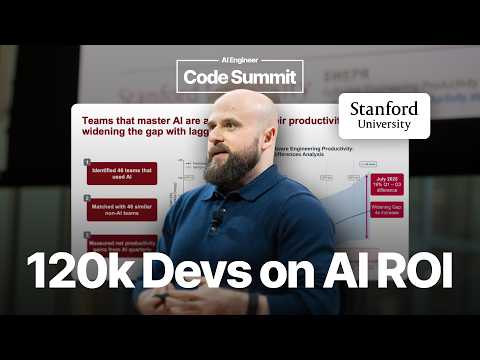
Strategic Shift: AI ROI isn't about adoption, it's about intelligent adoption. The gap between top and bottom performers will widen based on measurement sophistication and codebase health.
Builder/Investor Note: For builders, prioritize codebase hygiene and engineer training before or concurrently with AI rollout. For investors, scrutinize AI productivity claims; ask about code quality, rework rates, and specific measurement frameworks beyond simple usage.
The "So What?": In the next 6-12 months, companies that master AI integration by focusing on quality, measurement, and environment will compound their gains, while those chasing superficial metrics risk significant tech debt and negative ROI.
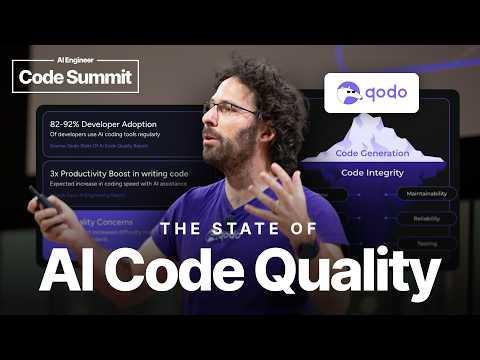
Strategic Implication: The next frontier of AI in software isn't just *generating* code, but *governing* its quality. This shift will redefine competitive advantage.
Builder/Investor Note: Prioritize investments in AI-powered quality gates, intelligent code review, and dynamic testing. For builders, feed your AI tools rich, comprehensive context. For investors, look for companies building these "picks and shovels."
The "So What?": The promised 2x-10x productivity gains are real, but they won't come from raw code generation alone. The next 6-12 months will see a scramble to implement agentic, context-aware quality workflows to unlock AI's true potential across the SDLC.
Strategic Shift: The competitive edge in AI agents is moving from clever architecture to superior model training data and robust RL environments.
Builder/Investor Note: Prioritize raw model capability over complex agent stacks. Builders should contribute to open-source RL environments; investors should seek companies focused on generating and leveraging high-quality training data.
The "So What?": The next 6-12 months will see a race to build and utilize real-world, outcome-driven benchmarks. Open initiatives like Client Bench could democratize model improvement and accelerate AI development significantly.
The Macro Shift: Deregulation is the new meta-theme. As the "Empire Strikes Back," traditional giants like Visa and Stripe will integrate crypto rails and turn the tech into invisible "TCP/IP" for finance.
The Tactical Edge: Monitor M&A activity during holiday periods. Look for "quality supply" consolidation where winners absorb the IP of failing projects.
The Bottom Line: 2026 is the target for a high-quality rally. The current shakeout is a feature designed to filter out the "nonsense supply" before the $40 trillion RIA channel arrives.
The Human Layer Exploit. As code becomes more robust, the attack surface moves to the people managing it. Security is now an HR and psychology problem as much as a technical one.
Deploy YubiKeys. Replace SMS and app-based 2FA with hardware keys to stop phishing. If a site cannot talk to your physical key, the attacker cannot steal your session.
Security is a process of adding layers, not a one-time audit. If you do not have a "blast radius" strategy to isolate your funds, you are one bad click away from a total loss.
The Macro Evolution: The Institutional Osmosis. Crypto is no longer a parallel universe but a high-speed rail for traditional assets.
The Tactical Edge: Audit Your Humans. Implement "Camera-On" policies and cross-verify identities via physical meetups to neutralize remote infiltration.
The Bottom Line: Survival in the next 12 months depends on moving from "Degen" security to "Enterprise" resilience as the lines between Coinbase and BlackRock vanish.
The Macro Shift: Content Abundance vs. Attention Scarcity. As AI makes the "what" of gaming cheap, the "where" (distribution) and "who" (high-LTV users) become the only defensible assets.
The Tactical Edge: Skin the Game. Use AI to rapidly iterate on visual assets for existing mechanics to capture trending subcultures within crypto communities.
The Bottom Line: The future of gaming isn't about building a 10-year world; it's about building high-fidelity, ephemeral experiences that drive value to on-chain ecosystems.
The Macro Shift: Macro gravity is currently winning as high interest rates suppress risk-on assets while AI captures the remaining speculative energy.
The Tactical Edge: Accumulate Ethereum only when it enters the regression band and Bitcoin when it touches the 200-week moving average.
The Bottom Line: The next major opportunity likely arrives in the summer of 2026 when monetary policy finally turns accommodative and the labor market stabilizes.