The Macro Shift: Context management is the new compute. As models get smarter, the winning architecture will be the one that most efficiently partitions and feeds relevant data to sub-agents.
The Tactical Edge: Prioritize reviewability. When building or using agents, focus on tools that provide clear diffs and tours of changes rather than just raw code generation.
The Bottom Line: The developer's role is evolving from a writer to an orchestrator. Success in the next 12 months depends on mastering the skill of agentic review rather than manual syntax.
The Macro Shift: Engineering is moving from a headcount-driven Opex model to an infrastructure-driven autonomy model where validation is the primary capital asset.
The Tactical Edge: Audit your codebase against the eight pillars of automated validation. Start by asking agents to generate tests for existing logic to close the coverage gap.
The Bottom Line: Massive velocity gains are not found in the next model update. They are found in the rigorous internal standards that allow agents to operate without human hand-holding.
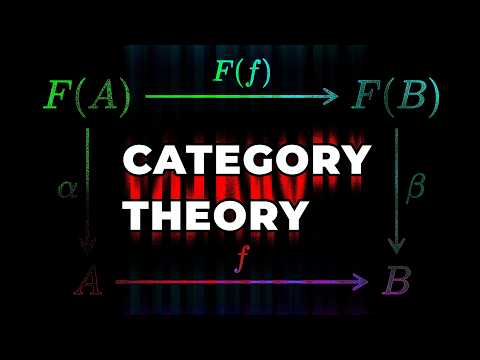
[Algorithmic Convergence]. The gap between symbolic logic and neural networks is closing through category theory. Expect architectures that are "correct by construction" rather than just "likely correct."
[Audit Architecture]. Evaluate new models based on their "algorithmic alignment" rather than just parameter count. Prioritize implementations that bake in non-invertible logic.
The next year will see a shift from scaling data to scaling structural priors. If you aren't thinking about how your model's architecture mirrors the problem's topology, you are just an alchemist in a world about to discover chemistry.
Strategic Implication: The future of software development isn't about *if* we use AI, but *how* we integrate human understanding and architectural discipline to prevent an "infinite software crisis.
Builder/Investor Note: Builders must prioritize deep system understanding and explicit planning over raw generation speed. Investors should favor companies that implement robust human-in-the-loop processes for AI-assisted development.
The "So What?": Over the next 6-12 months, the ability to "see the seams" and manage complexity will differentiate thriving engineering teams from those drowning in unmaintainable, AI-generated code.
Strategic Implication: The market for AI transformation services is expanding rapidly, driven by enterprises seeking to integrate AI for tangible business outcomes.
Builder/Investor Note: Focus on AI solutions with clear, practical applications for mid-market and enterprise clients. Technical talent capable of bridging research with deployment holds significant value.
The "So What?": The next 6-12 months will see increased demand for AI engineers who can implement and scale AI solutions, moving beyond proof-of-concept to widespread adoption.
Compensation Innovation: The traditional compensation playbook for engineers is outdated. New models that directly reward AI-augmented output will attract top talent and drive efficiency.
Builder/Investor Note: Founders should re-evaluate their incentive structures. Investors should seek companies experimenting with these models, as they may achieve outsized productivity.
The "So What?": The productivity gap between AI-augmented and non-AI-augmented engineers will widen. Companies that adapt their incentives will capture disproportionate value in the next 6-12 months.
Strategic Shift: Successful AI integration means identifying and solving *your* organization's specific SDLC bottlenecks, not just boosting code completion.
Builder/Investor Note: Prioritize psychological safety and invest in AI skill development. For builders, this means dedicated learning time; for investors, look for companies that do this well.
The "So What?": The next 6-12 months will separate organizations that merely *adopt* AI from those that *master* its strategic application and measurement, driving real competitive advantage.
Strategic Implication: AI integration is a company-wide transformation, not a feature. Organizations must re-architect processes, tools, and culture to compete.
Builder/Investor Note: Prioritize internal tooling that democratizes AI experimentation. Look for companies establishing "model behavior" as a distinct, cross-functional discipline.
The "So What?": The next 6-12 months will reward builders who bake AI security and user control into product design from day one, recognizing that technical mitigations alone are insufficient.
The Macro Shift: Deregulation is the new meta-theme. As the "Empire Strikes Back," traditional giants like Visa and Stripe will integrate crypto rails and turn the tech into invisible "TCP/IP" for finance.
The Tactical Edge: Monitor M&A activity during holiday periods. Look for "quality supply" consolidation where winners absorb the IP of failing projects.
The Bottom Line: 2026 is the target for a high-quality rally. The current shakeout is a feature designed to filter out the "nonsense supply" before the $40 trillion RIA channel arrives.
The Human Layer Exploit. As code becomes more robust, the attack surface moves to the people managing it. Security is now an HR and psychology problem as much as a technical one.
Deploy YubiKeys. Replace SMS and app-based 2FA with hardware keys to stop phishing. If a site cannot talk to your physical key, the attacker cannot steal your session.
Security is a process of adding layers, not a one-time audit. If you do not have a "blast radius" strategy to isolate your funds, you are one bad click away from a total loss.
The Macro Evolution: The Institutional Osmosis. Crypto is no longer a parallel universe but a high-speed rail for traditional assets.
The Tactical Edge: Audit Your Humans. Implement "Camera-On" policies and cross-verify identities via physical meetups to neutralize remote infiltration.
The Bottom Line: Survival in the next 12 months depends on moving from "Degen" security to "Enterprise" resilience as the lines between Coinbase and BlackRock vanish.
The Macro Shift: Content Abundance vs. Attention Scarcity. As AI makes the "what" of gaming cheap, the "where" (distribution) and "who" (high-LTV users) become the only defensible assets.
The Tactical Edge: Skin the Game. Use AI to rapidly iterate on visual assets for existing mechanics to capture trending subcultures within crypto communities.
The Bottom Line: The future of gaming isn't about building a 10-year world; it's about building high-fidelity, ephemeral experiences that drive value to on-chain ecosystems.
The Macro Shift: Macro gravity is currently winning as high interest rates suppress risk-on assets while AI captures the remaining speculative energy.
The Tactical Edge: Accumulate Ethereum only when it enters the regression band and Bitcoin when it touches the 200-week moving average.
The Bottom Line: The next major opportunity likely arrives in the summer of 2026 when monetary policy finally turns accommodative and the labor market stabilizes.