The Macro Shift: Infrastructure Invisibility. As core technologies become background noise, value moves from the pipes to the unique experiences built on top of them.
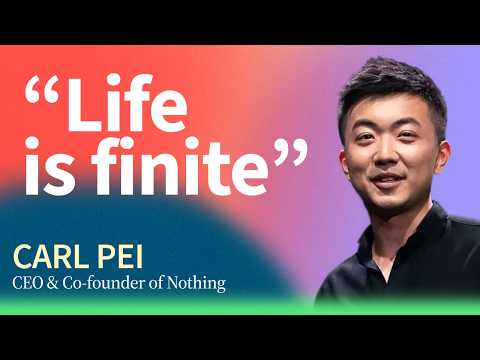
The Tactical Edge: Reject Mediocrity. Audit your product for average features and replace them with high-conviction improvements that competitors are too lazy to attempt.
The Bottom Line: Building is the only way to ensure the future happens. If you do not create the next version of reality, you are stuck living in an outdated vision.
The transition from hardware specs to emotional hardware where brand identity and OS-native AI become the primary moats.
Prioritize arbitrage opportunities in marketing by finding underpriced attention on platforms like TikTok before they become crowded.
Success in mature markets requires a Genghis Khan method: be a talent scout, stay open-minded to global supply chains, and use design to win the emotional battle for the consumer's pocket.
The transition from centralized cloud training to distributed local inference creates a massive demand for high-bandwidth storage and custom CPUs.
Audit your technical roadmap to prioritize local agentic workflows that reduce latency and data privacy risks.
The next 12 months will favor hardware that enables physical AI and local autonomy. Owning the compute stack is becoming a competitive necessity for builders who want to move faster than the cloud allows.
Intelligence is decoupling from scale. As reasoning becomes a commodity, the value moves from the size of the model to the proprietary nature of the training data.
Use TRL or Unsloth for single-GPU fine-tuning. Prioritize cleaning your instruction sets over increasing your training iterations.
The future belongs to those who own their data pipelines. If you can distill elite reasoning into a 350M parameter model, you win on latency, cost, and privacy.
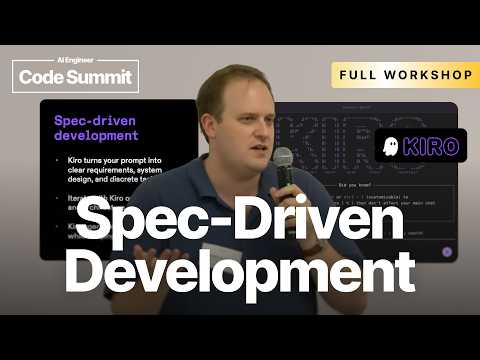
Software maintenance is moving from a manual craft to an industrial process. As agents handle the toil of migrations and security, human engineers will focus entirely on high-level system design.
Batch by Dependency. Use the OpenHands SDK to visualize your codebase as a graph and deploy agents to solve the leaf nodes first.
Companies that master agent orchestration will clear their tech debt backlogs in weeks instead of years, creating a massive competitive advantage in product velocity.
The Macro Shift: Deregulation is the new meta-theme. As the "Empire Strikes Back," traditional giants like Visa and Stripe will integrate crypto rails and turn the tech into invisible "TCP/IP" for finance.
The Tactical Edge: Monitor M&A activity during holiday periods. Look for "quality supply" consolidation where winners absorb the IP of failing projects.
The Bottom Line: 2026 is the target for a high-quality rally. The current shakeout is a feature designed to filter out the "nonsense supply" before the $40 trillion RIA channel arrives.
The Human Layer Exploit. As code becomes more robust, the attack surface moves to the people managing it. Security is now an HR and psychology problem as much as a technical one.
Deploy YubiKeys. Replace SMS and app-based 2FA with hardware keys to stop phishing. If a site cannot talk to your physical key, the attacker cannot steal your session.
Security is a process of adding layers, not a one-time audit. If you do not have a "blast radius" strategy to isolate your funds, you are one bad click away from a total loss.
The Macro Evolution: The Institutional Osmosis. Crypto is no longer a parallel universe but a high-speed rail for traditional assets.
The Tactical Edge: Audit Your Humans. Implement "Camera-On" policies and cross-verify identities via physical meetups to neutralize remote infiltration.
The Bottom Line: Survival in the next 12 months depends on moving from "Degen" security to "Enterprise" resilience as the lines between Coinbase and BlackRock vanish.
The Macro Shift: Content Abundance vs. Attention Scarcity. As AI makes the "what" of gaming cheap, the "where" (distribution) and "who" (high-LTV users) become the only defensible assets.
The Tactical Edge: Skin the Game. Use AI to rapidly iterate on visual assets for existing mechanics to capture trending subcultures within crypto communities.
The Bottom Line: The future of gaming isn't about building a 10-year world; it's about building high-fidelity, ephemeral experiences that drive value to on-chain ecosystems.
The Macro Shift: Macro gravity is currently winning as high interest rates suppress risk-on assets while AI captures the remaining speculative energy.
The Tactical Edge: Accumulate Ethereum only when it enters the regression band and Bitcoin when it touches the 200-week moving average.
The Bottom Line: The next major opportunity likely arrives in the summer of 2026 when monetary policy finally turns accommodative and the labor market stabilizes.