Strategic Implication: The value in software development shifts from manual coding to high-level architectural design and prompt engineering.
Builder/Investor Note: Experiment with AI Studio's agentic and design capabilities. Focus on describing desired functionality rather than low-level code.
The "So What?": The next 6-12 months will see a surge in AI-powered, full-stack applications built by a broader range of creators, disrupting traditional development paradigms.
Strategic Shift: AI's impact extends beyond simple productivity. The real opportunity lies in fundamentally changing the cost function of engineering, making previously expensive or undesirable tasks cheap and feasible.
Platform Imperative: For large organizations, a "golden path" platform is not optional. It's how you manage complexity, ensure quality, and scale AI adoption safely and efficiently.
Human-Centric Adaptation: Technology is only half the battle. Investing in cultural adaptation, community building, and leadership training is crucial for realizing AI's full potential.
Strategic Implication: Companies integrating AI-driven code generation into non-engineering roles will see significant efficiency gains and improved product reliability.
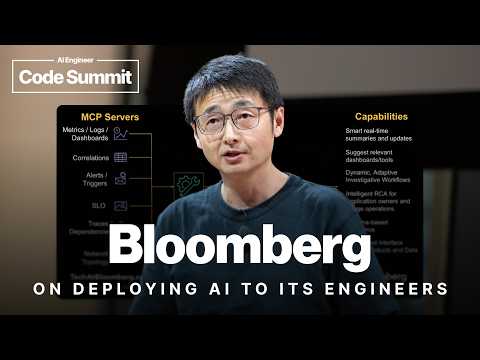
Builder/Investor Note: Focus on building AI tools that deeply embed into existing workflows. Orchestration of multiple AI tools into an agent-like system is key for adoption and value.
The "So What?": The next 6-12 months will see a redefinition of "support" from reactive reporting to proactive, code-shipping problem-solving, unlocking new talent pools and accelerating development cycles.
Strategic Implication: The AI era will disproportionately reward existing businesses that deeply integrate AI to create unassailable cost structures, not just new AI-native ventures.
Builder/Investor Note: Seek out resilient "Act II" leaders who embrace the "and" business—growth, innovation, and profitability—and are willing to navigate public market scrutiny for long-term alignment.
The "So What?": Over the next 6-12 months, expect market volatility to create opportunities to invest in disciplined companies leveraging AI for fundamental operational shifts, rather than just hype.
Strategic Implication: The next wave of industrial growth will come from applying manufacturing principles to large-scale infrastructure, not just consumer goods.
Builder/Investor Note: Focus on companies that are standardizing designs and processes for physical assets, particularly those leveraging AI to navigate regulatory complexity and accelerate deployment.
The "So What?": The rapid build-out of data centers is a live experiment for a broader industrial renaissance, providing a blueprint for how America can rebuild its capacity to build at scale over the next 6-12 months.
Strategic Implication: The "AI safety" narrative is shifting from content moderation to systemic security. Focus on hardening the entire AI ecosystem, not just restricting model outputs.
Builder/Investor Note: Be wary of "AI security" products that claim to "secure the model" through guardrails. These are likely security theater. Invest in full-stack AI security solutions, red teaming services, and platforms that facilitate open-source adversarial research.
The "So What?": The future of AI security is not about building higher walls around models, but about understanding and hardening the entire ecosystem in which they operate. Open collaboration and adversarial testing are the fastest paths to robust AI.
Strategic Implication: The quality and sophistication of LLM evaluation frameworks are now as critical as the models themselves. This is a foundational layer for AI progress.
Builder/Investor Note: Builders must adopt adaptive evaluation. Investors should scrutinize how LLM performance is measured, not just the headline numbers.
The "So What?": As LLMs gain complex reasoning and instruction-following abilities, evaluation frameworks that can accurately measure these capabilities will be essential for identifying true innovation and avoiding misallocated resources in the next 6-12 months.
Sovereign AI is Real: Nations are investing in domestic AI capabilities to counter linguistic bias and ensure data control. This creates opportunities for specialized models and infrastructure.
Builder's Edge: Meticulous parameter tuning, high-quality data curation, and innovative architectures like MoE are crucial for achieving top-tier LLM performance.
The Agentic Future: AI agents are rapidly becoming indispensable tools in research and education, demanding robust, reliable, and culturally relevant LLM backbones.
Strategic Implication: The future of AI code generation hinges on dynamic, robust evaluation systems that adapt to evolving model capabilities and detect sophisticated exploitation.
Builder/Investor Note: Invest in or build evaluation infrastructure that incorporates dynamic problem sets, LLM-driven hack detection, and granular, human-centric metrics.
The "So What?": Relying on static benchmarks is a losing game. The next 6-12 months will see a push towards more sophisticated, real-world-aligned evaluation methods, separating genuinely capable models from those that merely game the system.
The ongoing global distrust in centralized financial systems fuels a search for decentralized alternatives, yet the crypto market's focus on "store of value" assets like Bitcoin risks missing the original intent of a truly global, fair means of exchange, a gap Dogecoin aims to fill.
Re-evaluate digital asset utility beyond speculative store-of-value narratives, considering projects actively pursuing frictionless, low-cost means of exchange.
The long-term viability of decentralized finance hinges on its ability to deliver practical, everyday utility, not just investment returns. This means projects focused on transactional efficiency could gain significant ground in the coming 6-12 months.
Build infrastructure that simplifies blockchain complexity and stablecoin fragmentation for end-users and enterprises. This is where the next wave of value creation lies.
The global financial system's slowness and cost are directly challenged by programmable stablecoins, moving them from speculative assets to essential, low-cost, high-speed infrastructure.
Stablecoins are moving from a crypto-native tool to a core layer for global finance.
As global economies grapple with inflation and inefficient financial systems, capital seeks refuge and utility in digital assets. Onchain FX provides a direct, cost-effective escape route, bypassing legacy intermediaries and offering a superior alternative for cross-border value transfer.
Builders should focus on creating core financial primitives like onchain FX that solve real-world problems with superior economics, rather than chasing speculative narratives or token-driven vanity metrics.
The next 6-12 months will see a continued acceleration of capital into crypto-native financial rails, particularly in emerging markets. Investors and builders should position themselves to capitalize on the structural cost advantages and network effects of onchain FX, which is poised to become a default market for many currency pairs.
The "Neo Finance" paradigm is solidifying, blending TradFi assets with DeFi's capital efficiency and transparency. This shift is not just about crypto, but about the future of all finance, with AI agents as a new class of economic actors.
Invest in infrastructure and applications that bridge TradFi and DeFi, focusing on tokenized real-world assets and secure, high-yield stablecoin products. Prioritize platforms offering transparent, risk-managed yield, as institutional capital will flow there.
The market's current volatility masks a profound structural transformation. Builders and investors who focus on creating seamless, capital-efficient, and AI-native financial products will capture the next wave of value, as digital assets become the default for both humans and machines.
The erosion of the American dream, fueled by inflationary policies and monopolistic capitalism, is driving a political shift towards candidates who advocate for transparent, common-sense economic policies and modern regulatory clarity for emerging technologies like crypto.
Support political candidates who champion clear, updated regulatory frameworks for digital assets and advocate for increased market competition across industries.
The fight for crypto clarity is now intertwined with broader economic and political reform. Understanding this intersection is crucial for investors and builders navigating a landscape where policy decisions directly impact market viability and individual prosperity over the next 6-12 months.
Politically influenced central banking is returning, making monetary policy an electoral tool. Fed decisions will reflect political priorities, potentially leading to aggressive rate cuts.
Re-evaluate portfolio sensitivity to political intervention. Position for lower long-term rates, but prepare for increased market volatility.
The incoming Fed chair signals a re-alignment of monetary policy with executive branch goals. Expect policy to prioritize affordability and electoral success.