The decoupling of parameter count from active compute via sparsity means intelligence is becoming a software optimization problem as much as a hardware one.
Audit your agentic workflows for turn efficiency rather than just cost per token.
In a world of infinite tokens, the winner is the one who can verify the truth the fastest.
The Macro Pivot: The transition from LLMs as chat interfaces to LLMs as logic engines. As models move from text prediction to logic execution, the value moves from the model itself to the verification systems surrounding it.
The Tactical Edge: Audit the stack. Prioritize the integration of agentic coding tools like Jules to shorten the feedback loop between ideation and deployment.
The Bottom Line: Code is the only medium where AI can self-correct and scale without human intervention. The next 12 months will be defined by who can turn raw model power into reliable, self-healing code.
The Macro Transition: We are moving from "fire-and-forget" prompts to durable execution environments where state is as important as the model itself.
The Tactical Edge: Wrap your existing tool calls in the `useStep` function to gain instant retry logic and execution history.
The Bottom Line: Reliability is the primary moat in the agent market. Builders who adopt durable workflows will move to production while others are still debugging local scripts.
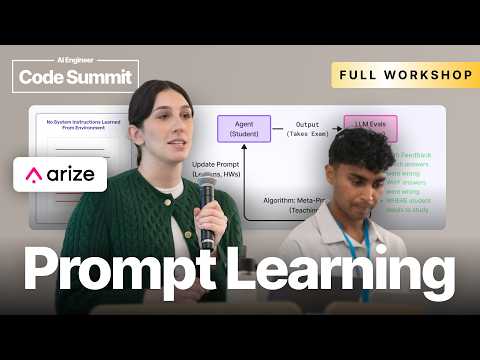
The move from manual prompt engineering to automated prompt learning. As models become commodities, the proprietary loop that refines them becomes the moat.
Implement a Train-Test Split for your prompts. Use a subset of failure data to generate new rules and validate them against a separate holdout set to ensure the logic holds.
Reliability is the only metric that matters for agent adoption. If you are not using a feedback loop to update your system instructions, you are building on sand.
The move from industrial management to creative inspiration. As AI automates routine tasks, the only remaining value is high-variance human creativity.
Apply the Keeper Test today. Ask your leads which team members they would fight for and provide generous exits for the rest to reset your talent bar.
Scaling doesn't require more rules. It requires better people. If you can maintain talent density, you can run fast while your competitors choke on their own handbooks.
The ongoing global distrust in centralized financial systems fuels a search for decentralized alternatives, yet the crypto market's focus on "store of value" assets like Bitcoin risks missing the original intent of a truly global, fair means of exchange, a gap Dogecoin aims to fill.
Re-evaluate digital asset utility beyond speculative store-of-value narratives, considering projects actively pursuing frictionless, low-cost means of exchange.
The long-term viability of decentralized finance hinges on its ability to deliver practical, everyday utility, not just investment returns. This means projects focused on transactional efficiency could gain significant ground in the coming 6-12 months.
Build infrastructure that simplifies blockchain complexity and stablecoin fragmentation for end-users and enterprises. This is where the next wave of value creation lies.
The global financial system's slowness and cost are directly challenged by programmable stablecoins, moving them from speculative assets to essential, low-cost, high-speed infrastructure.
Stablecoins are moving from a crypto-native tool to a core layer for global finance.
As global economies grapple with inflation and inefficient financial systems, capital seeks refuge and utility in digital assets. Onchain FX provides a direct, cost-effective escape route, bypassing legacy intermediaries and offering a superior alternative for cross-border value transfer.
Builders should focus on creating core financial primitives like onchain FX that solve real-world problems with superior economics, rather than chasing speculative narratives or token-driven vanity metrics.
The next 6-12 months will see a continued acceleration of capital into crypto-native financial rails, particularly in emerging markets. Investors and builders should position themselves to capitalize on the structural cost advantages and network effects of onchain FX, which is poised to become a default market for many currency pairs.
The "Neo Finance" paradigm is solidifying, blending TradFi assets with DeFi's capital efficiency and transparency. This shift is not just about crypto, but about the future of all finance, with AI agents as a new class of economic actors.
Invest in infrastructure and applications that bridge TradFi and DeFi, focusing on tokenized real-world assets and secure, high-yield stablecoin products. Prioritize platforms offering transparent, risk-managed yield, as institutional capital will flow there.
The market's current volatility masks a profound structural transformation. Builders and investors who focus on creating seamless, capital-efficient, and AI-native financial products will capture the next wave of value, as digital assets become the default for both humans and machines.
The erosion of the American dream, fueled by inflationary policies and monopolistic capitalism, is driving a political shift towards candidates who advocate for transparent, common-sense economic policies and modern regulatory clarity for emerging technologies like crypto.
Support political candidates who champion clear, updated regulatory frameworks for digital assets and advocate for increased market competition across industries.
The fight for crypto clarity is now intertwined with broader economic and political reform. Understanding this intersection is crucial for investors and builders navigating a landscape where policy decisions directly impact market viability and individual prosperity over the next 6-12 months.
Politically influenced central banking is returning, making monetary policy an electoral tool. Fed decisions will reflect political priorities, potentially leading to aggressive rate cuts.
Re-evaluate portfolio sensitivity to political intervention. Position for lower long-term rates, but prepare for increased market volatility.
The incoming Fed chair signals a re-alignment of monetary policy with executive branch goals. Expect policy to prioritize affordability and electoral success.