The Macro Shift: Infrastructure Invisibility. As core technologies become background noise, value moves from the pipes to the unique experiences built on top of them.
The Tactical Edge: Reject Mediocrity. Audit your product for average features and replace them with high-conviction improvements that competitors are too lazy to attempt.
The Bottom Line: Building is the only way to ensure the future happens. If you do not create the next version of reality, you are stuck living in an outdated vision.
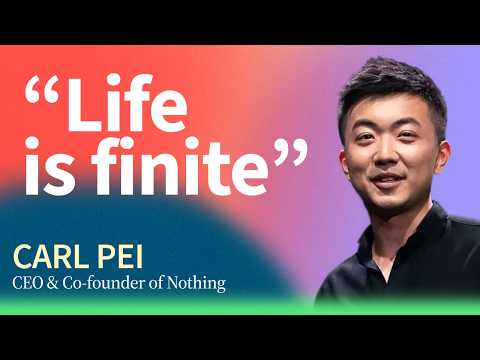
The transition from hardware specs to emotional hardware where brand identity and OS-native AI become the primary moats.
Prioritize arbitrage opportunities in marketing by finding underpriced attention on platforms like TikTok before they become crowded.
Success in mature markets requires a Genghis Khan method: be a talent scout, stay open-minded to global supply chains, and use design to win the emotional battle for the consumer's pocket.
The transition from centralized cloud training to distributed local inference creates a massive demand for high-bandwidth storage and custom CPUs.
Audit your technical roadmap to prioritize local agentic workflows that reduce latency and data privacy risks.
The next 12 months will favor hardware that enables physical AI and local autonomy. Owning the compute stack is becoming a competitive necessity for builders who want to move faster than the cloud allows.
Intelligence is decoupling from scale. As reasoning becomes a commodity, the value moves from the size of the model to the proprietary nature of the training data.
Use TRL or Unsloth for single-GPU fine-tuning. Prioritize cleaning your instruction sets over increasing your training iterations.
The future belongs to those who own their data pipelines. If you can distill elite reasoning into a 350M parameter model, you win on latency, cost, and privacy.
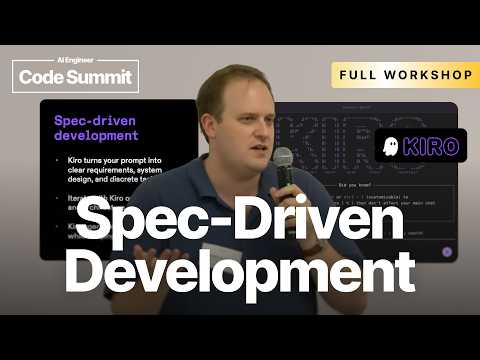
Software maintenance is moving from a manual craft to an industrial process. As agents handle the toil of migrations and security, human engineers will focus entirely on high-level system design.
Batch by Dependency. Use the OpenHands SDK to visualize your codebase as a graph and deploy agents to solve the leaf nodes first.
Companies that master agent orchestration will clear their tech debt backlogs in weeks instead of years, creating a massive competitive advantage in product velocity.
AI-driven efficiency gains are forcing a repricing across traditional software, directly exposing the overvaluation of crypto L1s that lack clear, revenue-generating utility.
Prioritize protocols demonstrating consistent product shipping and clear revenue generation over speculative L1s.
The crypto market is maturing, demanding real business models and product execution.
The demand for open-source, secure, and general-purpose AI inference is accelerating, pushing decentralized networks like BitTensor from experimental proofs to critical infrastructure.
Investigate BitTensor's subnet ecosystem for opportunities to build applications that leverage its secure, open-source compute, particularly in high-demand niches like AI-assisted coding or interactive content generation.
BitTensor's shift from free compute to a revenue-generating, self-sustaining flywheel signals a maturing decentralized AI market.
Evaluate L1s and app-specific protocols not just on throughput, but on their explicit value capture mechanisms.
Prioritize protocols that directly align user activity and protocol revenue with token value, as seen in Hyperliquid's buyback model, over those with less direct or diluted value accrual to the native asset.
Chains that can maintain low, stable fees during peak demand and clearly articulate how their native token captures value from growing on-chain activity will attract both users and capital.
The convergence of AI and crypto is not just a technological trend; it's a foundational shift towards a digital society where AI agents are first-class economic citizens.
Build agent-native financial primitives. Focus on creating protocols and services that allow AI agents to autonomously transact, manage assets, and interact with digital property without human intervention.
The question isn't if digital currency and AI agents will dominate, but when and how.
The AI-driven automation is not a sudden, generalist humanoid takeover, but a gradual, specialized deployment.
Invest in or build solutions for industrial automation, logistics, and specialized service robotics (e.g., medical, waste management).
The next 5-10 years will see significant, quiet growth in non-humanoid, task-specific robots transforming supply chains, manufacturing, and healthcare.