The Macro Shift: In an era of rapid technological disruption and diversified portfolios, 3G Capital's success with "old economy" brands highlights the enduring power of deep operational expertise, long-term alignment, and a relentless focus on fundamental business quality, even in non-tech sectors.
The Tactical Edge: Cultivate Ownership: Implement incentive structures that align management with long-term shareholder value, treating company capital as personal capital. This means disproportionately rewarding top performers and fostering a culture of accountability.
The Bottom Line: In a market obsessed with rapid tech cycles, 3G's long-term, deep-operator model suggests that enduring value lies in fundamental business quality, direct customer relationships, and a culture that empowers talent, offering a counter-narrative for builders and investors seeking sustainable alpha.
The robotics community is moving from bespoke, task-specific benchmarks to generalist policy evaluation platforms that prioritize real-world correlation and scalability. This mirrors LLM benchmark evolution, demanding tools that enable rapid, diverse testing.
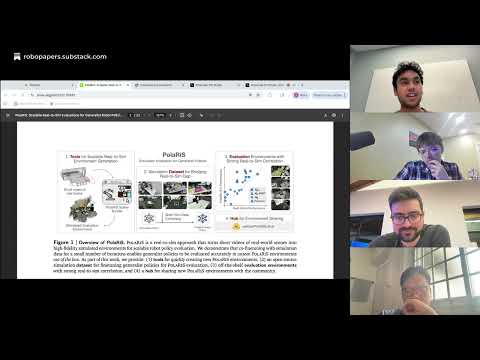
Builders and researchers should prioritize evaluation frameworks that offer easy, real-to-sim environment generation (like PolaRiS's Gaussian splatting) and incorporate small, diverse sim data for distribution alignment. This accelerates policy iteration and ensures applicability.
Scalable, real-world-correlated simulation is the missing link for accelerating generalist robot policy development. Investing in or building on tools like PolaRiS, which democratize environment creation and robust evaluation, will be key to unlocking the next generation of capable robots over the next 6-12 months.
The rise of generalist robot policies demands a new generation of evaluation tools that are both scalable and highly correlated with real-world performance.
Adopt hybrid real-to-sim evaluation frameworks like PolaRiS to accelerate robot policy iteration and ensure real-world applicability.
Reliable, scalable simulation is no longer a pipe dream; it's a present reality for rigid body tasks. This means faster development cycles and more robust robot policies in the next 6-12 months.
The rise of generalist robot policies, trained on large real-world datasets, demands a new evaluation framework. PolaRiS provides a scalable, real-world correlated simulation, moving robotics towards an LLM-like benchmark ecosystem where models are tested for zero-shot generalization across diverse, easily created environments.
Adopt PolaRiS to rapidly iterate on robot policies. Leverage its real-to-sim environment generation and minimal sim-code training to achieve high correlation with real-world performance, significantly cutting development time and cost compared to physical testing.
For builders and investors, PolaRiS means faster, cheaper, and more reliable robot policy development. This tool accelerates the path to deployable, generalist robots, making advanced robotics more accessible and competitive in the next 6-12 months.
The push for generalist robot policies, akin to foundation models in other AI fields, necessitates a shift from bespoke, real-world-only evaluations to scalable, correlated simulation benchmarks.
Adopt PolaRiS for faster policy iteration. Integrate small, diverse sets of *unrelated* sim data into your co-training mix to significantly boost real-to-sim correlation.
Robotics is moving towards LLM-style benchmarking.
While the market obsesses over "bits" and rapid tech disruption, 3G Capital demonstrates that enduring value often resides in "atoms"—physical businesses with strong brands and direct customer relationships. This highlights a counter-cyclical opportunity in overlooked, tangible assets.
Cultivate an owner-operator mentality in your ventures. Focus on attracting and empowering top talent with significant equity, then decentralize execution while maintaining clear strategic alignment.
In the next 6-12 months, prioritize investments in businesses with defensible customer relationships and clear, long-term growth runways, even if they appear "boring." Your ability to instill a true ownership culture will be a differentiator, driving outsized returns where others chase fleeting trends.
In a world where capital is abundant but truly great businesses are rare and often overpriced, 3G's model highlights a strategic pivot: deep, operator-led concentration on defensible, customer-centric assets with long-term growth potential, rather than broad, passive diversification.
Cultivate an "owner operator" mindset within your organization, pushing decision-making closer to the problems and aligning incentives with long-term shareholder value, not just short-term metrics.
Over the next 6-12 months, focus on identifying businesses with strong, direct customer relationships and inherent resistance to technological disruption. These "forever businesses," often family-controlled, offer a more reliable path to compounding returns than pursuing fleeting trends or commoditized assets.
The Macro Shift: In an era of rapid technological change, businesses with strong, direct customer relationships and physical moats are increasingly resilient. Technology should improve, not replace, core offerings.
The Tactical Edge: Cultivate a "brand bigger than the business" mindset. Seek out established brands with global recognition but underperforming operations, then apply rigorous, owner-operator principles to create latent value and growth.
The Bottom Line: Long-term thinking and a relentless focus on people and business quality, even in a concentrated portfolio, remain the most powerful engines for compounding capital. This means patience, deep operational involvement, and a willingness to bet big on exceptional talent.
Heightened Fraud Risks: The $LIBRA scandal underscores the perpetual risk of manipulation in memecoin markets, urging investors to exercise extreme caution.
Evolving Airdrop Strategies: Airdrops are becoming more sophisticated, but misalignment between expectations and reality continues to challenge their effectiveness.
Regulatory Balance Needed: While the SEC’s efforts to curb fraud are crucial, the crypto industry must develop robust self-regulation to complement external oversight
Ethereum Outshines Solana: Ethereum’s superior decentralization and monetary properties make it a more reliable asset compared to Solana.
Decentralization is Crucial: The degree of decentralization directly impacts an asset’s stability and future predictability, influencing investor confidence.
Bitcoin’s Influence Remains Strong: Despite Ethereum’s strengths, Bitcoin’s dominance sets the benchmark for decentralized digital assets, shaping the competitive landscape for other cryptocurrencies.
1. Regulatory Clarity is Crucial: Effective engagement with the SEC can pave the way for more robust and compliant crypto innovations.
2. Decentralization Enhances Stability: Solana’s efforts to decentralize through Jeto Labs contribute to a more resilient and trustworthy network.
3. DeFi as a Game-Changer: The growth of DeFi offers unprecedented opportunities for financial autonomy and market efficiency, driving future crypto adoption.
1. LIBRA’s collapse underscores the critical need for transparency and ethical practices in meme coin launches to restore investor trust.
2. Innovative projects like Sonic and Berachain are crucial in revitalizing the crypto market, demonstrating strong recovery and growth potential.
3. Utility-driven tools such as Kato are essential for fostering a more transparent and authentic crypto community, paving the way for sustainable development.
1. Institutional Momentum: Bitcoin’s increasing adoption by institutional investors solidifies its position as a stable digital asset, offering a counterbalance to market volatility.
2. Solana’s Resilience: Despite challenges from memecoin fallout, Solana’s strong ecosystem and fundamental value propositions continue to sustain its growth and developer interest.
3. HyperEVM’s Potential: The rise of HyperEVM highlights the ongoing innovation in blockchain technology, emphasizing the need for multi-faceted DeFi solutions to compete with established platforms like Solana.
1. Shift to Utility-Driven Crypto: The decline of meme coins signals a maturation of the crypto market, with a strong pivot towards innovative, utility-focused projects, especially in AI.
2. AI Models Are Accelerating Innovation: Rapid advancements in AI, exemplified by models like Grock 3, are challenging established leaders and driving the next wave of crypto innovation.
3. Kaido’s KITO Token is a Game-Changer: The launch of Kaido’s KITO token represents a significant opportunity for investors and developers, as it aims to create a robust decentralized data layer critical for the advancement of AI agents in crypto.