The decoupling of parameter count from active compute via sparsity means intelligence is becoming a software optimization problem as much as a hardware one.
Audit your agentic workflows for turn efficiency rather than just cost per token.
In a world of infinite tokens, the winner is the one who can verify the truth the fastest.
The Macro Pivot: The transition from LLMs as chat interfaces to LLMs as logic engines. As models move from text prediction to logic execution, the value moves from the model itself to the verification systems surrounding it.
The Tactical Edge: Audit the stack. Prioritize the integration of agentic coding tools like Jules to shorten the feedback loop between ideation and deployment.
The Bottom Line: Code is the only medium where AI can self-correct and scale without human intervention. The next 12 months will be defined by who can turn raw model power into reliable, self-healing code.
The Macro Transition: We are moving from "fire-and-forget" prompts to durable execution environments where state is as important as the model itself.
The Tactical Edge: Wrap your existing tool calls in the `useStep` function to gain instant retry logic and execution history.
The Bottom Line: Reliability is the primary moat in the agent market. Builders who adopt durable workflows will move to production while others are still debugging local scripts.
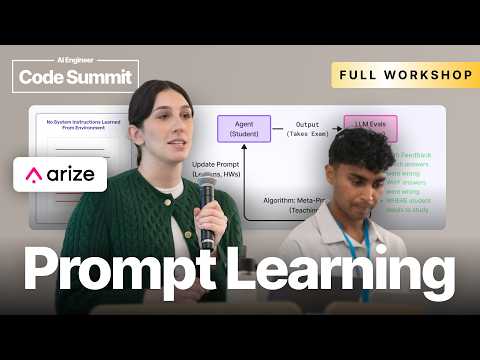
The move from manual prompt engineering to automated prompt learning. As models become commodities, the proprietary loop that refines them becomes the moat.
Implement a Train-Test Split for your prompts. Use a subset of failure data to generate new rules and validate them against a separate holdout set to ensure the logic holds.
Reliability is the only metric that matters for agent adoption. If you are not using a feedback loop to update your system instructions, you are building on sand.
The move from industrial management to creative inspiration. As AI automates routine tasks, the only remaining value is high-variance human creativity.
Apply the Keeper Test today. Ask your leads which team members they would fight for and provide generous exits for the rest to reset your talent bar.
Scaling doesn't require more rules. It requires better people. If you can maintain talent density, you can run fast while your competitors choke on their own handbooks.
1. Blackbird is pioneering a blockchain-based loyalty and payment system that could redefine restaurant economics by eliminating costly intermediaries.
2. The dual-token system of Fly and F2 ensures both consumer engagement and network governance, offering a unique value proposition.
3. For developers and investors, Blackbird exemplifies how blockchain can be leveraged to create real-world value and user ownership, setting a precedent for future applications.
1. Understanding the cyclical nature of crypto markets is essential for strategic investment. Deploying capital during downturns can lead to significant gains.
2. Integrity, humility, and adaptability are critical traits for founders seeking long-term success in the crypto space.
3. Investors should focus on deep research to identify undervalued opportunities, particularly in DeFi and real-world assets.
1. Bybit’s Large-Scale Hack Highlights the Need for Robust Security: The $1.4 billion ETH breach underscores the importance of advanced security measures and resilient infrastructure in preventing and mitigating massive crypto exploits.
2. Sustainable Airdrop Models are Crucial for Long-Term Success: Kaido’s extensive airdrop strategy reveals the tension between immediate community engagement and the necessity for sustainable token distribution practices to ensure lasting protocol viability.
3. Regulatory Clarity Will Shape the Future of Token Launches: As regulatory bodies like the SEC begin to provide clearer guidelines, the crypto industry must adapt to new rules that can legitimize token offerings and foster a more stable market environment.
1. Enhanced Security through Ethereum: By outsourcing consensus to Ethereum, MegaETH leverages a highly secure and decentralized network, minimizing vulnerabilities associated with centralized consensus mechanisms.
2. Performance Optimization: Avoiding its own consensus process allows MegaETH to reduce latency and boost transaction speeds, making it a high-performance blockchain solution.
3. Strategic Leveraging of Established Protocols: Developers and investors should consider the benefits of utilizing established consensus protocols like Ethereum’s to ensure robust security while focusing on other aspects of blockchain performance.
1. NEAR is pioneering a unified blockchain infrastructure integrating AI, eliminating the need for multiple chains and enhancing user experience.
2. The launch of NEAR 2.0 with fully sharded architecture and reduced block times positions NEAR as a scalable and high-performance blockchain platform.
3. NEAR’s focus on chain abstraction and Trusted Execution Environments sets it apart from other blockchain and Layer 2 solutions, offering a more seamless and secure user experience.