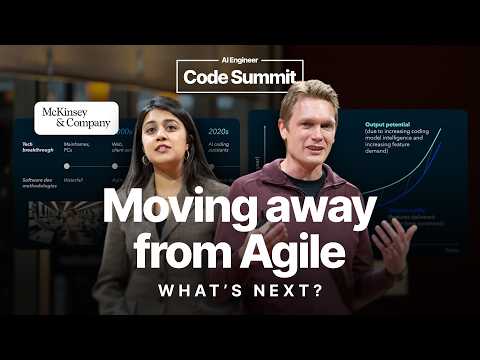
Strategic Implication: The "Agile" era is ending. AI demands a new, more fluid, and context-aware operating model for software development.
Builder/Investor Note: Look for (or build) companies that are fundamentally redesigning their SDLC, team structures, and roles around AI, not just bolting on tools. This includes robust, outcome-based measurement.
The "So What?": The next 6-12 months will separate the AI-native leaders from the laggards. Those who embrace this human and organizational transformation will unlock exponential value; others will be stuck with marginal gains.
Strategic Implication: The market is moving beyond basic "copilot" functionality. The next frontier is proactive, context-aware AI that reduces cognitive load and integrates seamlessly into existing workflows.
Builder/Investor Note: Focus on building or investing in multi-agent architectures that converge context across the entire product lifecycle (code, design, data) and prioritize human-in-the-loop alignment over pure autonomy.
The "So What?": The fundamental patterns of software development (Git, IDEs, even code itself) are ripe for disruption. Don't be afraid to question old ways; the future of how software is built is being invented right now.
**The "Small is Mighty" Paradigm:** Don't underestimate smaller, specialized models. M2 proves that smart engineering, real-world feedback, and iterative reasoning can outperform larger models in specific, high-value domains.
**Builders, Embrace Iteration:** Design your agents with "interleaved thinking." The ability to self-correct and adapt to noisy environments is critical for real-world utility.
**The "So What?":** The next wave of AI agents will be defined by their robustness, cost-effectiveness, and ability to generalize across dynamic environments. M2 is a blueprint for building practical, scalable AI that developers will actually integrate into their daily workflows.
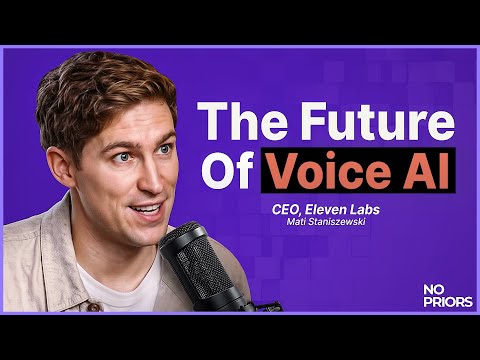
Strategic Shift: The future of human-computer interaction is voice-first, moving from static content to dynamic, personalized, and agentic experiences.
Builder/Investor Note: Defensibility in AI is increasingly found in deep product layers, specialized architectural breakthroughs (especially in audio), and robust ecosystems, not just raw model scale.
The "So What?": Over the next 6-12 months, expect to see significant advancements in proactive AI agents, immersive media, and personalized education, with voice as the core interface.
The AI-Delegation Revolution is Here: Start experimenting with AI tools like ChatGPT for delegation now. The future involves proactive machine assistants deeply integrated into your workflow.
Builders & Investors: Focus on "How to Delegate": The biggest constraint isn't finding assistants, but teaching clients how to delegate effectively. Tools and services that educate delegators will win.
Reclaim Your Ambition: By offloading the mundane, you free up mental bandwidth to think bigger, pursue more ambitious goals, and ultimately, control your most valuable asset: time.
Strategic Implication: The AI bubble is inevitable. Focus on defensible positions: deep product integration, proprietary data, and distribution, rather than just raw model performance.
Builder/Investor Note: The opportunity lies in productizing AI for specific "jobs to be done" within niche industries, creating intuitive UIs, and building in validation, not just building another foundational model.
The "So What?": We're about to figure out the true "job to be done" for many industries. AI will unbundle existing businesses by exposing their hidden inefficiencies or non-obvious defensibilities.
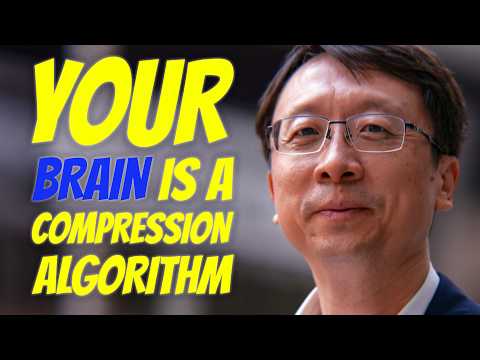
Embrace Parsimony and Self-Consistency: Adopt these principles as guiding forces in AI design. Build models that not only compress data efficiently but also maintain a high degree of self-consistency to ensure accurate and reliable world models.
Focus on Abstraction, Not Just Memorization: Prioritize developing systems that can abstract knowledge beyond mere memorization. Move beyond surface-level compression and aim for models that can discover and reason about the underlying principles of the world.
Understand and Reproduce the Brain’s Mechanisms: Focus on understanding and reproducing the mechanisms in the human brain that enable deductive reasoning, logical thinking, and the creation of new scientific theories to truly push AI to the next level.
**Prioritize AI Safety Research:** Invest aggressively in understanding and mitigating AI risks to safeguard humanity against potential rogue LLMs.
**Support Decentralized AI Alignment:** Champion decentralized platforms like Bit Tensor and initiatives like Trishool that promote open and transparent AI alignment research.
**Embrace Mechanistic Interpretability:** Drive the development of tools that enable us to understand and control the internal workings of AI models, ensuring alignment with human values.
Embrace Delegation as a Foundational Skill: Whether you leverage AI or human support, mastering delegation is paramount for unlocking personal and professional potential.
Prioritize Time Ownership: Recognize time as your most valuable asset and design your life and calendar around your highest goals.
Start Small, Scale Intentionally: Begin with affordable AI tools and gradually incorporate human assistance as your budget and needs evolve, building trust and compounding leverage over time.
1. Despite short-term market volatility influenced by factors like tariff discussions, the underlying economy appears healthy, presenting a potentially bullish outlook for Bitcoin.
2. RWA and Trafi represent significant growth areas in crypto, but the rationale behind permissioned blockchains needs further examination.
3. AI continues to rapidly evolve, with vibe coding and localized LLMs poised to democratize app development and enhance user experiences.
1. While the current landscape for meme coins and certain trading strategies seems saturated, innovation and new implementations will drive the next wave of opportunities.
2. Macroeconomic forces, particularly institutional deleveraging, are significant drivers of recent market fluctuations, but long-term fundamentals remain strong for Bitcoin and select altcoins like Solana.
3. The convergence of AI and crypto holds immense potential, with orchestration playing a key role in unlocking value and efficiency across various applications.
1. ZK technology is essential for scaling verifiability and enabling privacy, which are critical for broader blockchain adoption.
2. The zkSync and EigenLayer partnership creates a synergistic combination of cryptographic and cryptoeconomic security, strengthening the ecosystem and ensuring greater resilience.
3. The implementation of EigenLayer's novel slashing mechanism enhances the security and trustworthiness of decentralized services, paving the way for a more robust and reliable decentralized future.